
Cleveland Obituary Search Guide
Cleveland obituary records sit inside Bradley County archives, local library rooms, newspaper files, and state certificate systems. That gives you more than one route when a death notice is hard to pin down. A good search may start with a surname, a burial clue, or a newspaper title. In Cleveland, the record trail often moves from the library history branch to the county archive and then to the state office if you need the certified copy. The city has enough depth to make that path work, and the older newspaper run gives you a real advantage.
Cleveland Obituary Sources
The Cleveland Bradley County Public Library History Branch and Archives at 833 North Ocoee Street is the best first stop for deep local research. The research notes say it holds vital records, family histories, city and county histories, court records, local newspapers from 1854 to 1970 on microfilm, Civil War sources, and more than 209 surname files. That is a serious base for obituary work. If a notice is short or the surname is common, the surname files and newspaper shelves can often give you the missing branch.
Bradley County itself also matters. The county clerk in Cleveland handles marriage licenses and court records, and the county was formed in 1836. The research notes say early marriage records were lost in courthouse fires, so the local library and historical society become even more important. That is where Cleveland obituary research starts to feel like a county search instead of just a newspaper hunt. The city and county records work together, especially when the notice points to a funeral home or an older family line.
The Cleveland Banner and Cleveland Daily Banner also give the city a long newspaper trail. The older run reaches back to the 1850s, and the current paper still carries local death notices. That matters because a family clue may appear in a clipped notice long before it shows up in a statewide index. If you can line up the paper title with the library's surname files, the search usually gets much easier. In Cleveland, those two tools are often enough to solve the first pass.
Funeral home names can help too. Westmoreland Funeral Home, Fike Funeral Home, Higgins Funeral Home, and Jim Rush Funeral Homes are all useful local clues. When a death notice gives a service place, that detail can point you to the right family line even before you reach the county archive. That is one reason Cleveland works so well for obituary research. The local sources are layered, but they still feel close together.
The Cleveland Bradley County Library History Branch at clevelandlibrary.org/history-branch is the main city history source for obituary work.
That library image fits Cleveland because the history branch is where obituary work often becomes a deeper family search.
The Bradley County TNGenWeb page at tngenweb.org/bradley is a useful county fallback when the city notice needs a burial clue or an old family line checked against local transcriptions.
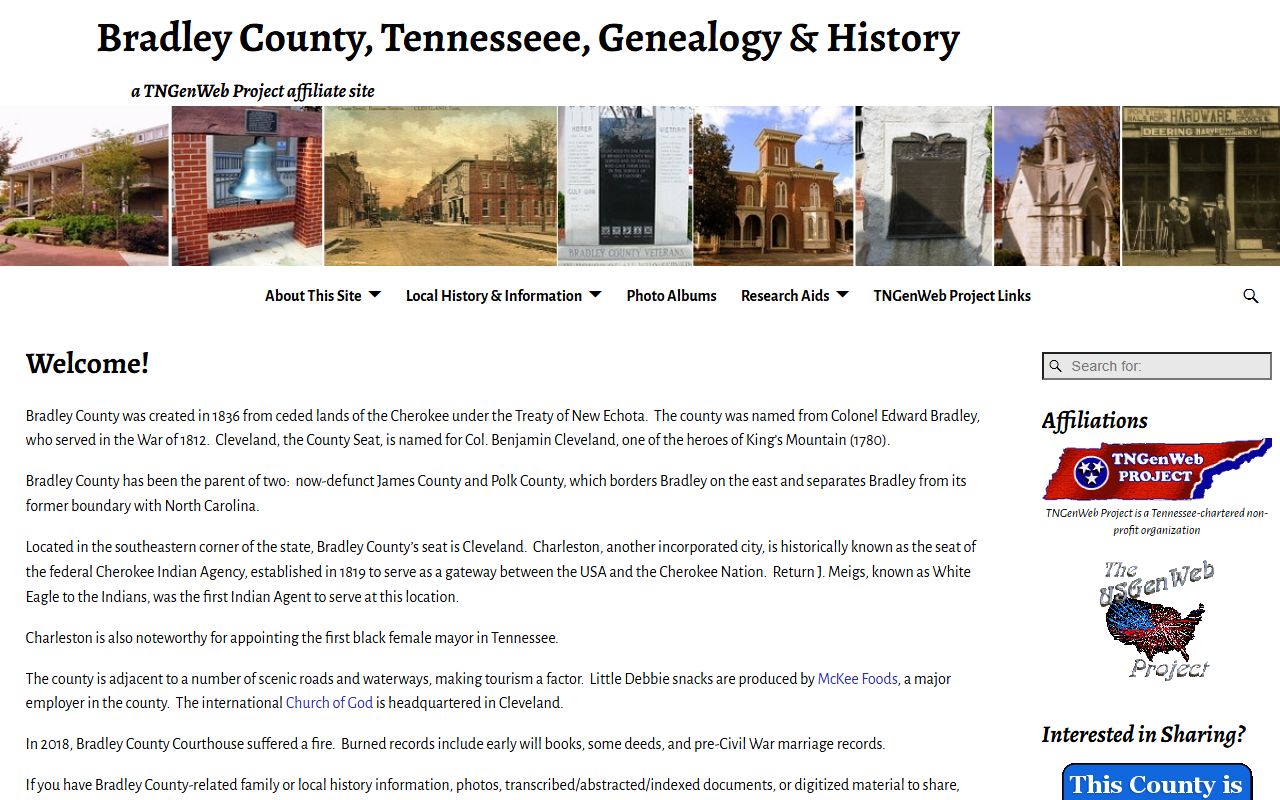
That county image is a practical second step because county transcriptions often confirm the same family that appears in a Cleveland notice.
The Bradley Vital Records Page at tngenweb.org/bradley/research-aids/public-records/vital-records/ is another good county fallback when the obituary points to a death record or an older family entry.
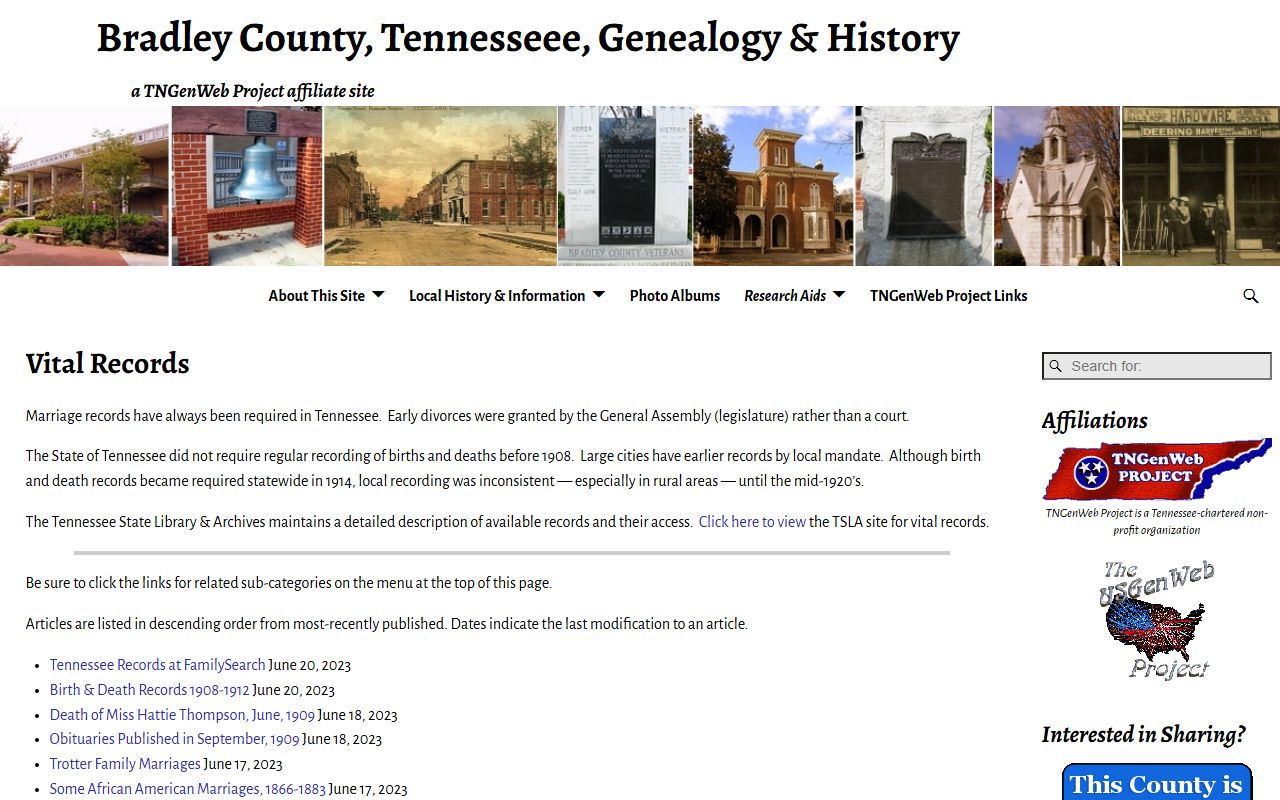
That image works because a short obituary often becomes clearer once the county death record is in view.
The TN Gen Society Bradley County page at tngs.org/resources/Site/Custom_HTML_Files/TCD/County/Bradley.html gives one more useful county path for Cleveland obituary research.
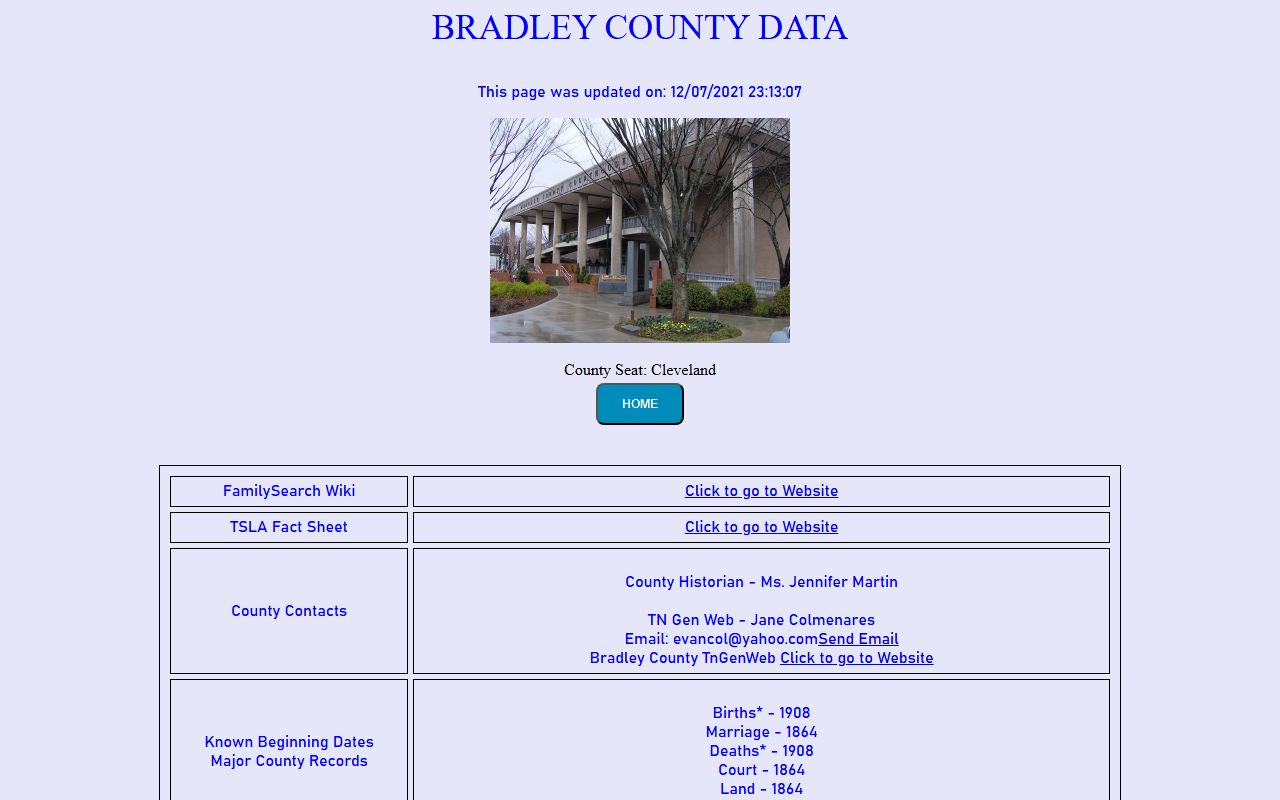
That image is useful because a county society page can confirm the same family branch that appears in a city notice.
How to Search Cleveland Obituary Records
Start with the History Branch when you want the obituary text or a family clue. It has microfilm, surname files, and a wide set of local history materials. If you already know the newspaper title, the older Cleveland Banner notices can be a fast route to the death or marriage reference. That is especially useful when the obituary is older than the index or when you need the exact wording from the newspaper. The library can also help you see which family branch belongs to which surname.
Then move to the county clerk or county archive. Bradley County marriage records begin in 1864, and the archives hold wills, probate files, court minutes, and other records that can support a death notice. The 2018 courthouse fire damaged early will books, some deeds, and antebellum marriage records, so the local library and newspaper files are especially important. If a notice mentions a family name, the surname files at the library can help separate one branch from another. That is often the fastest way to get a clean match.
Statewide backup still matters. Tennessee death records and TSLA indexes can confirm the date when the local notice is vague or incomplete. Under T.C.A. § 68-3-205 and T.C.A. § 68-3-206, recent records still follow request rules. That means a city obituary and a state certificate can be related, but they are not the same record. The certificate is the formal copy. The obituary is the clue.
Funeral home clues matter in Cleveland too. When the notice names a local service provider, the search usually gets narrower right away. That is one reason the city works so well for obituary research. The paper clue, the funeral home, and the county archive all point in the same direction.
That is the Cleveland pattern. Use the library for the notice, the county for the family record, and the state for the official copy.
Cleveland Obituary Records and Newspapers
Cleveland obituary records are especially newspaper friendly because the city has a long local run. The Cleveland Banner and Cleveland Daily Banner give you a direct path into older death and marriage notices, and the library's microfilm collection reaches from 1854 to 1970. If a notice is not indexed, the microfilm can still get you there. That is often the quickest way to turn a family memory into a clean citation. A few minutes with the right date range can save a lot of guessing.
Bradley County death records also fit the city search well. The research notes mention Tennessee death certificates from 1908 to 1954 at TN GenWeb and Bradley County death records in county research files. That means a Cleveland obituary search can often move from the paper to the certificate to the county record without leaving the same local research flow. The county historical society and genealogical society add another layer for family context. If you already have a burial place, that detail can guide the rest of the search.
If the obituary mentions a church, school, or Cherokee family line, the special collections at the history branch are especially helpful. The Mayfield Papers, James F. Corn Papers, and William R. Snell Papers can explain a name that looks ordinary in the notice but is tied to a much larger local story. That is the kind of detail city research can uncover when you have the right source nearby. It also helps when the family moved through more than one Bradley County community.
In Cleveland, the obituary trail often begins in the newspaper but ends in the history branch or county archive. That is the path that usually gets you to a solid answer.
Cleveland Vital Records and Access Rules
When a Cleveland obituary leads to a certified copy, the Bradley County Health Department or the state office becomes the next step. The county and state rules still control access. Under T.C.A. § 68-3-205 and Rule 1200-07-01-.11, death records are handled differently from newspaper notices. T.C.A. § 68-3-206 explains certified copies. That is why the obituary and the certificate should be treated as separate steps in the same search.
The Tennessee Department of Health vital records page and TSLA death indexes help when the city record is older or when the local note is missing a precise date. In Cleveland, that is usually a backup step rather than the main one. The main route is the library, the county clerk, and the newspaper microfilm. If the family is recent, the county health office is the place to ask for the official certificate after the obituary gives you the date. That keeps the search practical and local.
The city and county records fit together well enough that a careful search usually stays close to home. That is one of the reasons Cleveland is such a strong obituary city in East Tennessee.
Bradley County Obituary Records
Cleveland belongs to Bradley County, so the county obituary page is the natural next step after the city search. Use the county page when you need the broader record set, the county offices, or the state and county death index links in one place. That is especially useful when a local notice points to a family that also lived in Charleston, Ocoee, or another Bradley County community.
Nearby Tennessee Cities
Residents of nearby Tennessee cities often compare notes with Cleveland when a family moved or used another paper. Pick a city below to keep the search moving.