
Search Tennessee Obituary Records
Tennessee obituary records are easiest to find when you combine statewide archives with county and city sources. A Tennessee obituary search may start with a newspaper notice, a library index, a cemetery record, or a state death index, then move to county archives or the Tennessee Office of Vital Records when you need stronger proof. The state has useful public tools for older obituary work, especially through the Tennessee State Library and Archives, while recent death certificates follow tighter access rules. Use this page to start the search, then move into the county and city pages for local obituary details.
Tennessee Obituary Quick Facts
Tennessee Obituary Sources
Tennessee obituary records do not live in one office. The main statewide source for historical obituary work is the Tennessee State Library and Archives vital records guide. TSLA explains when death records began, where the gaps are, and what kinds of indexes or city records are open to the public. Tennessee did not require death records until 1908, the law expired at the end of 1912, 1913 is a dead year for statewide death records, and a stronger death-certificate law took effect in 1914. Those timeline changes matter when an obituary search turns up nothing in the first index you try.
Tennessee obituary work also depends on city and county variation. Nashville death notices begin earlier than the statewide system, Memphis has unusually strong register indexes, Knoxville and Chattanooga have early city records, and many counties rely on local libraries or archives to bridge courthouse loss. A short obituary notice may point you toward a spouse, church, burial place, or undertaker. That detail can then be matched against a county archive file, a cemetery list, or a Tennessee death index. The best approach is to treat an obituary as the entry point, not the full answer.
Start with the broadest state tools, then narrow by place. If you already know the county or city, move into that local page on this site for library names, archives, and county-specific record notes. If you only know a surname and a rough date, start with the statewide obituary and death resources first.
Start with the statewide guide at TSLA Vital Records Guide. It explains how Tennessee death records and related obituary clues are split across years, agencies, and collections.
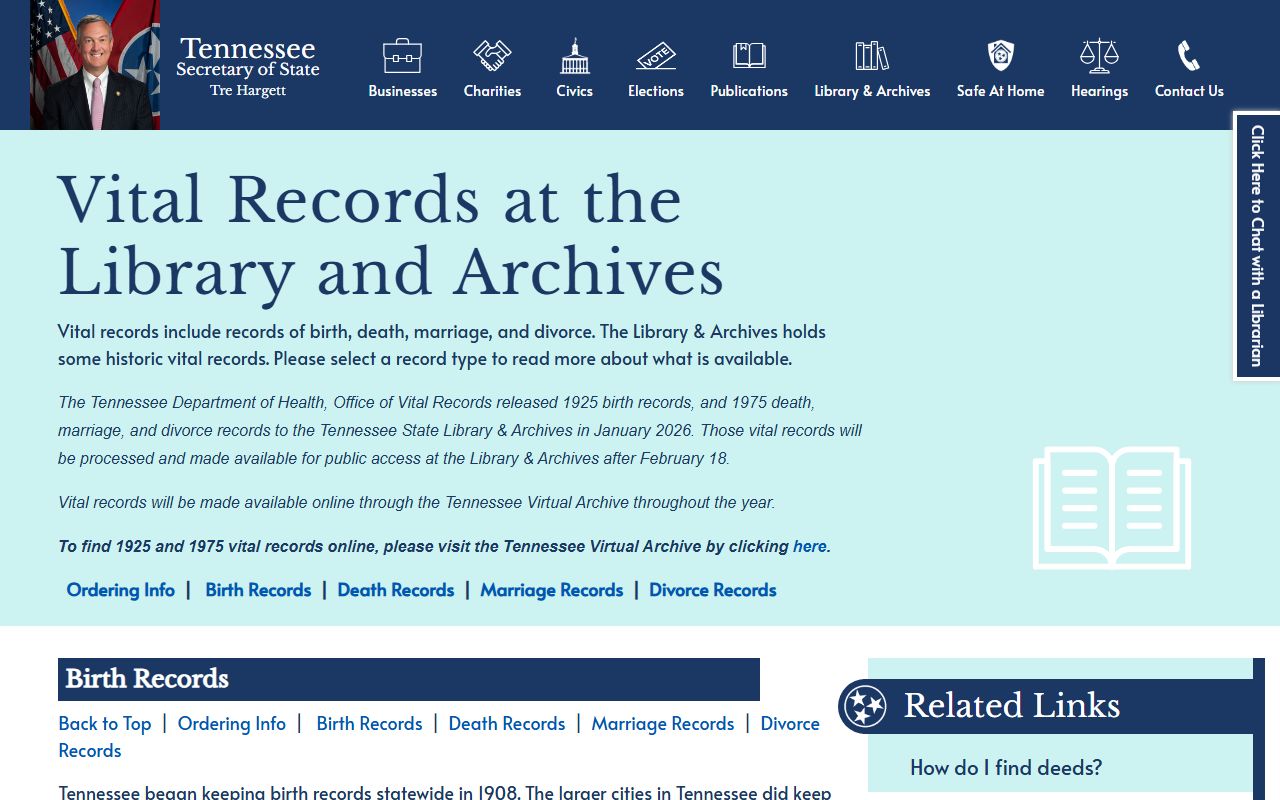
That overview is one of the fastest ways to decide whether your Tennessee obituary search belongs in a city file, a county repository, or a statewide death index.
The broader search portal at TSLA Genealogy Index Search lets you move across obituary, death, and genealogy databases from one screen instead of checking each collection by hand.
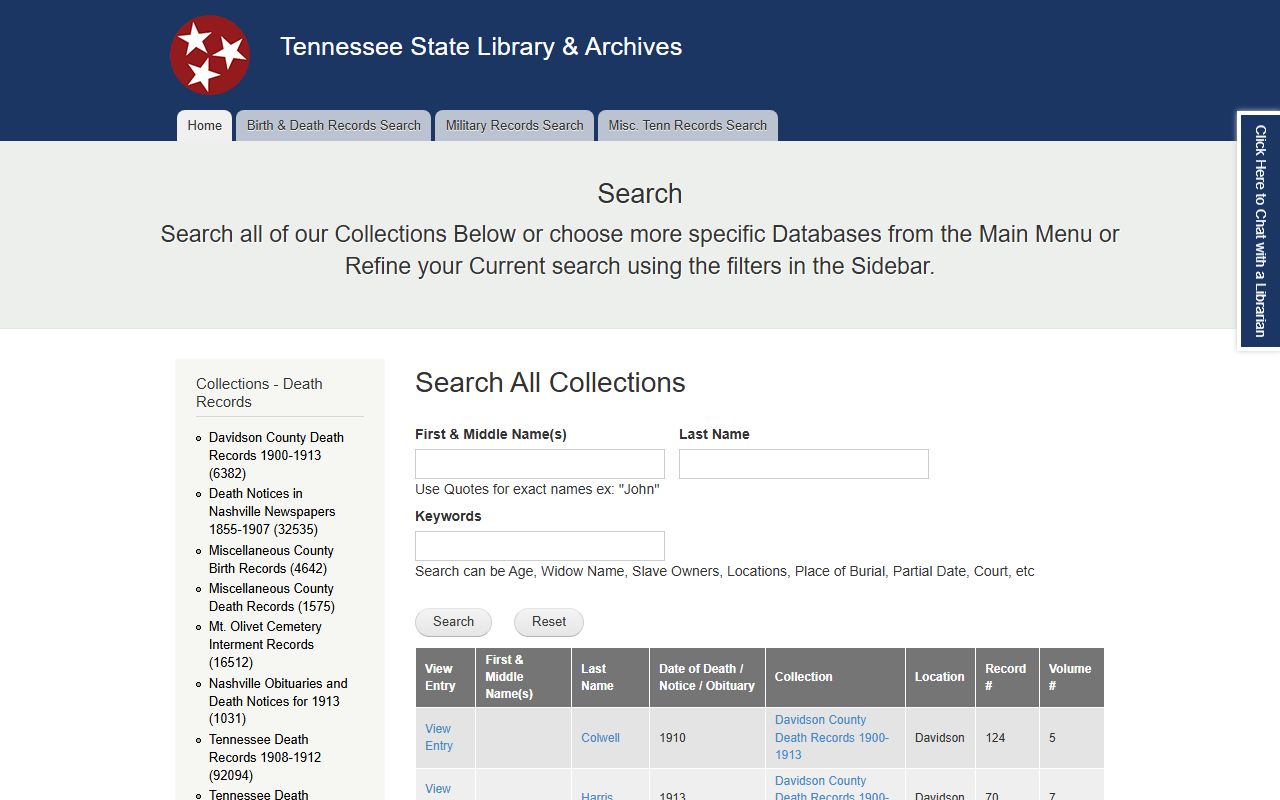
That is useful when the same Tennessee obituary trail touches death notices, Nashville records, and statewide indexes in one session.
Search Tennessee Obituary Records Online
The strongest free statewide obituary search tool in Tennessee is the TSLA death-notices database for Nashville newspapers. The database at Death Notices in Nashville Newspapers 1855-1907 holds more than 32,000 notices from five Nashville newspapers. It often gives a name, age, race, and cause of death. That is not the same as a full obituary, but it is often enough to anchor a Tennessee obituary search before you turn to local papers or cemetery records.
For statewide death certificates, use the Tennessee indexes for 1908-1912 and 1914-1933. The earlier index tracks nearly 98,000 deaths and gives the name of the deceased, county, year, and certificate number. The later statewide index gives the county of death and volume or certificate references, with the format changing in 1926. When you search these Tennessee obituary-related indexes, try alternate surname spellings and do not assume the first spelling is correct. The research guidance specifically notes common shifts such as Hale, Hayle, or Hail, and married women may appear under a husband's name.
Tennessee residents can also use the Tennessee Electronic Library for wider genealogy access, and local libraries often point researchers there when a newspaper obituary is not easy to reach. The state path is especially strong for older deaths, while local obituary records remain stronger for rich biographical detail.
- Search the exact full name first
- Add a county or city if results are broad
- Try alternate surname spellings
- Check both obituary notices and death indexes
- Use the certificate number to request supporting records
The Nashville newspaper death-notice database at TSLA Death Notices is one of the most useful Tennessee obituary entry points for the pre-statewide period.
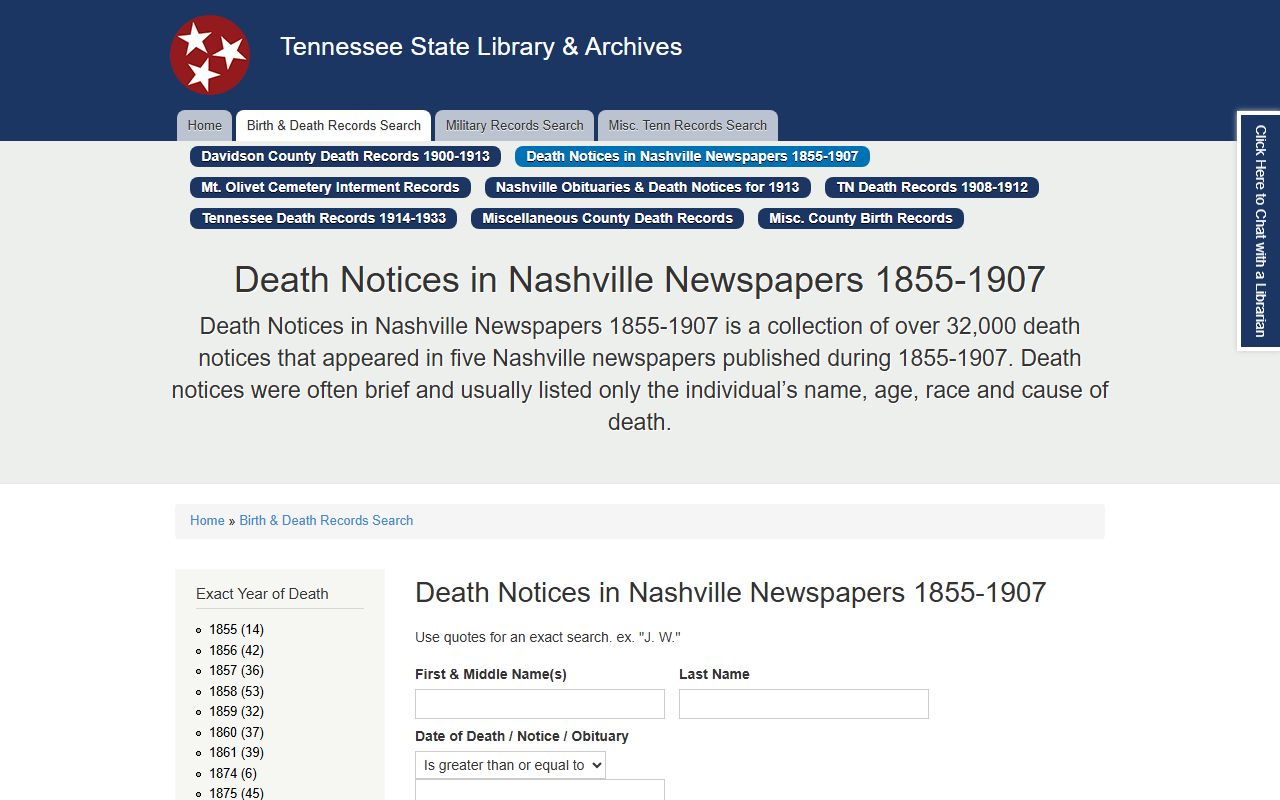
It is especially valuable when you have a Davidson County lead, a Nashville surname, or a burial clue but no firm death certificate date.
The statewide index years can then be checked through the TSLA death-records pages and related search tools.
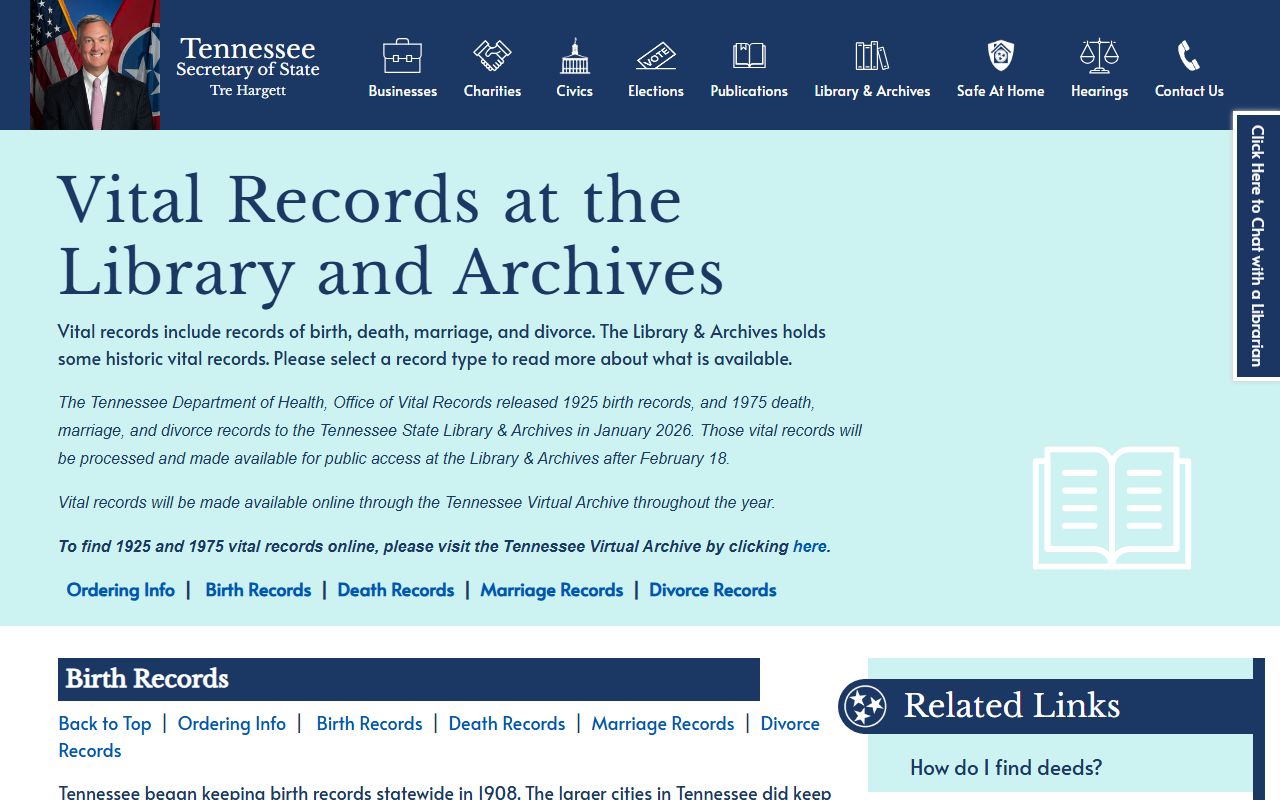
Those Tennessee death indexes help turn an obituary clue into a county, year, and certificate reference that can be used in the next step.
Tennessee Obituary Records and Death Certificates
A Tennessee obituary is usually public because it comes from a newspaper, funeral home, cemetery, or local history source. A Tennessee death certificate is different. The Tennessee Office of Vital Records maintains original certificates for births, deaths, marriages, and divorces, then transfers older sets to TSLA after the retention period. The main office details are outlined at the Tennessee Department of Health vital records page and the help center at vitalrecords.tn.gov.
The office location is the first floor of the Andrew Johnson Tower at 710 James Robertson Parkway in Nashville, with the entrance on the Rosa Parks Boulevard side. Tennessee uses a $15 fee for certified death certificates, and the ordering help page explains in-person, mail, and online steps. For obituary research, the certificate often confirms the date, county, and burial facts that tie back to a Tennessee obituary notice. It is the support document, not the obituary itself.
Because Tennessee obituary research often mixes public and restricted sources, it helps to know which tool you are trying to reach. Use obituary databases, public library files, county archives, and cemetery sources when you want public narrative detail. Use the vital-records office when you need the state document that confirms the death behind the obituary.
The main Tennessee help center for certificate access is the state office at Vital Records Help Center. It is the right place when your obituary search needs an official state record.
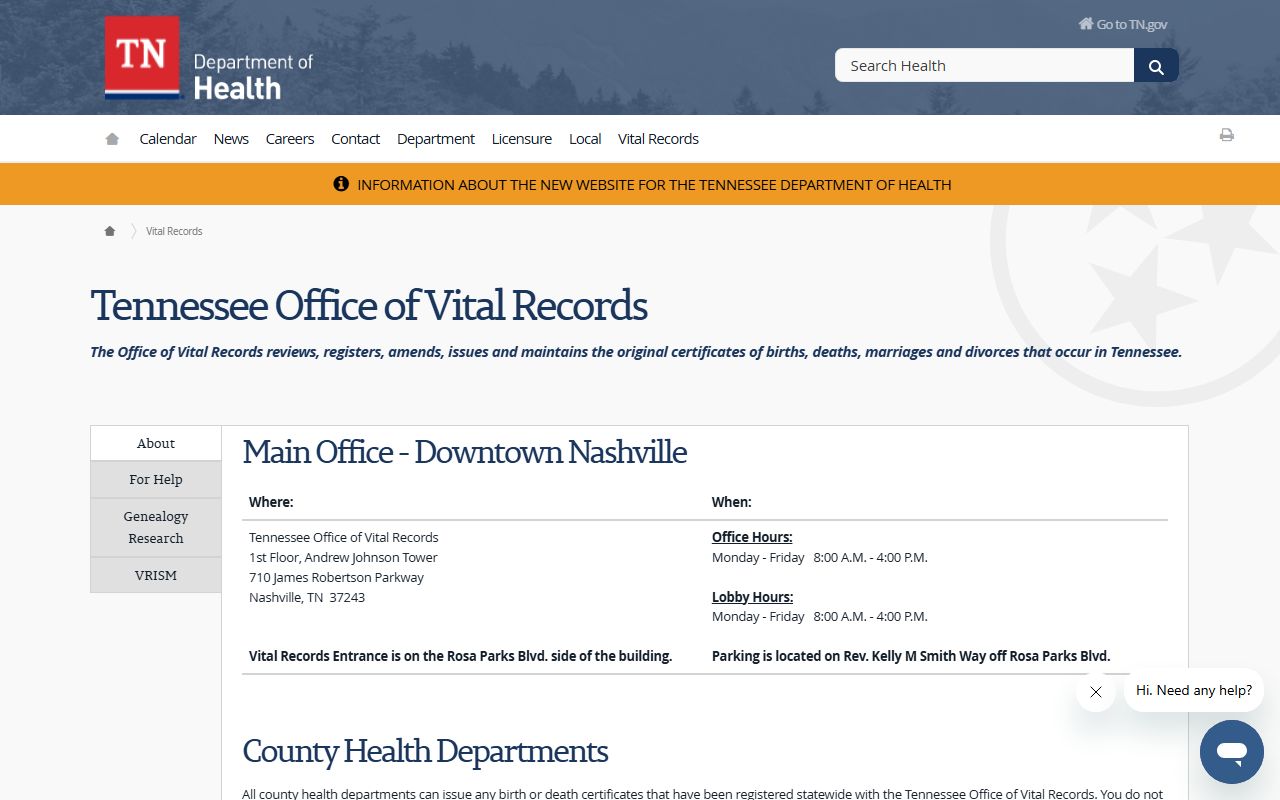
The office maintains the certificates, reviews amendments, and handles current requests, while older Tennessee obituary-adjacent records shift into TSLA collections over time.
The ordering steps are described at Tennessee Vital Records Ordering, including mail requirements, in-person orders, and official vendor use.
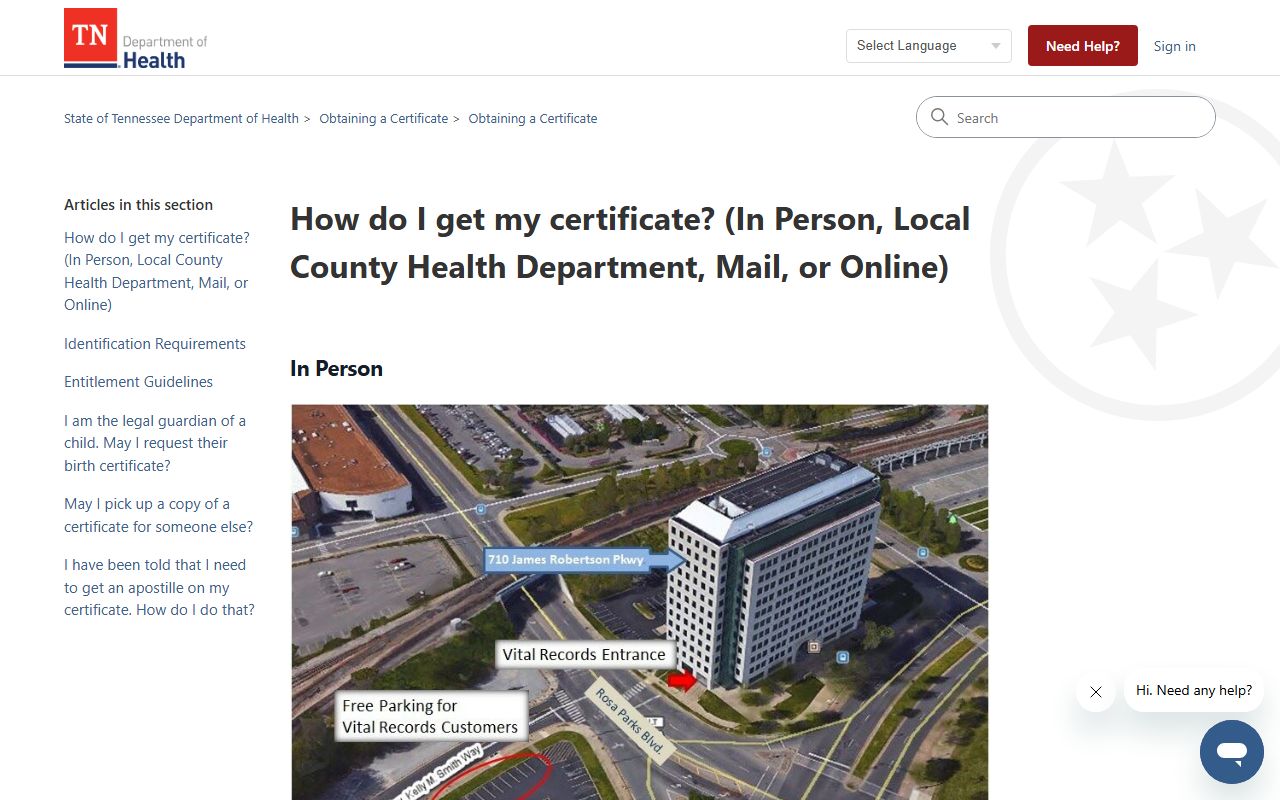
That ordering page matters when an obituary clue is strong enough that you are ready to request the supporting death certificate.
Tennessee Obituary Access Rules
Tennessee law treats certificates more narrowly than obituary notices. Under T.C.A. 68-3-205, death, marriage, and divorce records are restricted for 50 years, while birth records are restricted for 100 years. Under T.C.A. 68-3-206, certified copies are generally limited to the person named on the record, close family, guardians, or people who can show a personal or property right. That does not shut down Tennessee obituary work, but it does explain why an obituary notice can be public while the matching certificate is not.
The Tennessee entitlement guidance page lays out who can request a death certificate and what extra proof may be needed when the cause of death is involved. Funeral directors, beneficiaries, executors, legal representatives, and close family may all have different access positions depending on the kind of certificate requested. For many researchers, that means the obituary, cemetery entry, and public index are the practical first step while a qualified relative or representative handles the certificate request.
Death registration rules also matter. Tennessee law requires death certificates to be filed within five days after death, and the medical certification is generally due within 48 hours. That helps explain why a Tennessee death certificate can exist even when a newspaper obituary appeared later or not at all. The record systems overlap, but they are not the same source.
Note: A Tennessee obituary can often be searched by the public even when the matching death certificate is still inside the 50-year restricted window.
The state entitlement page at Tennessee Entitlement Guidelines spells out who can request different kinds of vital records.
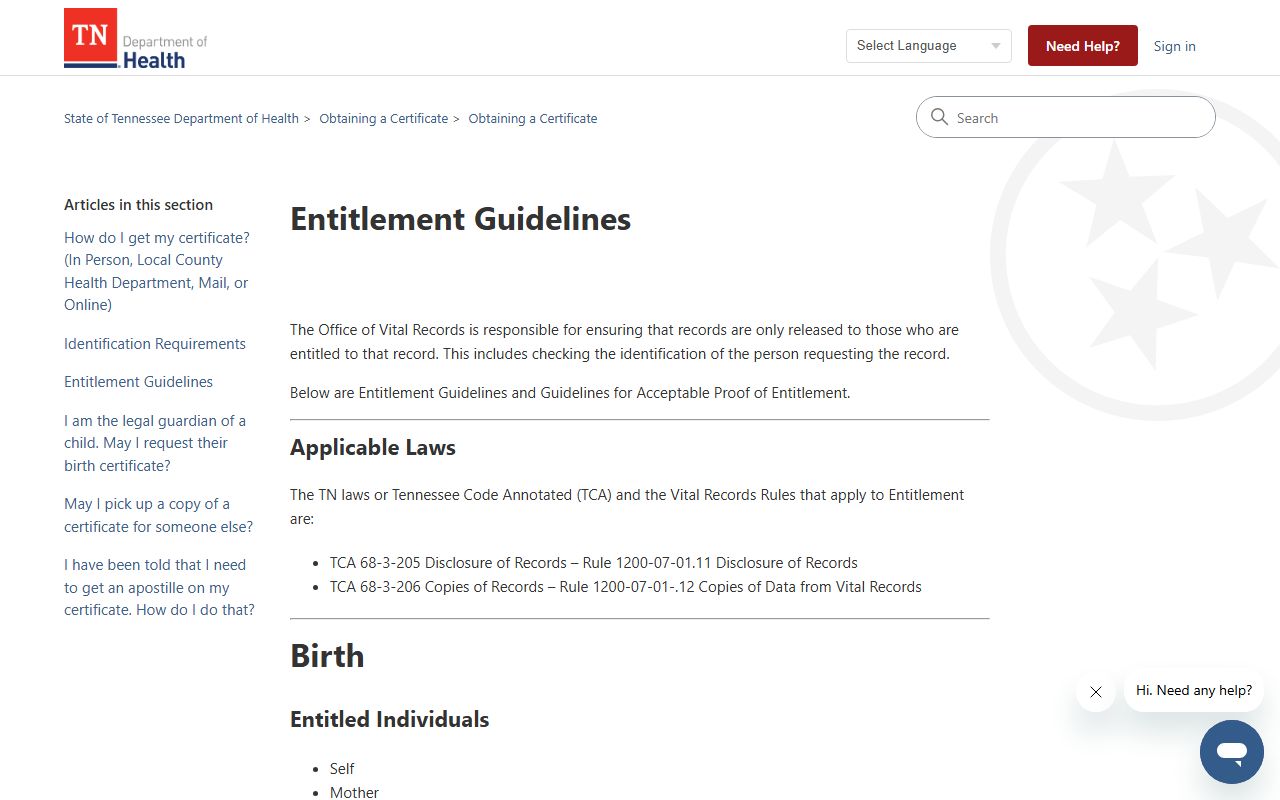
It is worth checking before you assume a Tennessee death record request will be treated the same way as an obituary lookup.
Tennessee Obituary Archives
Older Tennessee obituary records are getting easier to reach because of archive releases and digitization. TSLA noted that 1975 death records and other newly opened material were transferred in January 2026, with public availability beginning after February 18, 2026. The Tennessee Virtual Archive at TeVA is part of that long-term access path. It is a digital repository with photographs, documents, maps, postcards, and released vital-record material. When a county page on this site sends you toward statewide records, TeVA is often the place to continue once the public release window has passed.
There is also a strong Memphis-area path. The Shelby County Register of Deeds maintains a statewide death-records index covering 1949-2014 and Shelby County death records from 1848-1967 with downloadable images. That makes it one of the strongest Tennessee obituary support tools for later decades. Many obituary searches in Tennessee eventually pass through Shelby's register system even when the death happened outside Memphis, because the statewide index helps confirm the county and date before a local newspaper search begins.
The Tennessee Virtual Archive at TeVA is the state’s open digital repository for records and historical material that has moved into public access.
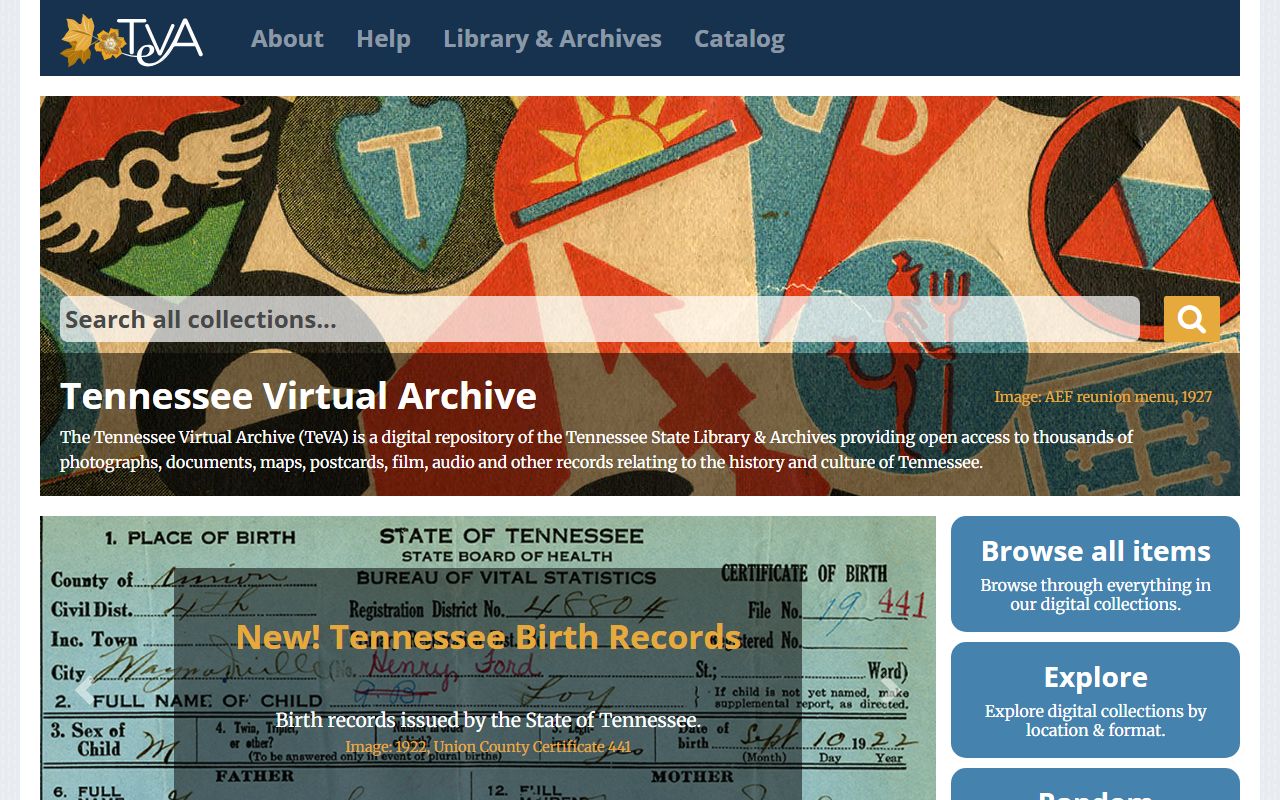
It is a useful Tennessee obituary companion when a death record release or scanned archive item fills a gap that county sources cannot.
The Memphis-based statewide death index at Shelby County Register of Deeds gives another strong public search option.
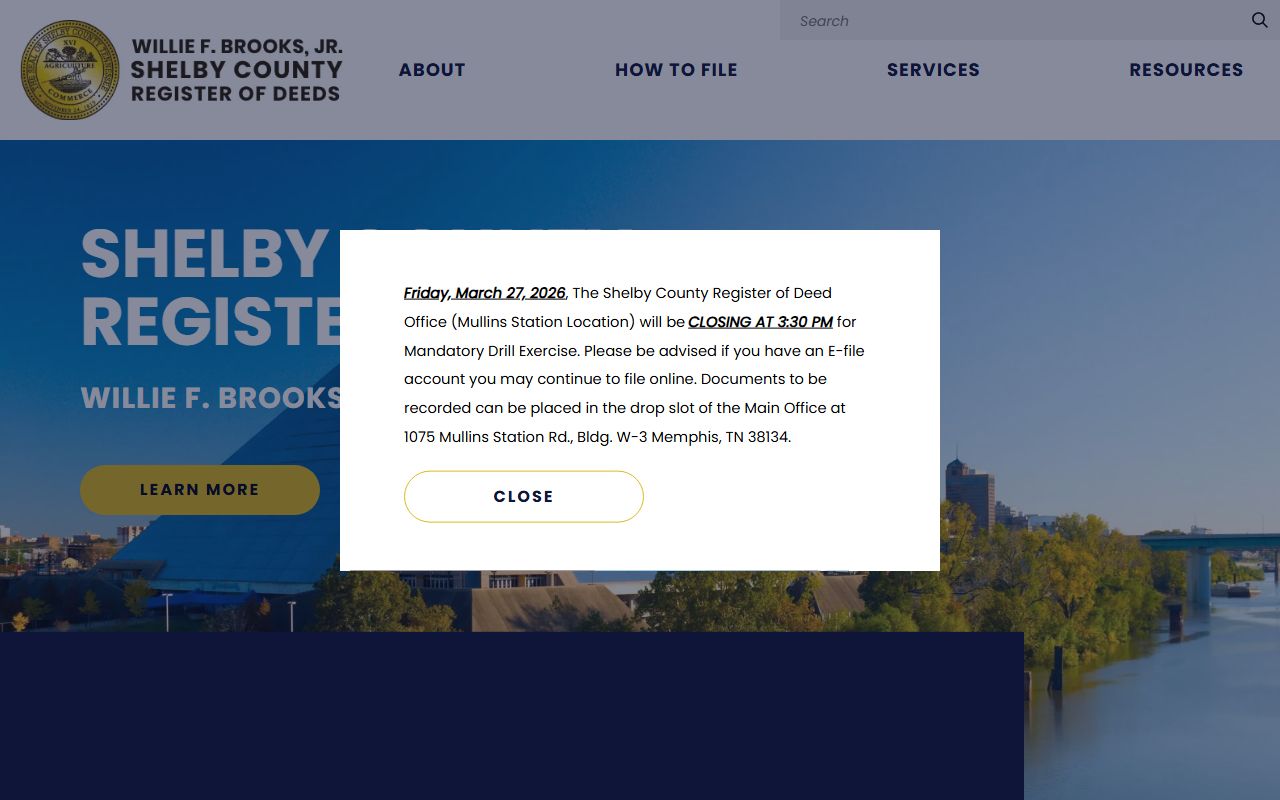
That system is especially helpful when you need to confirm a later Tennessee death before you invest time in a county obituary search or newspaper request.
Browse Tennessee Obituary Pages
Use the county pages when you know the jurisdiction. Use the city pages when the obituary trail is centered on a major Tennessee city and its library, newspaper, or cemetery holdings. Both paths still lead back to statewide Tennessee obituary and death-record tools when you need broader confirmation.
Tennessee Obituary Pages by City
Major city obituary pages highlight city libraries, local papers, county offices, and cemetery resources for the urban areas most people search first.