
Find Memphis Obituary Records
Memphis obituary records pull from county death indexes, local library collections, and state vital records tools. That mix is useful because one source may show a name only, while another adds the date, place, and family tie you need. In Memphis, the best searches often begin with a surname and a rough decade, then move into the Shelby County index or the public library. If you have a funeral home, church, or cemetery clue, use it early. It can cut the search time fast.
Memphis Obituary Records in Shelby County
The Shelby County Register of Deeds keeps a useful death records index at register.shelby.tn.us. That site includes the statewide Tennessee death records index from 1949 to 2014, plus Shelby County death records from 1848 to 1967 with images. For Memphis obituary research, that is a strong lead because you can move from a name in the index to a scanned record in the same system. The site also includes marriage and divorce indexes, which can help identify the right person when several relatives share the same surname.
Memphis families often need both the death index and the actual certificate path. The Shelby County Health Department Office of Vital Records handles certified copies. It is at 814 Jefferson Avenue in Room 100, and the fee is $15 per certified copy. The office also accepts VitalChek orders, cash, and most credit or debit cards, though American Express is not accepted. That detail matters when you are ready to turn an obituary clue into an official record request.
The city is large, but the path is simple. Start with the death index, check the date, then use the county office for the certificate or the library for the newspaper. That sequence keeps the search tied to real sources instead of repeating the same broad query. Note: Memphis obituary work usually moves faster when the death date is confirmed first.
The Shelby County system is especially useful for families who lived in Memphis but died in a nearby hospital or care home. The county record still gives you a stable place to start. Once you know the date, the obituary search can stretch across newspapers and family folders without guessing at the year.

The image above points to the Shelby County vital records path, which is often the cleanest way to confirm a Memphis death date before you pull the full obituary trail.
Memphis Obituary Records at the Library
The Memphis Public Library genealogy collection is one of the best city sources for obituary research. It holds books, indexes, guides, periodicals, family folders, manuscripts, maps, biographies, histories, and city directories. That gives you more than one way to chase a death notice. If a newspaper clipping is thin, the directory or family folder can show where the person lived and which branch of the family to follow next.
Commercial Appeal microfilm is available at the Main Library, which gives you a direct newspaper path for local death notices. In a city the size of Memphis, an obituary may be indexed in one place, printed in another, and preserved in a family folder somewhere else. The library keeps those doors open. It is also where you are most likely to find supporting notes that do not appear in the index, like burial location or surviving relatives.
The Shelby County death records index and the library work well together. The index gives you dates. The library gives you context. Put them together and you get a better chance of finding the right newspaper issue without wasting a lot of time. If the person used a common surname, add the spouse, neighborhood, or cemetery to the search.
Memphis obituary research is also helped by the city's large manuscript and map collections. Those materials can show a family move, an old church name, or a street that later changed. That kind of detail makes a short death notice easier to place in the right family branch.

The library image above fits the genealogy room, where obituary searches often turn from a rough lead into a usable newspaper citation.
How to Search Memphis Obituary Records
Begin with the death index if you can. Once you have the death date, the newspaper search gets much sharper. If the Shelby County index gives you a late 20th century date, the Memphis Public Library can often bridge the gap to the full obituary. If the person is older, the county image record may be all you need to connect a family name to a burial place or informant.
Memphis obituary records can include more than one version of the same name. A person may appear in a death index under a legal name and in a newspaper under a familiar one. A married woman may show up under her spouse's name in one source and under her own in another. Search both ways. That is not extra work. It is the right kind of work for a city with deep records.
If you already know a funeral home or cemetery, use it. Funeral homes are often named in a notice, and cemeteries can appear in both obituary text and official death records. The Shelby County and Memphis library sources are good at confirming those links. That gives you a straight path from one record to the next instead of a pile of loose hints.
For the shortest possible list of search details, keep these on hand:
- Full name and any maiden name
- Approximate death year or decade
- Possible spouse or parent name
- Likely church, cemetery, or funeral home
That list works because Memphis has broad record coverage, but the records still depend on the right clue. One good detail can cut through a lot of noise.
The same genealogy source can also support local family folders and newspaper files when the obituary text is hard to find.
Memphis Vital Records and Access Rules
The Shelby County Health Department Office of Vital Records is the place to request certified death copies for modern Memphis cases. It covers deaths within the past 50 years and charges $15 per certified copy. You can order through VitalChek or request the record in person at 814 Jefferson Avenue. This is the office to use when the obituary gives you the date but you still need the official proof.
State access rules still matter here. Under T.C.A. § 68-3-205, death and marriage records stay restricted for 50 years before they are opened more broadly. T.C.A. § 68-3-206 explains who can get copies and when. That makes recent Memphis searches different from older ones. A newspaper notice may be public, but a certified certificate can still depend on eligibility rules.
For older research, the Tennessee Virtual Archive and the TSLA Genealogy Index Search are useful state backups. They can help when a county search gives you a date but not the full context. TSLA also ties into the Tennessee death records indexes, which can help confirm the exact year before you look in Memphis newspapers.
The Memphis route is simple once you know the source split. The county register handles the searchable index. The health department handles the certificate. The library handles the newspaper and family context. Put them together and you get a solid city obituary search path.
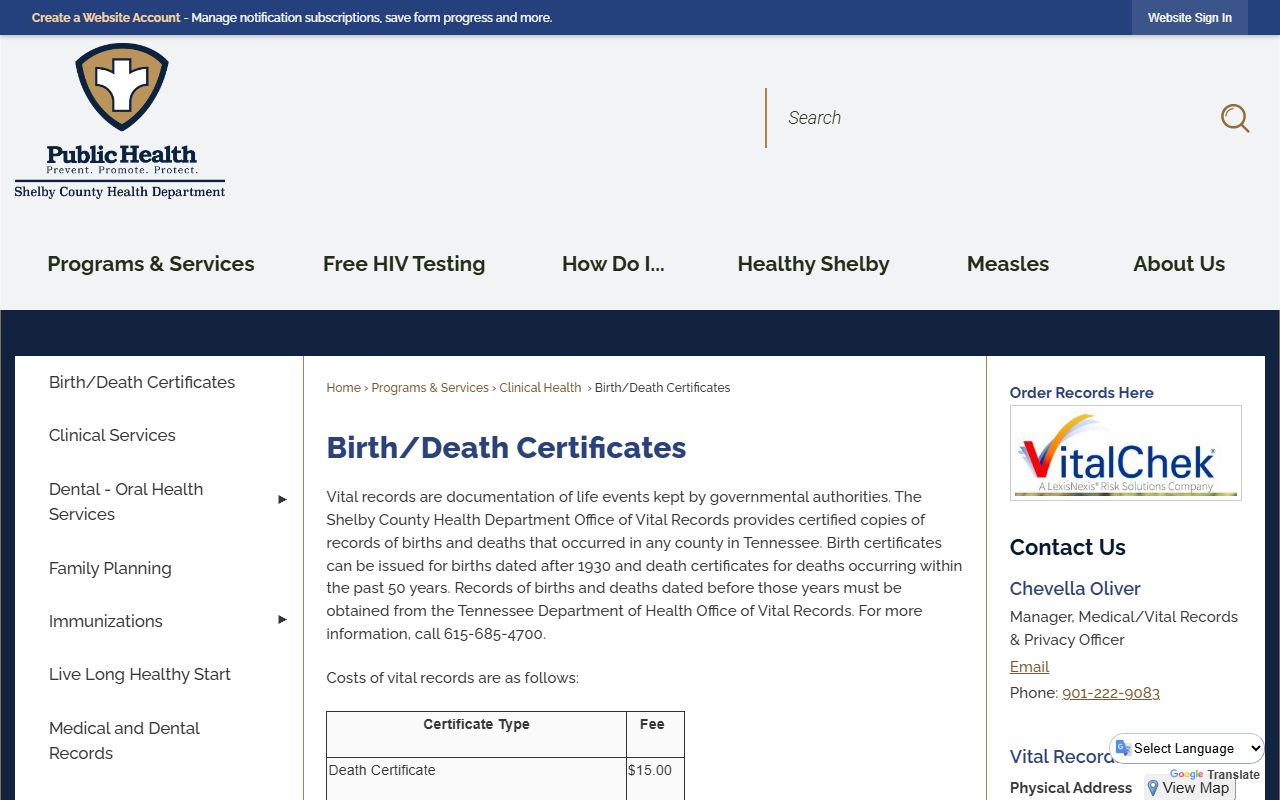
The vital records image above reinforces the county certificate path for Memphis deaths and the copy request that follows it.
Public Copies and Memphis Obituary Records
Memphis obituary records work best when you treat public access as a chain instead of a single step. The death index is public. The library index is public. The certificate request may have rules. The full obituary may sit on microfilm, in a family folder, or inside a newspaper database. Each part adds something different, and no single source gives the whole story.
The Shelby County Vital Records page and the Memphis library site both help you sort out the next move. If you need an official record, go county. If you need the notice text or nearby family clues, go library. If you need a state reference point, use TSLA or TeVA. That mix keeps the search grounded in real Memphis sources.
Memphis is a city where death notices can be rich, but they are rarely the only record worth checking. A cemetery listing can confirm a burial place. A family folder can name siblings. A newspaper notice can connect the whole line. The most useful searches often use all three. Note: if one source feels thin, the next one is usually closer than it looks.
If you need to keep moving after this page, the county and city browse pages can take you to more Tennessee obituary sources without changing the search pattern.
Nearby Tennessee Cities
These nearby city pages can help you compare obituary sources across West Tennessee.