
Search Nashville Obituary Records
Nashville obituary records help you track death notices, burial facts, and family names across city files, county archives, and newspaper indexes. The strongest searches usually start with a name, an age, and a rough date range. In Nashville, the Metro Archives, the public library, and the Metro Health office each hold different pieces of the same trail. That makes the city a strong place to look when you need a quick clue or a full paper copy.
Nashville Obituary Records at Metro Archives
The Metropolitan Archives of Nashville and Davidson County is the best first stop for deep local research. It holds more than 5 million records that reach back to the 1780s. That range matters when you are tracing an obituary that names old family lines, burial sites, or a spouse whose name only appears in a notice. The archive also keeps online indexes for city death records from 1874 to 1913 and Davidson County death records from 1900 to 1912. Those indexes can point you to the right record fast.
The archive is at 3801 Green Hills Village Drive, and staff can help you work through older death and burial material. Nashville death records often include more than a notice. They may show the date of death, the place of burial, the undertaker, and the informant. That kind of detail can fill a gap that a short obituary leaves open. Nashville also has marriage and cemetery finding aids, so one search can lead to several records that fit the same person.
For city research, this office is useful because it bridges the gap between a newspaper name and a hard record. If you already know a funeral home, church, or cemetery, use that clue here first. The archive also supports African American genealogy work through resources tied to the Nashville Globe and Mt. Ararat Cemetery. Note: older city records often answer the question a clipped obituary only starts to ask.
The archive page at research your genealogy also points to online finding aids for deaths, marriages, wills, cemetery files, and military discharge records. That makes it easier to move from a death notice to the rest of the family story without leaving Nashville sources behind.
The Metro Archives page is also one of the cleanest ways to confirm whether a death record exists before you order or visit in person.
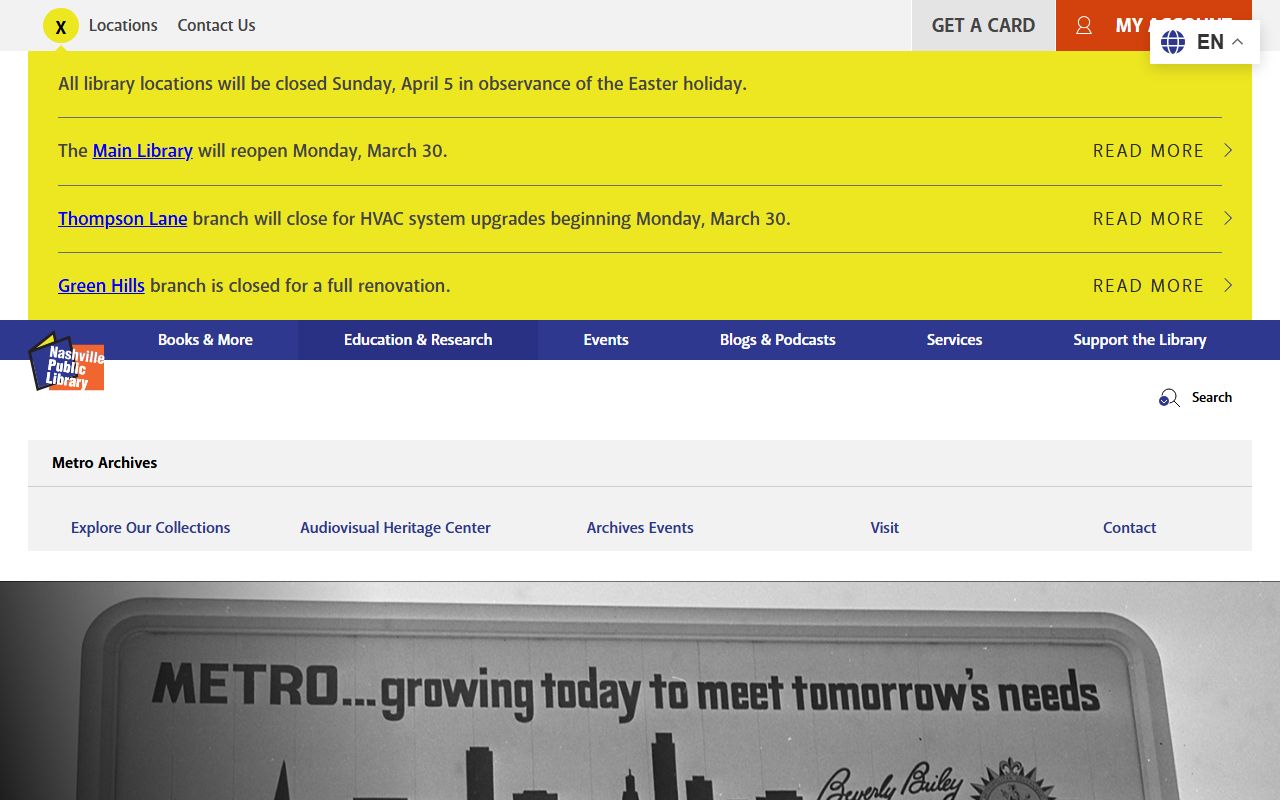
Use the Metro Archives image above as a cue that Nashville obituary research often starts with an index, then moves into the full file.
Nashville Obituary Indexes and Library Sources
The Nashville Public Library obituary page gives you one of the most practical entry points in the city. The Tennessean obituary index runs from 1964 to the present. Full text obituaries are available from 2006 forward with a Nashville Library card, while earlier entries can still be checked at the library or at TSLA. That makes the library useful for both recent notices and older family searches.
The special collections staff at the Nashville Public Library also keep city directories, family histories, and news clippings. Those holdings help when an obituary uses a nickname, a maiden name, or a street address instead of a full legal name. The obituary page says mail requests can take 4 to 6 weeks, and microfilm prints cost 25 cents per page. That is a good reminder that not every search ends online.
Another useful clue is the Tennessee State Library and Archives material for Nashville. TSLA keeps Nashville Globe obituaries from 1907 to 1918, plus death notices in Nashville newspapers from 1855 to 1907 through the death notices index. If the name you need never appears in a modern index, these older newspaper tools can still carry the search home. The TSLA index gives the newspaper name, date, and page reference, which is enough to track down the full text.
For a short search checklist, keep these items close:
- Full name and any maiden name
- Approximate year of death
- Church, funeral home, or cemetery clue
- Newspaper title if you already know it
- Family member names from a memorial notice
That list works well because Nashville records are spread across more than one office. A library index can tell you where to look next, while the archive or TSLA copy may show the full notice text or burial detail.
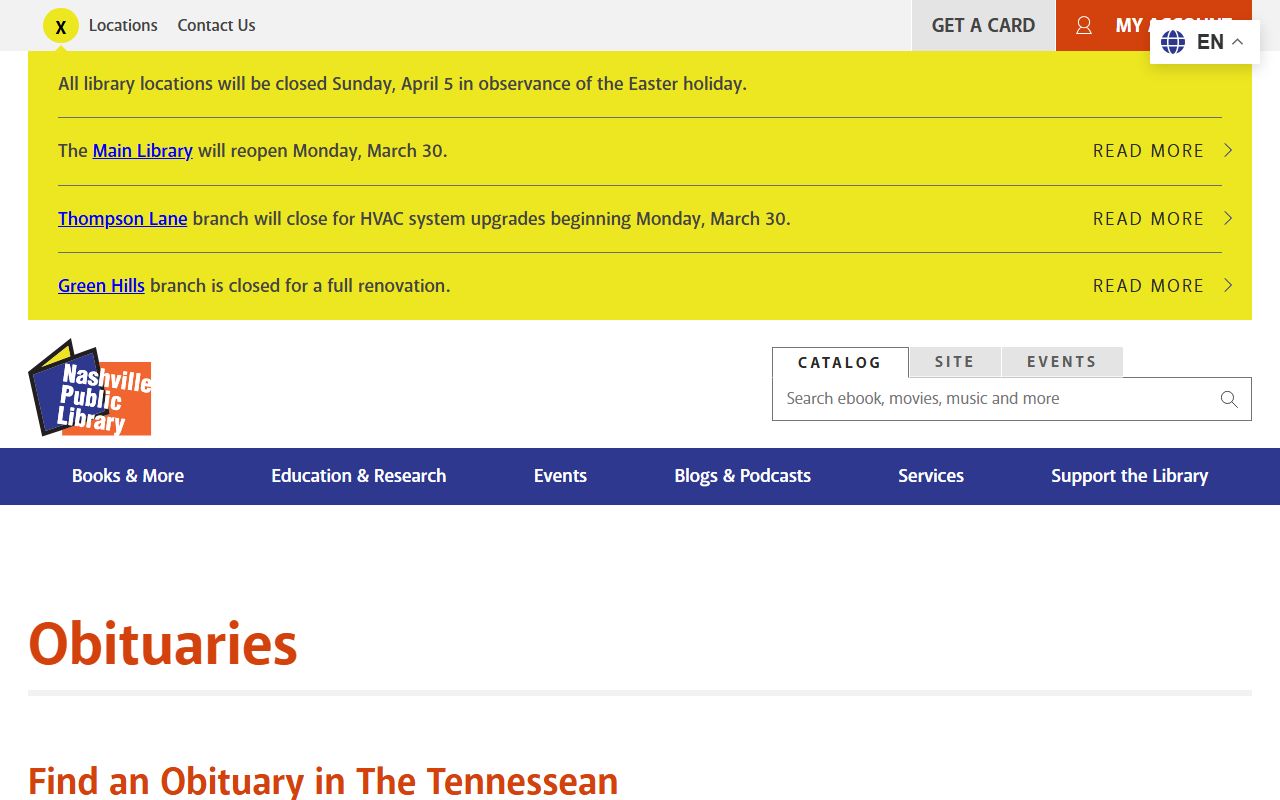
The library image above fits the city obituary index, which is often the quickest path from a surname to a usable newspaper citation.
How to Search Nashville Obituary Records
Start with the shortest route. A surname search in the obituary index often gives you the paper title, date, and page before you ever see the full article. From there, move to the Nashville room, the Metro Archives, or the Tennessee State Library and Archives if the notice is older or incomplete. This step-by-step path saves time and keeps you from guessing at the wrong year.
The search works best when you add a second clue. That might be a spouse name, a church, a burial ground, or a likely newspaper. Nashville notices often mention a funeral home or a cemetery, and those names can open a second record set. If a notice lists a neighborhood or a school, use that too. Small clues matter in city research.
TSLA and the Nashville library both support names that are hard to find in broad searches. A person may be listed under a nickname, a middle name, or a spouse's name. A woman may appear under her married name in one place and her maiden name in another. Because of that, it helps to search with more than one form of the name. Note: a narrow search can miss the one line that proves you have the right person.
When the obituary is not enough on its own, check city directories and cemetery finding aids. They can confirm address history, family links, and burial sites. If the notice mentions the family plot, use that name in the archive search. If it names a church, look for church records in the archive or in the local history room.
The Nashville obituary path is strongest when you move from index to record to context. That keeps the search tied to real local sources instead of forcing one database to do every job.
Nashville Vital Records and Access Rules
For certified copies, the Metro Public Health Department Vital Records office is the main city contact. It charges $15 per certified copy and accepts cash, money orders, cashier's checks, and credit or debit cards. Records cover births after 1924 and deaths after 1955. The office is at 311 23rd Avenue North, and VitalChek is available for online ordering. That makes the office useful when an obituary points you to a death certificate, not just a newspaper notice.
Under T.C.A. § 68-3-205 and Rule 1200-07-01-.11, access to vital records can stay limited for recent deaths, while older records move toward public availability. T.C.A. § 68-3-206 governs certified copies. That matters because obituary research often starts with a newspaper reference but ends with a request for the official certificate or death record.
Metro Health is also a good source when a family member needs proof for settlement work, burial questions, or a legal file. The certificate is shorter than a full death record, but it can still confirm names, dates, and the county of death. That is often enough to keep the search moving when the newspaper clipping is faded or incomplete.
The Tennessee Department of Health vital records page and the state help center explain the same office and its record rules in one place. The state office is also helpful when you need to compare a city death notice with the official vital record. If the obituary gives the story and the certificate gives the facts, you want both.
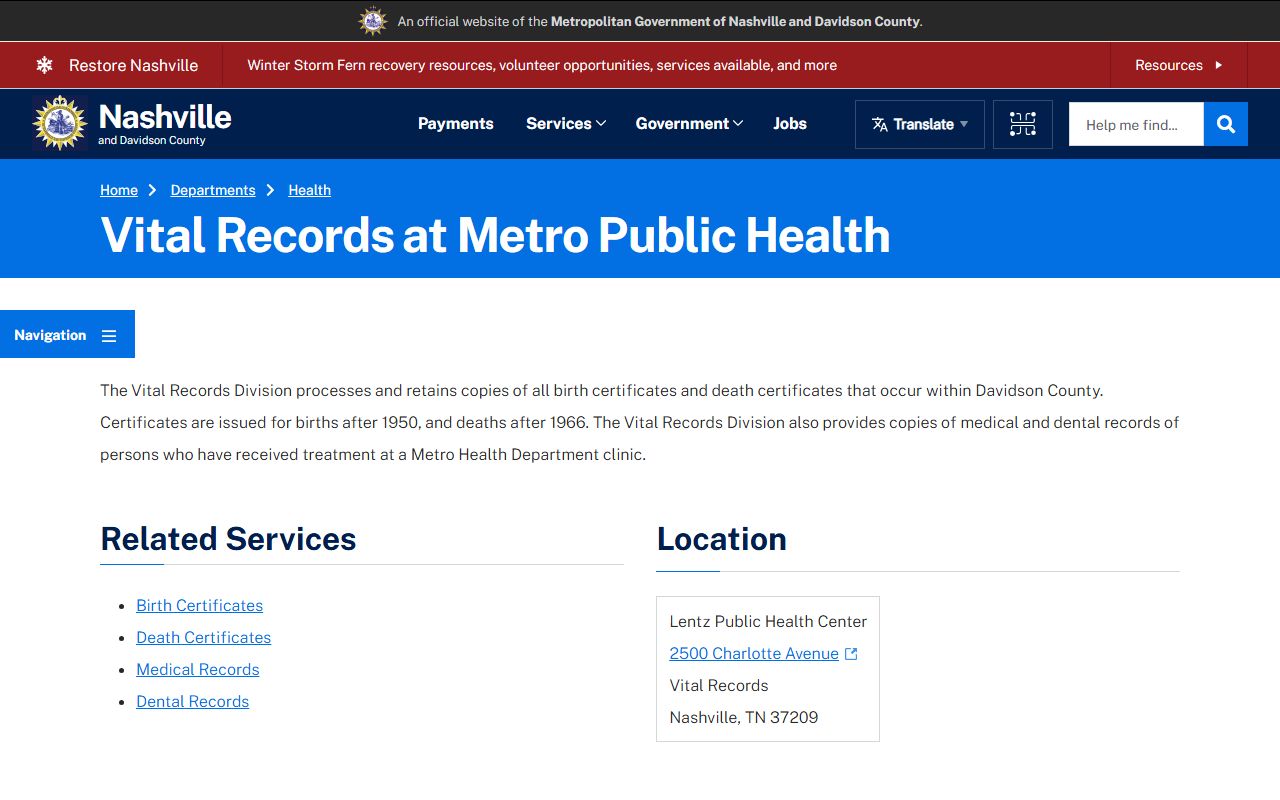
The vital records image above shows the city office you would use when a Nashville obituary points to a certified death record request.
Public Copies and Nashville Obituary Records
Nashville obituary research often turns on public access rules. Newspaper indexes, archive finding aids, and many city records are open for inspection, but the full file may still be split across offices. Some pieces are public. Some pieces need a request. A short index may tell you where the full notice sits, while a certificate request gives you a copy that can be used in later paperwork.
The Tennessee Virtual Archive at TeVA is another useful state source when you want a free digital path. It can help with older city history and records that were released to the public after transfer. TSLA's Genealogy Index Search also brings multiple collections into one place, which is handy when a surname appears in more than one database. That is common in Nashville, where one family might show up in death notices, cemetery files, and city directories all at once.
Obituary work is stronger when you compare sources. A newspaper notice may mention a burial site. A death record may add the cause of death or the informant. A city directory may pin down an address. Together, those records build a full picture. Alone, each one may look thin.
Note: For recent research, start with the index first, then move to the office that controls the full copy or certificate.
If you want to keep going, the city and county browse pages can help you jump to nearby Tennessee locations without leaving the same research flow.
Nearby Tennessee Cities
These nearby city pages can help you compare obituary sources across Middle Tennessee.