
Search Davidson County Obituary Records
Davidson County obituary records are tied to Nashville's long paper trail, and that gives searchers a real edge. You can use Metro Archives, the Nashville Public Library obituary index, county death records, and state death notices to follow a name across paper, film, and online files. Old notices may appear in a newspaper index first. Later ones may sit with a library clipping file or a vital-record request. If you know a date range, a neighborhood, or a funeral home, your search gets much faster.
Davidson County Obituary Records
Davidson County has one of the richest obituary trails in Tennessee. Nashville has been a large city for generations, so death notices, obits, cemetery references, and funeral home records are spread across several collections. That helps when one source is thin. A family line may show up in a newspaper, then reappear in a cemetery file, then show a death record or burial note in the Metro Archives.
The county seat is Nashville, and the Metro Archives sits at the center of local research. It holds genealogy finding aids for birth and death indexes, marriage records, wills, cemetery files, naturalization material, and military discharge records. Those tools do not replace an obituary, but they often point straight to one. They also help with names that change over time. A widow may be listed under a maiden name in one source and under a spouse's name in another.
Use the archives page at library.nashville.gov/metro-archives when you want a local starting point, and use the genealogy portal when you need searchable guides. Those pages fit well with Davidson County because the city and county record systems overlap so much.
The Metro Archives page at library.nashville.gov/metro-archives is a strong first stop for Davidson County research.
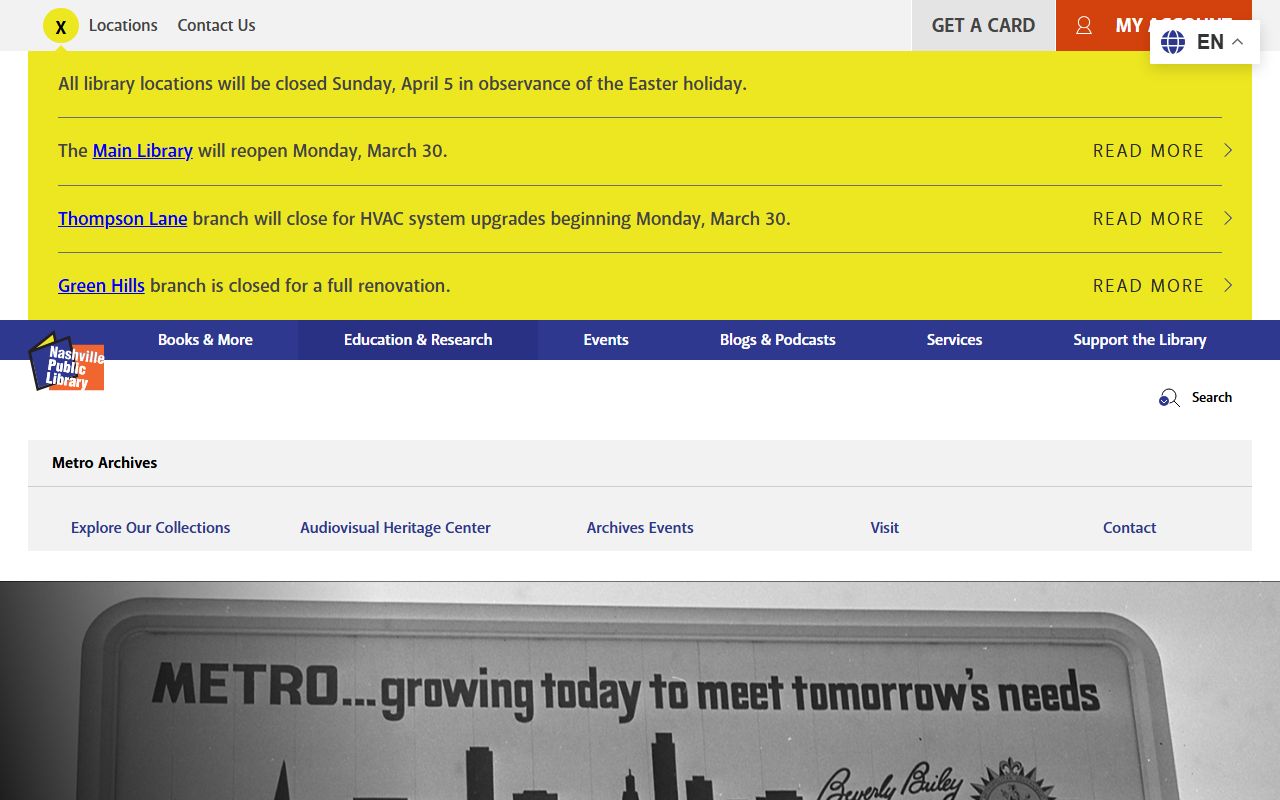
That archive portal helps trace names, dates, and burial clues across city and county files.
Search Davidson County Obituary Records
A good Davidson County search starts with small facts. Keep the surname, the likely decade, and any church, hospital, or funeral home name close at hand. Nashville papers often shorten names, and index entries may not match the form used later in a family file. If you have a spouse name, parent name, or cemetery name, use it. That extra clue can pull a notice into view when a plain name search misses it.
The Nashville Public Library obituary page at library.nashville.gov/research/obituaries is useful for later deaths. The library's obituary index covers Nashville obituaries from 1964 forward, and the full text index begins in 2006 for cardholders. That mix matters. Some families show up in both places, while others appear only in the older clipping style.
For a fast search, use the county list below as a loose plan, not a rigid rule.
- Search the surname in Metro Archives first.
- Check the Nashville obituary index for later years.
- Look for cemetery and burial notes next.
- Use a funeral home name if you know it.
If you need a broader state search, Tennessee's archive tools can still help. The statewide genealogy index at sos.tn.gov/products/tsla/genealogy-index-search gathers many TSLA databases in one place. It is a good way to move from a local hint to a stronger paper trail.
Nashville Obituary Sources
Nashville has several obituary sources that complement one another. The TSLA death notices database covers Nashville newspapers from 1855 to 1907, and the old Davidson County death record collection covers 1900 to 1913. That overlap is valuable. Some names appear in one source but not the other. Some papers give only a line. Others list family members, service times, or burial places.
The death notices database at tslaindexes.tn.gov/death-records-database-name/death-notices-nashville-newspapers-1855-1907 is a direct route into the older newspaper record. The Davidson County death records page at tsla.tnsosfiles.com/history/vital/davidson1.htm is another key source, and the records can fill gaps where a newspaper copy is missing or too brief.
The Nashville Globe obituaries, held at TSLA and the Nashville Public Library, are especially important for African American family history. They may include biographical notes, funeral arrangements, and family names that do not show up elsewhere. Together with city directories and cemetery files, they create a sharper view of the person behind the notice.
The Nashville obituary index page offers another layer of local search help.
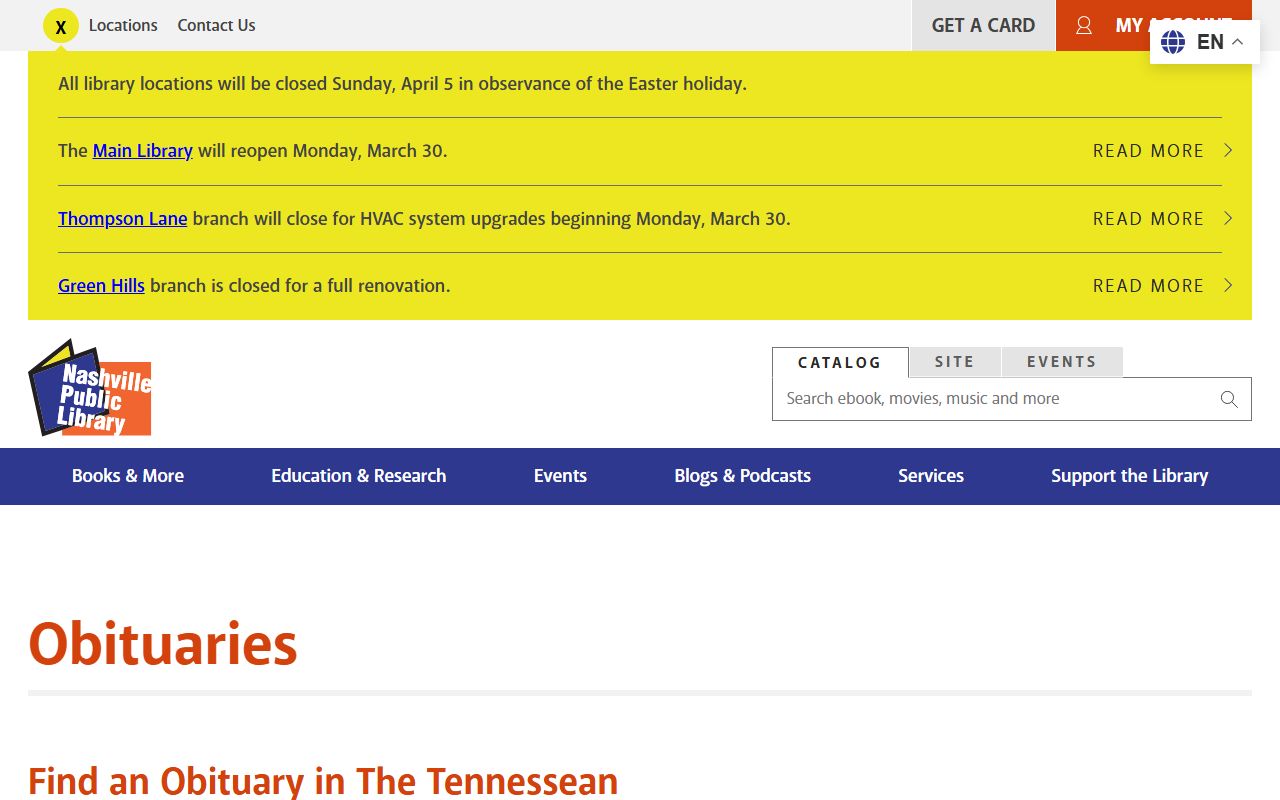
That local index is useful when a newspaper clipping survives but the full issue does not.
Davidson County Obituaries in Libraries
Libraries matter in Davidson County because they preserve what newspapers and courthouses do not. Nashville Public Library Special Collections keeps city directories, obituaries, news clippings, and local histories. Those files can confirm a spouse, a burial place, a church, or a home address. The directory trail is often enough to connect one generation to the next.
Special Collections also gives researchers a way to move between records. A city directory may show a residence from one year. A cemetery note may confirm the burial ground. Then a newspaper obituary may list the family members. That chain can solve a hard case. It also makes a weak source stronger because each piece points to the next.
For state-level support, the Tennessee Virtual Archive is worth checking when you need digitized copies of older material. It is especially helpful when you want to browse instead of search a single index.
Metro health records still matter too. The current vital records page at www.nashville.gov/departments/health/vital-records helps with modern death certificate access, which can confirm the basic facts behind a later obituary.
The Nashville vital records page helps confirm modern death facts.
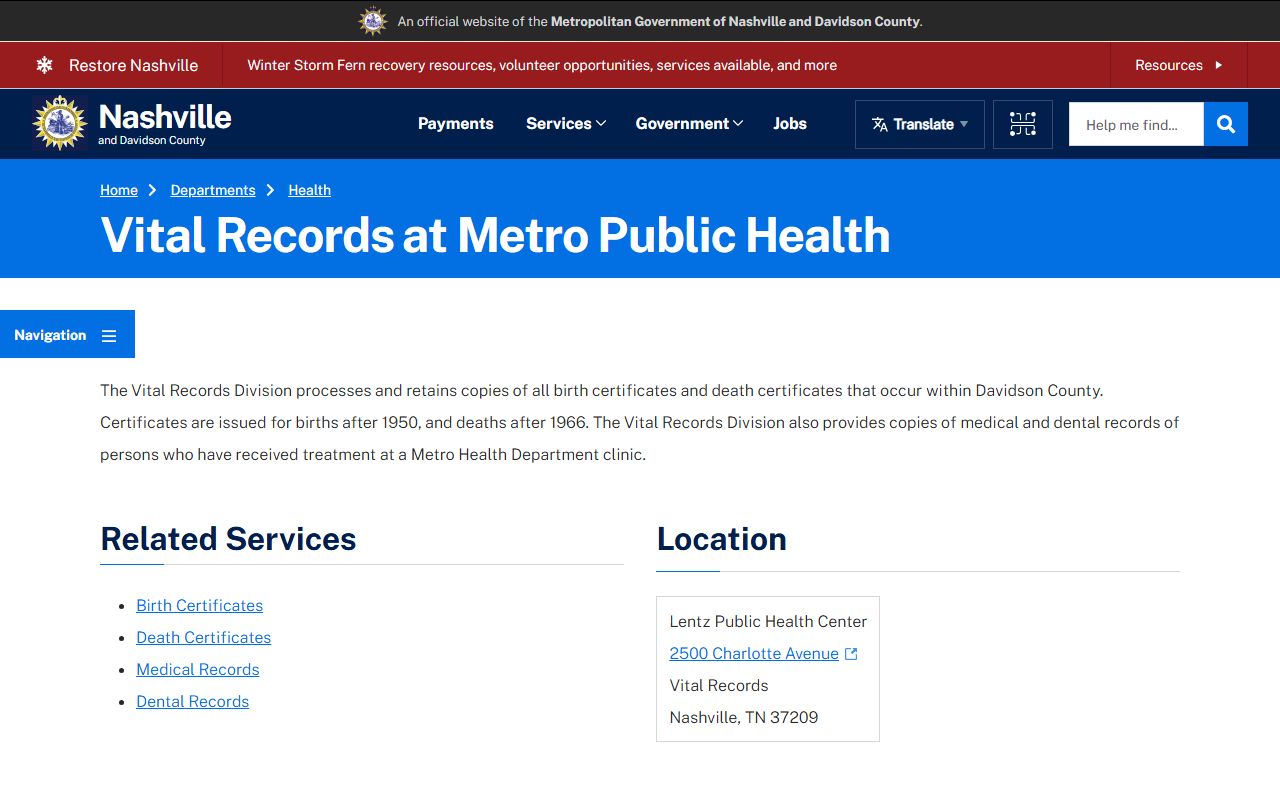
That source is best when you need a death certificate to match a later obituary notice.
Nashville Obituaries and Death Notices
Nashville obituaries often carry more than a death date. They can name the church, the funeral home, the cemetery, children, siblings, and a place of work or service. When a paper notice is brief, the death record or cemetery file may fill in the rest. When the obituary is detailed, it can lead you to a marriage record, a probate file, or a family plot with the same names.
The county's older funeral home collections at TSLA are also useful. Records for Finley M. Dorris and Karsch Dorris & Co. can list age, burial place, and funeral charges. The W.R. Cornelius burial records can point to military deaths and hospital burials during the Civil War period. Those records are narrow, but they are often precise. They help when a newspaper notice is missing or when the family used a funeral home rather than a church paper.
For users who want to compare records, the Nashville obituary page and the Metro Archives page work well together. One gives the clipping style. The other gives the broader county context. Used side by side, they cut down on guesswork.
Public Access to Davidson County Obituary Records
Most obituary records in Davidson County are open to the public, but the route to them changes by source. Newspaper obituaries, library indexes, and many archive files are open for research. Certified vital records are more limited. Tennessee law also draws a line between public access and certified copy eligibility. Under T.C.A. § 68-3-205 and T.C.A. § 68-3-206, access and certified-copy rules are not the same thing.
That matters when a search moves from an obituary into a death certificate request. The entitlement guidance explains who may request a certificate and what proof may be needed. In practice, that means a family researcher can often read an obituary, but may need a direct relationship or legal reason to order the certified record.
State transfer rules also help explain where the older material lives. Tennessee turns over death and marriage records after 50 years, and the state archive keeps the older copy trail. That is why TSLA and the Tennessee Department of Health both matter in Davidson County research.
Request Davidson County Obituary Copies
When you need a copy, work from the source that has the best version of the record. For a newspaper obituary, start with the library or archive that holds the index. For a modern death certificate, start with the health department. For a buried family clue, use the cemetery or funeral home record if one exists. That order keeps you from paying for the same fact twice.
The Metro Archives research portal is a good place to sort the local options. It points to the kinds of material that sit inside the archive, and it gives a cleaner path when a surname appears in more than one collection. If the local route stalls, the statewide death indexes at TSLA remain a strong backup.
For a direct state path, the Tennessee vital records site explains the order process for certified records. Use that when you need proof rather than a reference note. If you only need the story, the obituary index and archive files are often enough.
The Metro Archives research portal is useful when you need a cleaner path into local files.
That kind of local request path helps when the clue begins with a surname and nothing more.
Related Davidson County Research
Some Davidson County obituary searches grow into wider family history work. City directories can show where a person lived before death. Cemetery files can confirm the burial ground. Probate notes can show heirs and a date range. That wider trail often turns a bare notice into a complete family page. The process is slow, but it stays local and traceable.
When you need the broadest view, use Nashville, TSLA, and the health department together. The combination gives you newspaper coverage, archive aids, and certified-record access. In Davidson County, those three paths often save time. They also cut down on false matches when several people share the same name.
Note: Davidson County materials are strongest when you move from index to source, then from source to record copy. That order keeps the search tight and makes the result easier to trust.