
Search Franklin Obituary Records
Franklin obituary records are strongest when you use the local obituary database, the county archive, and older newspaper material together. That matters here because Franklin has deep family history and a long paper trail. A good search may start with a surname, but it usually gets better when you add the newspaper title, the month, or a burial clue. In Franklin, the research room and the county archive both help narrow the field fast.
Franklin Obituary Records at Special Collections
The Williamson County Public Library Special Collections is the main Franklin obituary source. The research says the obituary database holds nearly 45,000 records organized alphabetically by surname. Each entry can include the last name, first name, death date, newspaper name, source location, abbreviated obituary text, and newspaper date. That is a strong setup when you need a quick citation or a first clue for a family line.
Special Collections also supports the Pioneer Families Program, which honors descendants of pre-1850 pioneers. The research says there are more than 900 applications honoring over 240 pioneers. That is useful for obituary work because the applications rely on county documents, census records, newspaper articles, marriage records, obituaries, and birth or death certificates. In other words, the same source that gives you an obituary clue can lead you to a much older family file.
The collection is at 1314 Columbia Avenue in Franklin, and the research gives it wide access hours during the week. It also notes microfilm records for Williamson County newspapers, wills and inventories, WPA records, and court records. That means the obituary search is not limited to one database. If a notice is short or the surname is common, the microfilm and local history files can add the missing piece.
Franklin obituary research works well here because the collection is built to answer the next question, not just the first one. A database hit is helpful. A newspaper issue is better. A family file is often best.
When you reach Special Collections, start with the obituary database, then compare the result against the newspaper title and the source location. That keeps the search focused from the start.
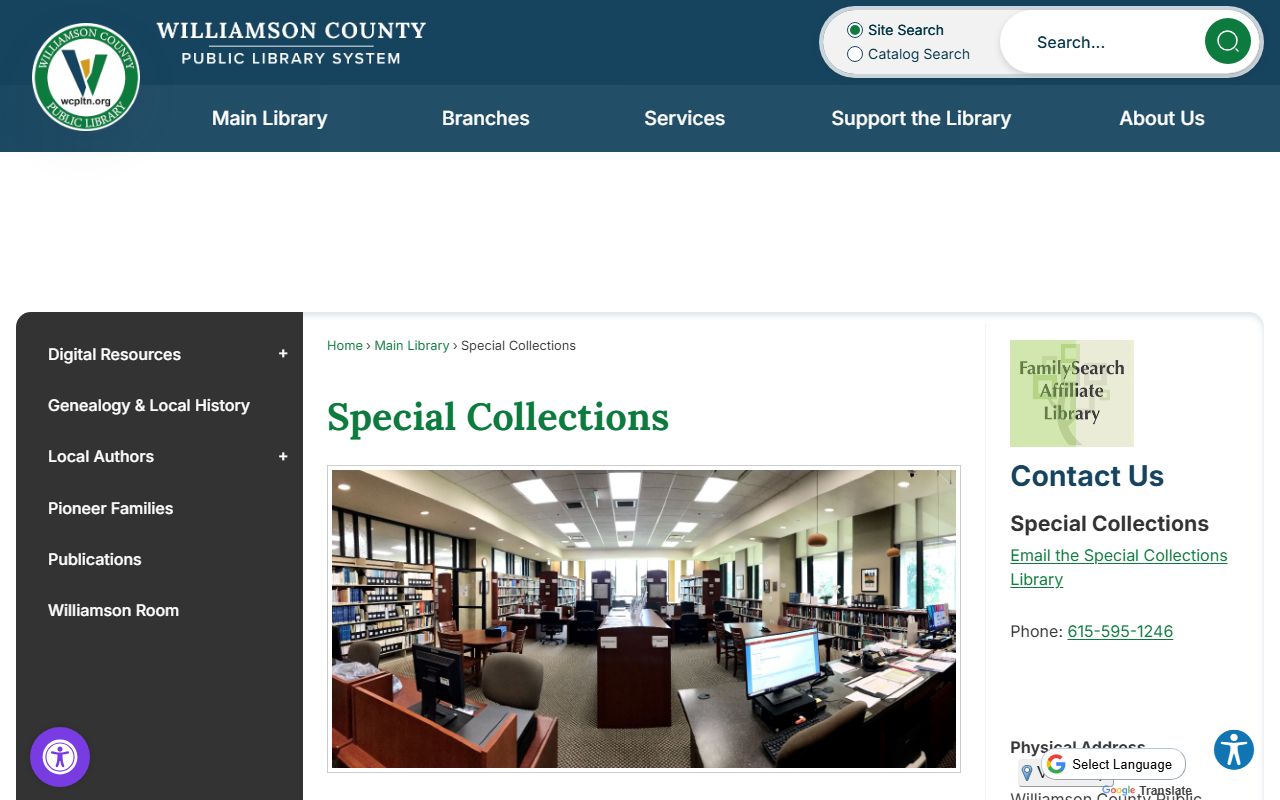
The special collections image above points to the obituary database that makes Franklin one of the easiest Tennessee cities to begin a surname search.
Franklin Obituary Records in Williamson Archives
The Williamson County Archives give Franklin obituary searches a deeper county base. The research says the archive is located at the Old Library at Five Points and keeps marriage records from 1800, tax records from 1799, probate records from 1799, land records, and wills. Those records are useful because an obituary often names a spouse, a parent, or a place that can be confirmed in a county file.
The later research also names the Williamson County Clerk at 1320 West Main Street, Suite 135, Franklin, TN 37064. It handles vital records such as birth certificates, death certificates, and marriage licenses, and in-person service is usually same day when the paperwork is ready. That makes the clerk an important stop when an obituary points you toward the official record instead of the newspaper clipping.
Franklin is one of those places where county history and family history sit close together. A death notice may name a pioneer family, a farm, or a church long tied to the county. The archive can confirm those clues with probate or land records. That is especially useful if the obituary database gives you only a short text line. Note: in Franklin, the county record often explains the obituary, not the other way around.
The county archive also helps when you need to compare a newspaper death notice with the older family line. That can matter in Williamson County because many names repeat across generations. A clean archive match tells you whether the obituary belongs to the right branch.
The same special collections image also fits this county step because the obituary database and the archive work together on the same family line.
How to Search Franklin Obituary Records
Start with the obituary database if you know the surname. Use the newspaper name and date fields to tighten the hit. Then move to the archive when you want to see whether the person belonged to an older county line. Franklin obituary searches are easier when you stay inside the same family cluster and do not jump too broad too soon.
The research adds older newspaper and genealogy material from TNGenWeb. It names death notices from the Western Weekly Review covering 1831 to 1858, plus marriage records from 1808 to 1837 and wills and settlements from 1801 to 1824. That is a strong bridge for older Franklin obituaries and for families that appeared before the modern database was built.
When you need a broader record trail, compare the obituary result with the county archive and the clerk's office. The county clerk page in the research says birth certificates cost $15 for the first copy and $5 for additional copies, and same day service is typically available if your paperwork is ready. That can save time when you need the official record right after the obituary search.
Keep a small list while you work:
- Full name and any maiden name
- Year or month of death
- Newspaper title or source location
- Pioneer family, church, or cemetery clue
- Parent, spouse, or child name
That list is enough to move from the obituary database to the county file without losing the thread.
Franklin Vital Records and Access Rules
When a Franklin obituary points you to a certificate, the Williamson County Clerk is the local step and the Tennessee Department of Health is the state backup. The county clerk handles birth, death, and marriage requests, while the state office issues certified copies under Tennessee's current rules. That split matters because a newspaper notice is only part of the story. A certificate can confirm the date, county, and names in the official record.
Under T.C.A. § 68-3-205 and T.C.A. § 68-3-206, access to vital records follows state rules about age and requester eligibility. That is why recent deaths may require a different process from older records. The county and state pages in the research make the same point in different ways: an obituary may be public, but the certified copy still follows the rules.
The research also points to the Tennessee State Library and Archives for Williamson County death records on microfilm from 1881 to 1882 and for Franklin Memorial Chapel funeral ledgers from 1909 to 1925. Those resources are valuable when the obituary is older than the database or when the family used a funeral home record instead of a newspaper clipping. State indexes and ledgers often fill in gaps that the obituary summary leaves open.
For wider context, the Tennessee Virtual Archive and the state death indexes for 1908 to 1912 and 1914 to 1933 can help you verify the year before you request a copy. Franklin has enough record depth that one source usually leads to another. The trick is to keep the search narrow and local.
Note: If the obituary points to a very old family line, compare the database hit with the archive and the older newspaper material before you order anything.
The special collections image above also matches the certificate step because the obituary database often tells you which official record to order next.
Public Copies and Franklin Obituary Records
Franklin obituary records are public in the sense that the obituary database, the archive, and much of the local history material can be searched by the public. But the full path still changes by record type. A database entry is a guide. A newspaper issue is the source text. A certified certificate is the official copy. You usually need all three at some point in Franklin.
The best local routine is simple. Start with Special Collections. Move to the Williamson County Archives. Then use the clerk or the state office if you need the certificate. That route keeps the search tied to the exact city and county sources named in the research. It also lowers the chance of pulling the wrong person from a large surname cluster.
Note: A Franklin search goes faster when you compare the obituary date with the newspaper date and the county record before you make a request.
That is the core pattern for Franklin. The records are deep, the names repeat, and the best result usually comes from checking one local source against another.
Nearby Tennessee Cities
These nearby city pages can help you compare obituary sources across Middle Tennessee.