
Search Williamson County Obituary Records
Williamson County obituary records are unusually rich, and that makes Franklin one of the best places in Tennessee to start a death-notice search. The county library holds a large obituary database with nearly 45,000 records, and the county archives preserve older books that can confirm family ties, land, probate, and marriage clues. Because Williamson County has both a deep local history and a strong modern index, a search can move from a surname to a newspaper title to a burial note very quickly. If you know a family line, a church, or a pioneer settlement, the record trail is often already waiting.
Williamson County Obituary Records
Williamson County obituary research begins with the Special Collections department at the county public library. Its obituary database is organized alphabetically by surname and includes nearly 45,000 records. The fields are practical too. They include last name, first name, death date, newspaper name, location, and abbreviated obituary text. That means you can move from a name to a paper title and then back to the local story without guessing. For a county researcher, that is a major time saver.
The library also supports the Pioneer Families Program and keeps microfilm records that include Williamson County newspapers, wills and inventories, WPA records, and court records. Those resources help when the obituary is only part of the story. A death notice may name a family farm or a pioneer ancestor, and the library can help you track that person through older county material. In a county as well documented as Williamson, the obituary is often the doorway rather than the finish line.
The library Special Collections page at wcpltn.org/177/Special-Collections is a strong first stop, while the county archives site at williamsoncounty-tn.gov gives the broader office context. The TNGenWeb county page at tngenweb.org/williamson is another useful bridge when you want to compare local notes.
The Special Collections obituary database is the best lead-in when you want a fast surname search.
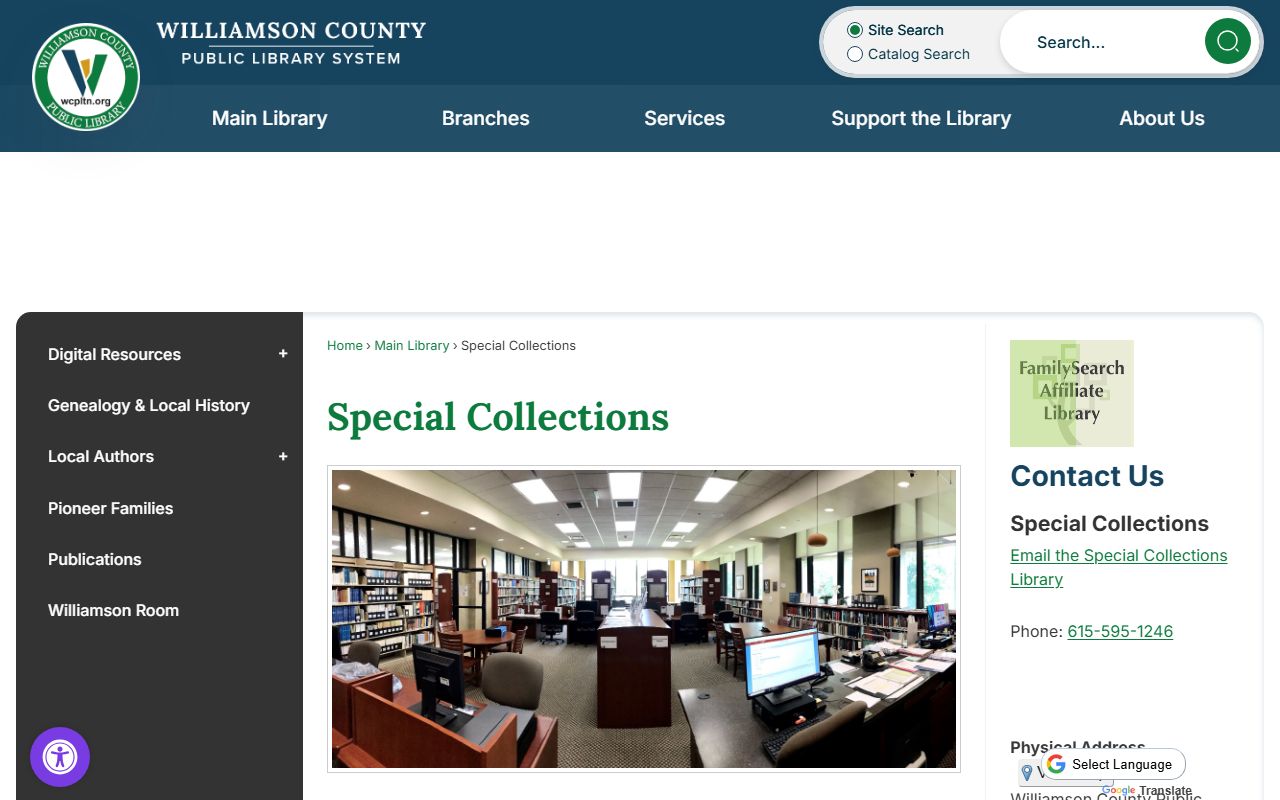
That database can carry you from a surname to a newspaper title and an abbreviated obituary in one step.
How to Search Williamson County Obituary Records
Start with the surname, then move to the death year and newspaper name. Williamson County has enough material that a single surname may produce several records, so it helps to keep the date range tight. The obituary database is especially useful because the entries are indexed with real search fields, not just a broad mention of the family name. If you know the pioneer line or the church, use that too. Williamson County researchers often find that one extra detail closes the gap between a family story and a record copy.
The county archives strengthen the search. The archives hold marriage records from 1800, tax records from 1799, probate records from 1799, land records, and wills. Those early books are important because they show how the county family line connects before the obituary era was fully developed. A widow named in an obituary may also appear in a probate file. A place named in the notice may appear in a land entry. That matching is what makes Williamson County so productive.
Use the county library, the archives, and TNGenWeb together, not one at a time. The more you combine them, the less likely you are to miss the record that already has the answer.
- Search the obituary database by surname first.
- Note the newspaper title and the death date together.
- Compare the obituary with probate and land entries.
- Use the Pioneer Families Program for older family lines.
That sequence works well because Williamson County has enough material to reward a careful search.
Williamson County Obituary Sources
Williamson County sources are unusually broad. The Special Collections department provides obituary indexing and local history context. The archives add marriage, tax, probate, land, and wills. TNGenWeb gives a free local research frame. Put all three together and you get a county trail that can handle both modern newspaper notices and older family history lines. That makes Franklin one of the most useful county seats in the state for obituary work.
The library's obituary records also work well with the county's earlier paper trail. A Pioneer Families application may point to a pre-1850 ancestor that later appears in a newspaper obituary. A microfilm record may show the same surname in a will, a court note, or a local paper. Those overlaps matter because they let you verify the same family from more than one angle. In research terms, that is the difference between a hint and a documented line.
The county archives at williamsoncounty-tn.gov and the TNGenWeb page at tngenweb.org/williamson are the next layers after the library index. Together they give the county obituary search a strong local base.
The Williamson County Archives page at williamsoncounty-tn.gov is useful when you need the older county book trail.
That archive layer is where marriage, tax, probate, and land records begin to reinforce the obituary clue.
Williamson County Libraries and Archives
Libraries and archives do more than confirm a death date in Williamson County. They help explain the family. A line in the obituary may mention a pioneer ancestor, and the library may already hold the application packet for that family. A land reference may show the same surname in a different generation. That kind of overlap is why Williamson County obituary work can move quickly once the first match is found. The county has enough material that a person is often visible in several collections at once.
The library materials also help when the obituary database gives only an abbreviated text line. In that case, the microfilm, archive, or county newspaper note can fill in the missing details. This is especially helpful for children, spouses, and burial places that were not fully indexed. The more you use the library and archives together, the more likely you are to get a complete family picture instead of a one-line death notice.
TNGenWeb remains useful because it gives a quick county map when you are deciding whether the family line belongs in Franklin, Nashville, or a neighboring county. It keeps the work local and practical.
The TNGenWeb county page at tngenweb.org/williamson is the simplest free bridge between the obituary index and the older county records.
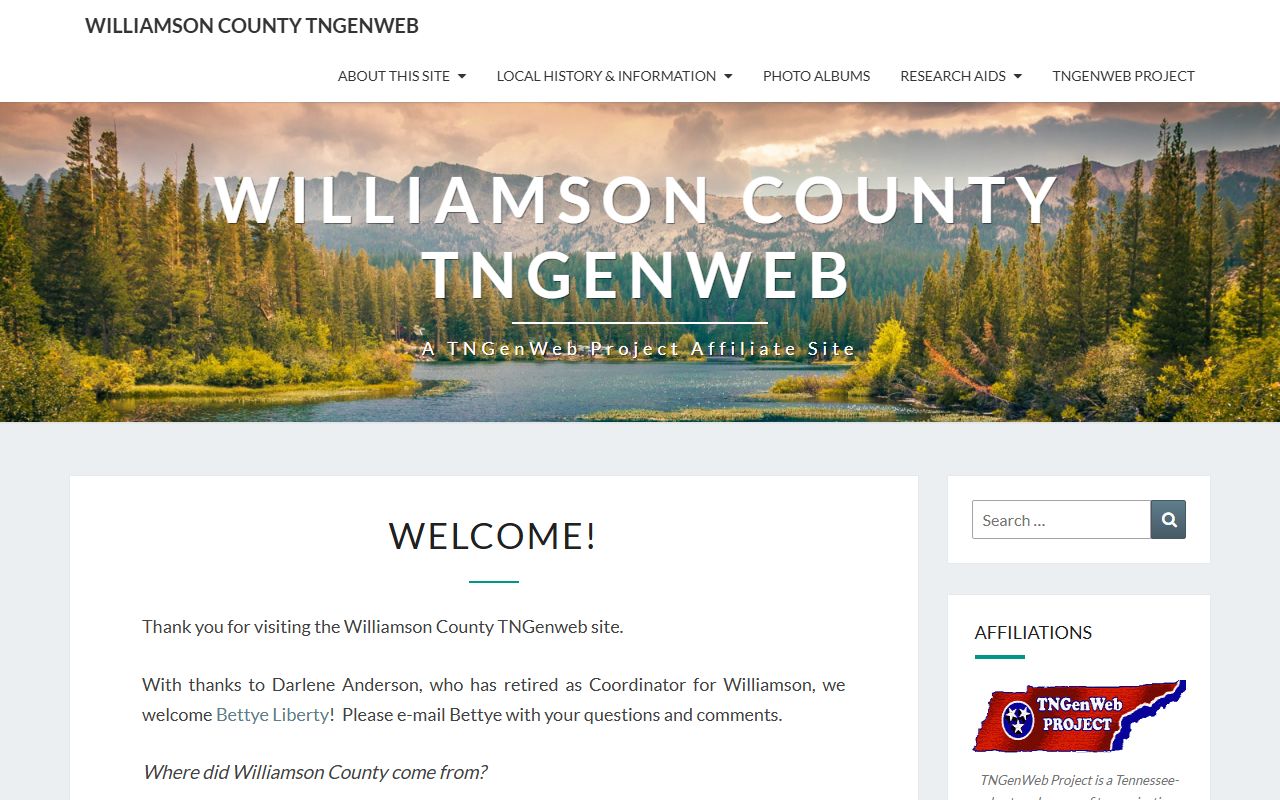
That page is useful when you want a free local route before you turn to a copy request.
Public Access to Williamson County Obituary Records
Most Williamson County obituary material is public, but the certified-copy path still follows Tennessee rules. The obituary database, library collections, and many archive items can be read by researchers. Certified death records are different. Under T.C.A. § 68-3-205 and T.C.A. § 68-3-206, the state treats access and entitlement separately from a general public search. That matters when you move from a local newspaper reference to an official certificate.
Williamson County works well because the public obituary and the county archive often give enough detail to make the state request easier. If the obituary shows a full date, the newspaper name, and a location, that can guide a certificate search. If the death is older, the archive and library material may be the only surviving path. Either way, the county pages are the place to start before you ask for a certified copy.
Request Williamson County Obituary Copies
When you need a copy, begin with the source that has the best index. For Williamson County that is often the library Special Collections department, because the obituary database is already organized for surname searches. If you need a supporting record, move next to the county archives. Their marriage, tax, probate, land, and will records can confirm the same family story that appears in the notice. That combination is powerful because it lets you verify the obituary with a second local record rather than a guess.
The Special Collections phone and address from the research notes can help when you need to make a direct local request, while the county archives and TNGenWeb pages give you the wider local context. If you need a certified death record instead of an obituary copy, the Tennessee Department of Health help center at vitalrecords.tn.gov/hc/en-us explains the ordering path and the entitlement rules. That is the right next step once the obituary has done its job.