
Search Hamilton County Obituary Records
Hamilton County obituary records are strong because Chattanooga kept a deep local trail. The county has old death indexes, a large public library history collection, and county records that reach back before the 1910 courthouse fire. That means a name may surface in a newspaper, a cemetery file, or a library index before you reach the county clerk. Start with the name, then add a likely decade, church, or funeral home. In Hamilton County, a small clue often opens a bigger search path.
Hamilton County Obituary Records
Hamilton County was established in 1819 and Chattanooga became its center of gravity early. The 1910 courthouse fire damaged many records, so obituary work often relies on a mix of city, county, and state sources. That mix is useful. The Tennessee, Hamilton County obituary index, cemetery records, and newspaper clippings all help when one source is thin. A line in a paper might give a burial place. A library index might give the date. The county record trail can then confirm the rest.
The county clerk has marriage records and court minutes from 1857, while the register of deeds has land records from 1799. Those are not obituary records by themselves, but they often point to the right family. A spouse, property transfer, or court note can tie a death notice to the right household. That is why Hamilton County searches often move from obituary to court to cemetery and back again.
The Hamilton County vital records page at health.hamiltontn.org/en-us/data,permits,andrequests/vitalrecords(birthdeath).aspx is a useful local entry point for death-related questions. The same office also helps ground later records when a newspaper clipping is not enough.
The Hamilton County vital records page is a good local start for modern death record questions.
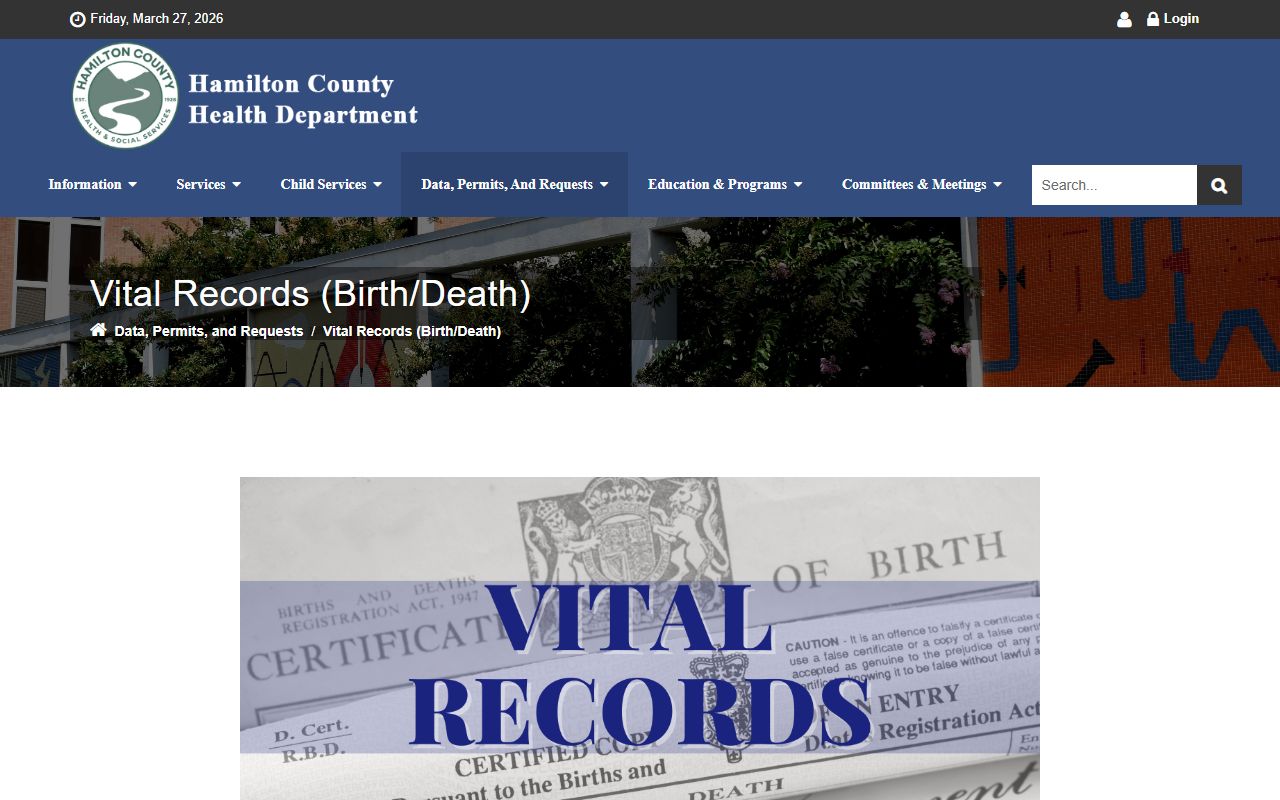
That page helps confirm modern facts when a later obituary needs a matching death record.
Search Hamilton County Obituary Records
The Chattanooga Public Library local history and genealogy room is one of the best starting points in the county. It holds Hamilton County marriages, court minutes, tax books, county wills, county court minutes, obituary indexes, city directories, census records, soundex material, and military records. That spread matters because obituary research often starts with a family name and then shifts to a place, a spouse, or a burial site. The library can help connect those clues.
Use the library page at chattlibrary.org/local-history-and-genealogy/ when you want the local history department. It pairs well with the TNGenWeb Hamilton page at tngenweb.org/hamilton/, which includes transcribed obituaries, cemetery records, birth and death indexes, and other family research material. The two together give you both a fast index view and a wider county frame.
For a quick search strategy, use the points below before you ask for a copy.
- Full name of the deceased
- Likely decade of death
- Chattanooga, a cemetery, or a funeral home name
- Spouse, parent, or sibling name if known
When the first search fails, move sideways. Try initials, a maiden name, or a city directory clue. That is often enough to catch the same person in a different local index.
Chattanooga Obituary Sources
Hamilton County has several obituary sources that work together. The Chattanooga obituary index at chattadata-chattgis.hub.arcgis.com/datasets/chattanooga-obituary-index-1 gives a direct path into the county's local death-notice record. It is especially useful when you know the approximate year but not the exact paper. The index can help you confirm that a clipping exists before you hunt for the full text or a funeral home reference.
The Chattanooga Public Library also sits near the Chattanooga Area Historical Association collection and the Hamilton County Tennessee Genealogy Society material. That makes the library more than a shelf of books. It is a real search hub. A name can move from a city directory into an obituary index, then into a cemetery record, then into a court minute or deed reference. Each step narrows the field.
The Hamilton County Register page at register.hamiltontn.gov is another important local source. It is useful when an obituary clue leads to a property or land trail. In a city county like Chattanooga, the family story often crosses from death record to deed record fast.
The Chattanooga obituary index is useful when you want to confirm a local death notice before chasing the full article.

That index is one of the fastest ways to match a name to a place and date.
Hamilton County Obituaries in Libraries
Hamilton County library work matters because it keeps the pieces together. The Chattanooga Public Library holds local history documents, photographs, manuscripts, city directories, and obituary indexes. It also provides access to Ancestry Library Edition, HeritageQuest, Fold3, Newspapers.com, and Tennessee State Library and Archives databases. Those tools let a researcher move from one clue to a second source without leaving the building.
The library branch system can also help when you need a place-based lead. Older residents may appear in the downtown collection, while newer obituary references may show up in digitized papers or a city directory scan. The branch libraries give the county more than one door. That can matter when a name is common or the family lived in a busy neighborhood.
The Hamilton County Tennessee Genealogy Society at hctgs.org adds another local layer. Its resources cover bibles, biographies, cemeteries, courts, deaths, deeds, marriages, military, obituaries, and wills. That mix is a good fit for obituary work because it often gives the family names and burial context that a newspaper notice leaves out.
The Hamilton County Tennessee Genealogy Society is a strong companion source when you need family and burial context.
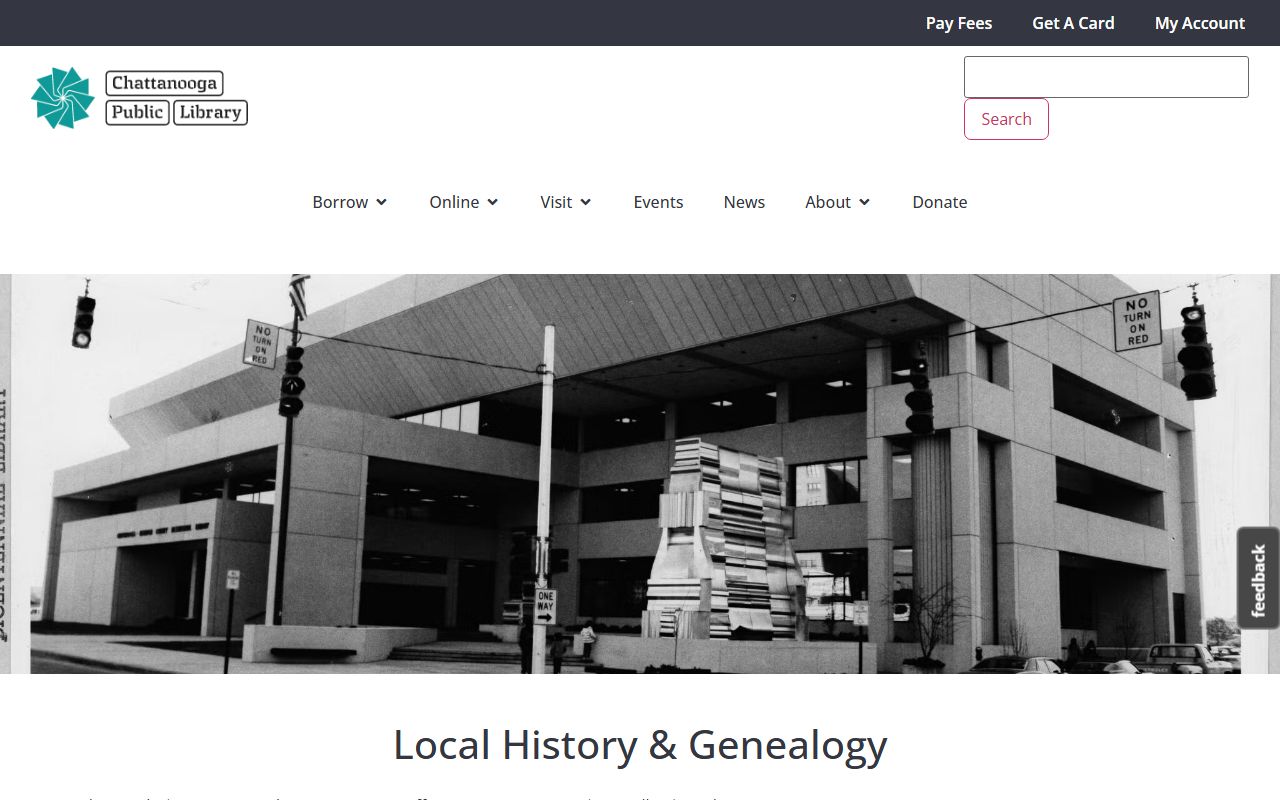
That library page helps bridge the gap between a notice and a full family history.
Hamilton County Obituary Access
Most Hamilton County obituary material is open to search, but the exact route changes with the record type. Newspaper obituaries and library indexes are generally open. Certified death records are more limited. Under T.C.A. § 68-3-205, death records are subject to access rules, and the certified-copy limits in T.C.A. § 68-3-206 matter when you need an official copy instead of a reference.
The state vital records office and TSLA both matter here. The county history and the state record system overlap in Hamilton County more than many places do. That makes the search better, but it also means you need to know which office has the version you need. A library obituary index can confirm a name. A county clerk or vital records office can confirm the certificate. TSLA can fill the older gaps.
Note: In Hamilton County, a local obituary search often moves from library to county office to state archive. That order is slower, but it usually gives the cleanest result.
Request Hamilton County Copies
When you need a copy, work from the best source. Use the library index for a newspaper trail, the county clerk for marriage or court material, the register of deeds for property links, and the vital records office for modern death records. The Chattanooga obituary index can tell you whether a notice exists before you order anything. That saves time and avoids duplicate requests.
If you want a broader official path, the Hamilton County Clerk page at register.hamiltontn.gov is worth checking. It helps connect obituary research with land and court records. The county clerk can also point you toward records that help identify the right family line. In a large county like Hamilton, that kind of cross-check is often the difference between a guess and a match.
The Hamilton County Register page at register.hamiltontn.gov is useful when an obituary clue points toward land or court records.
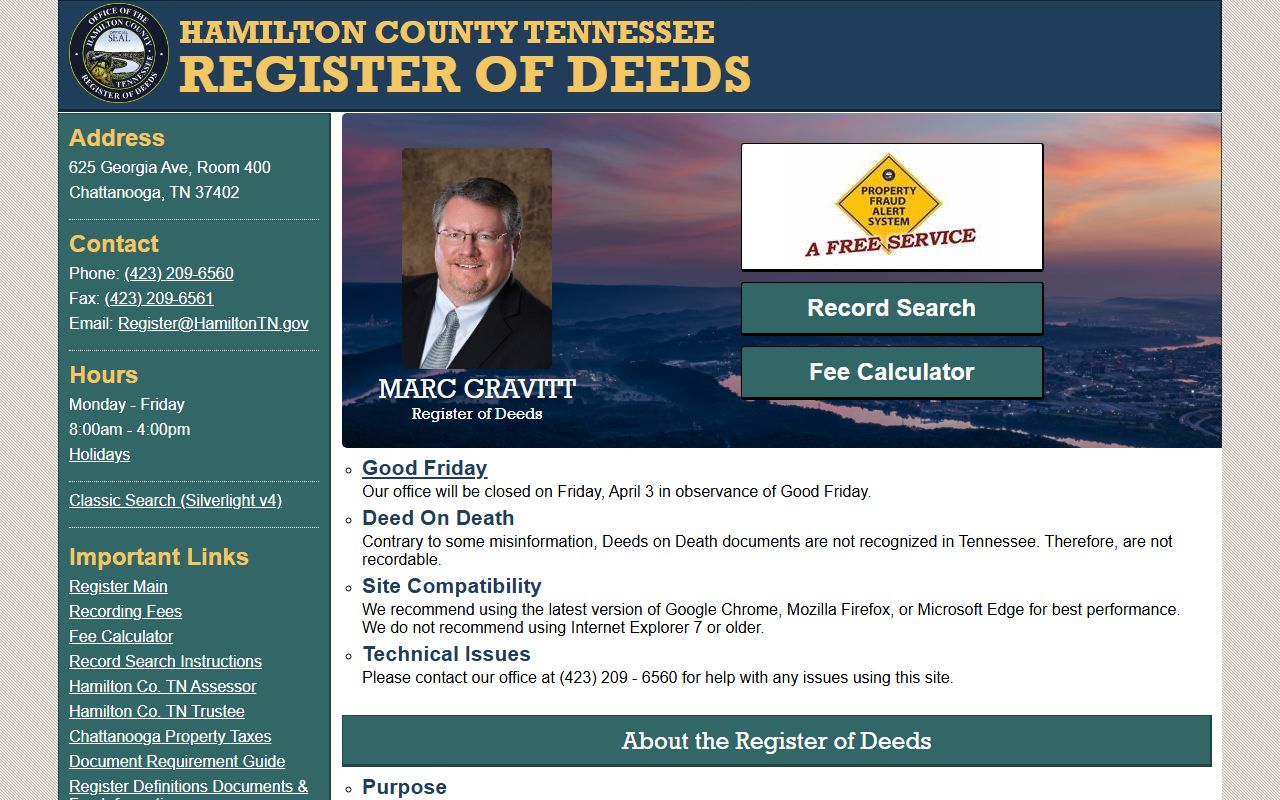
That record page can help tie a death notice to property, court, or family changes.
If you need to compare one more surname, use the search box below before you make a request.