
Search Knox County Obituary Records
Knox County obituary records are some of the strongest in East Tennessee. Knoxville is the county seat and the third largest city in the state, and the record trail here is deep enough to support detailed family research. A search can begin in the Knoxville obituary index, move into the McClung Historical Collection, and then branch into county archives, church records, and state death indexes. Because the county has excellent record survival, obituary work here is often about choosing the right local source first, then using the others to confirm the exact person.
Knox County Quick Facts
Knox County Obituary Sources
Knox County was established in 1792 and served as Tennessee's first capital from 1796 to 1812. That long history gives obituary research a very strong base. The Knox County Archives is at the East Tennessee History Center on South Gay Street, the Knox County Clerk is in the City County Building on Main Street, and the McClung Historical Collection sits in the same East Tennessee History Center building. Those three places form the core of local obituary work in Knoxville.
The McClung Historical Collection is the most important genealogy stop. It holds more than 75,000 books, 3,000 genealogies, manuscripts, newspapers, city directories, maps, photos, and government records. It is also described as the premier genealogy repository for East Tennessee and an especially strong family history source for East Tennessee and North Carolina families. That matters because Knox County obituary records often include long survivor lists, military details, church ties, and community notes that make sense only when you can compare them with local history material.
| Archives | East Tennessee History Center, 601 S Gay St, Knoxville, TN 37902 |
|---|---|
| Clerk | City County Building, 400 Main St, Knoxville, TN 37902 |
| McClung Collection | 601 South Gay Street, 3rd Floor, Knoxville, TN 37902 |
| Historical Society | 601 S. Gay Street, Knoxville, TN 37902 |
Because Knox County records survive so well, an obituary search can stay local for a long time. If a notice names a family, an occupation, or a church, the county archives and the McClung Collection can often push the search to a full family file without needing a broad statewide hunt.
The Knox County obituary index at knoxcountylibrary.org/resources/knoxville-obituary-index-1991-present is a practical first stop. It can save time before you dig into deeper paper files.
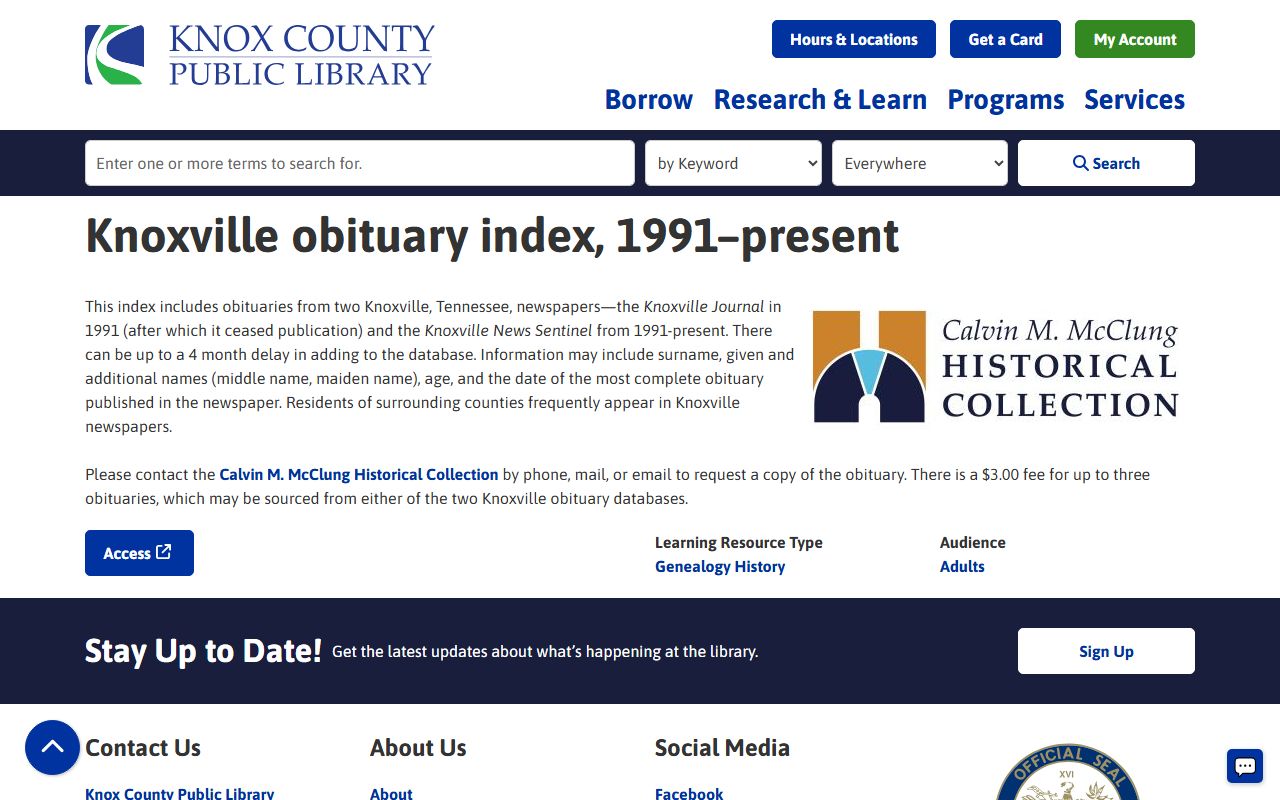
That index is valuable because Knox County obituary notices often carry rich detail. A quick match can give you the right record path almost at once.
How to Search Knox County Obituary Records
Start with the Knox County Public Library obituary index and the McClung Historical Collection. The research notes say the index covers 1991 to the present and that the collection has an obituary database, newspapers, city directories, and wide genealogy holdings. That combination is ideal for obituary work. A search can move from a current obituary to older newspaper runs, then to wills and estate settlements if you need another clue.
The county archives are the next major stop. Knox County Archives is the repository for non-current permanent county records. It is in the East Tennessee History Center, and the archives can help with government records that support a death notice. The county clerk, register of deeds, and circuit court clerk provide probate, marriage, divorce, tax, and court record access. When a notice names a spouse, child, or property detail, those office records can confirm the family line.
Knox County obituary research also benefits from the East Tennessee Historical Society and the Museum of East Tennessee History. The historical society keeps surname files and original submission files for First Families, and the museum showcases regional history across 35 counties. Those resources are useful when a death notice includes a long family story, a military reference, or a community role that needs context.
For statewide backup, TSLA death indexes remain useful. The county has birth records from 1881 to 1913 at TSLA, death records with partial coverage from 1872 to 1923 and full coverage from 1908 to 1958, and marriage records through the county clerk. When a local obituary is missing a date or uses a nickname, those state indexes can confirm the year and county.
The law side is simple. Under T.C.A. 68-3-205 and T.C.A. 68-3-206, record access and copies depend on age and requester status. That matters when you move from obituary research to a certified death record request.
Use the county's strong obituary detail to your advantage. Knox County notices often include maiden names, nicknames, service details, and multiple memorial options. That gives you more than enough to compare against cemetery records and the county's long court record run.
Note: Knox County obituary research is usually about choosing among several good local sources, not trying to find a record that barely survives.
- Full name, maiden name, and nicknames
- Approximate death year or obituary date
- Church, cemetery, or funeral home
- Spouse, child, or residence clue
- Paper index or archive reference
Keep those clues together. In Knox County, they usually take you to the right file quickly.
The Knoxville obituary index and the McClung Collection work well as a pair. One gets you to the notice, and the other gets you to the family context around it.
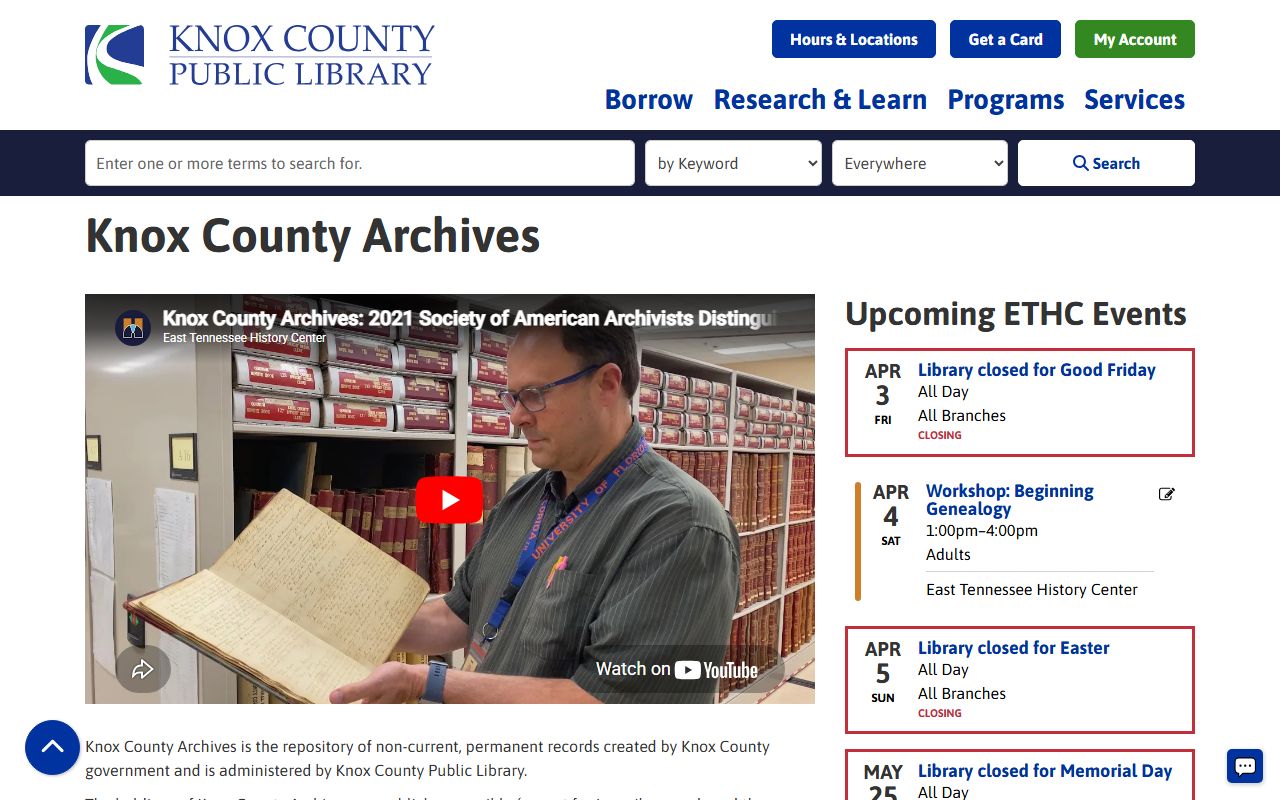
That archive image is a good reminder that Knox County records are deep enough to support a full research trail without leaving Knoxville.
Knox County Obituary Records and Archives
Knox County obituary records often go beyond the basic facts. The notes say obituaries can include birth and death dates, marriage anniversaries, cause of death, survivor lists, service details, career history, education, church affiliation, military service, donation notes, and photos. That kind of detail is a gift to family researchers. It also means you should read each notice carefully, because one line can carry three different clues.
The Knoxville News-Sentinel and Knoxville Journal are especially important. The obituary indexes cover 1991 to the present and also reach back to 1885-1906 and 1912-1914 in indexed runs. If you need an older notice, the McClung microfilm and newspaper holdings are the best path. The wills and estate settlements index from 1792 to 1939 is another helpful bridge when the obituary mentions heirs or a probate matter.
For a certified record, the Tennessee Department of Health Office of Vital Records at tn.gov and vitalrecords.tn.gov remains the state source. If the obituary gives you a death date and you want the official copy, the state office is the cleanest final check. Certified copies are also addressed in the ordering guidance at the state level.
Knox County has a strong cemetery network too. Knoxville National Cemetery, the state veterans cemeteries, Old Gray Cemetery, and several other burial grounds can help verify a notice when the obituary is not enough by itself. If the record says a person was buried in a historic cemetery, a cemetery search can confirm the date and family cluster.
The county's high record survival makes it one of the best obituary counties in Tennessee. That is why you can often build a full picture from the obituary, the index, and one archive visit.
Note: In Knox County, a good obituary search often turns into a broader family history search because the supporting records are so complete.
The East Tennessee Historical Society and McClung Collection add a local depth that is hard to match elsewhere. They help explain the family, the church, and the neighborhood behind a death notice.
If the Knox County obituary records search turns into a certificate request, the county health and state vital-records route still matters. The county-facing vital-records page at knoxcounty.org/health/vitalrecords.php is a useful checkpoint before you move from a public obituary to a formal record order.
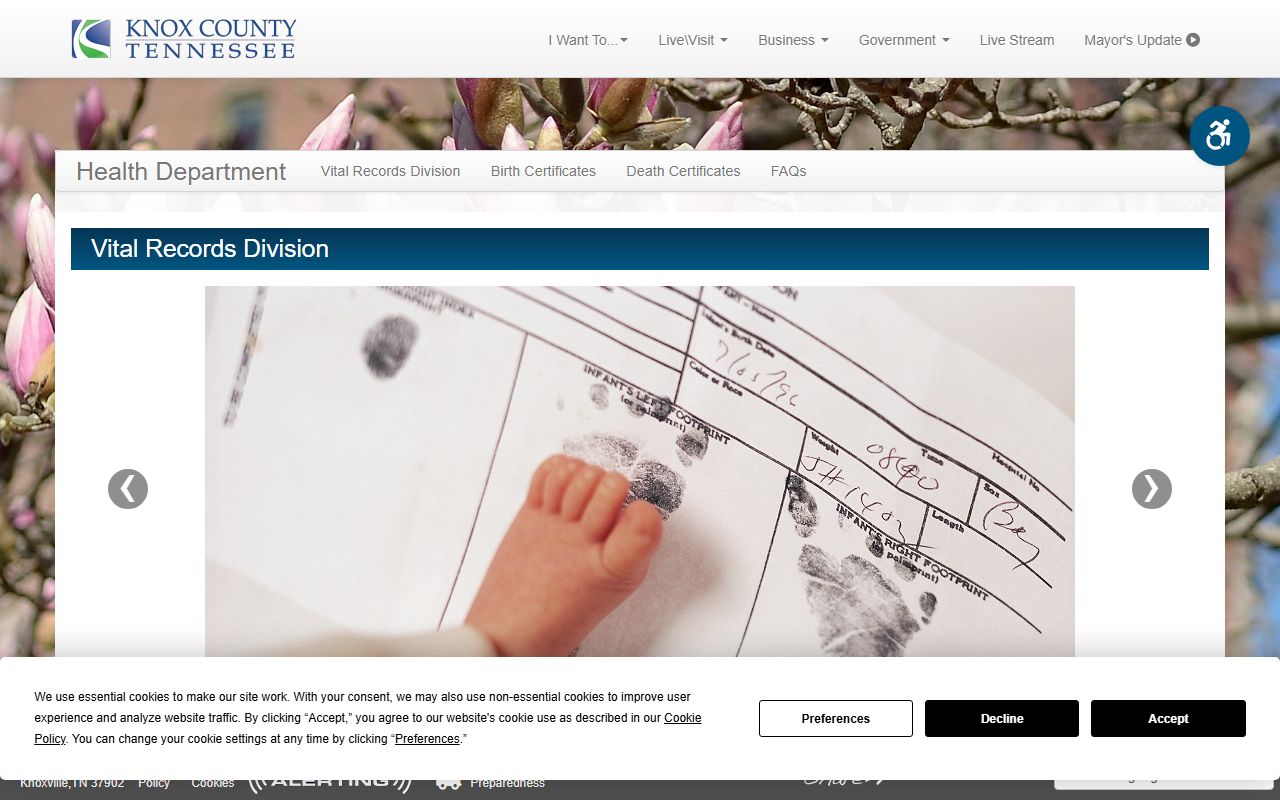
That page helps separate a Knox County obituary records search from a certified-copy request, which saves time when you already have the right person.
That extra context often makes the difference between a useful obituary and a complete family profile.
Browse More Tennessee Records
Knox County fits into a larger Tennessee obituary and record network. Use the browse pages when a family line extends beyond Knoxville.