
Search Morristown Obituary Records
Morristown obituary records often begin with the library, then move into county marriage, probate, and court records that can confirm the family line behind the notice. That works well because Hamblen County has a long paper trail and Morristown has a strong local history collection. A short death notice may name a spouse, a funeral home, or a cemetery, and that clue can usually be checked in one of the local record sets. The best search starts with a year, a surname, and one place clue, then widens only when the first result is clear.
Morristown Obituary Records at the Public Library
The Morristown-Hamblen Public Library is the most useful city stop for obituary work. The research says the library holds a genealogy and local history collection, historical newspapers, census records, family history files, and local obituary indexes. That matters because a death notice often lands in more than one place. If the paper clipping is short, the library may still have enough local history material to show the family branch, the cemetery, or the newspaper title that matters most.
The library’s local history focus is especially useful for families who stayed in Hamblen County for generations. The county was formed in 1870 from Grainger, Jefferson, and Hawkins counties, so older records can stretch beyond the city itself. A Morristown obituary may look simple on paper, but the surrounding library collection can reveal a deeper family pattern. That is why the library should usually come before the state office when the search is still in the early stage.
The local obituary index also helps with repeat names. A common surname can be hard to sort by itself, but the family history files and census material can add just enough context to separate one person from another. If a notice mentions a church, a burial ground, or a child’s name, the library can turn that detail into a second source. The city side of the search is strongest when you treat it as a place to confirm, not just to look once.
The Morristown-Hamblen Public Library is the right visual doorway for that city step. It points straight to the library that does the most work for Morristown obituary searches.

The library image above is the right starting point for a Morristown obituary search because it brings the newspaper, local history, and family files into one room.
Morristown Obituary Records in Hamblen County
The county records add the legal and historical frame around the notice. The Hamblen County Clerk keeps marriage and probate records from 1870, and the Hamblen County Circuit Court Clerk holds divorce and court records from 1900. Those dates matter because they give you an older route than the obituary itself. If the notice names a spouse, a child, or a town in western Hamblen County, the county file can confirm the line quickly.
Hamblen County also has a practical death record trail. The research points to Tennessee Death Records 1908-1933, Tennessee Death Records 1908-1958, death records of Hamblen County from 1902-1950, Hamblen County obituaries in WorldCat, and Horton Funeral Home records from 1940-1957. That is a strong record set for a county that did not report courthouse disasters in the research. It means many families can be tracked across both public and funeral-home sources without having to jump out of the county first.
Funeral homes in the county also help. The research lists Alder, Allen, Dignity Memorial, Dockery-Senter, Farrar, Mayes Mortuary, Stetzer-Bales, Stubblefield, and Westside Chapel. A notice that names one of those businesses often points directly to the burial record or the service date. That is useful when the obituary text is clipped or when the newspaper scan is incomplete. A funeral-home clue can be enough to anchor the rest of the search.
Morristown itself also has a county office layer that matters for access. The county clerk and circuit court clerk together cover much of the paper trail you need before you move to the state office. In a county with records beginning in the 1860s and 1870s, the county file is often the quickest way to prove the obituary belongs to the right person.
How to Search Morristown Obituary Records
Start with the Morristown-Hamblen Public Library if you have a surname, a death year, or a likely newspaper title. The library’s obituary indexes and newspaper archives are the quickest way to get the paper citation. Once you have that, move to county marriage, probate, or court records if the name is common or if the notice mentions another family member. Morristown obituary research works best when you use the newspaper as the entry point and the county record as the confirmation.
If the person died after 1909, the death record may also exist in the state system or in a county source tied to the clerk. That is important because Hamblen County birth and death records begin in 1909, while marriage records begin in 1863. Those dates give you a clear line for where to look first. If the death is older, use the county obituary indexes, funeral home records, or the WorldCat and FamilySearch references listed in the research. Note: a narrow year range saves a lot of time in Morristown.
The research also points to Morristown newspapers on TSLA microfilm and to the Hamblen County Genealogical Society. That is useful when the library file is close but not enough. The society’s family histories and cemetery records can settle a question about a burial place or a second marriage. Once you have one good clue, the rest of the county trail tends to open more easily.
- Full name and any maiden name
- Approximate death year or decade
- Funeral home, cemetery, or church clue
- Possible spouse or parent name
Those clues are enough to move from a Morristown obituary reference to a county file that confirms the identity.
Morristown Vital Records and Access Rules
When a Morristown obituary leads you to an official copy, the county clerk or the state office becomes the next stop. The Tennessee vital records system is still the main route for recent certified copies, and the county office remains useful for older local materials. That split matters because a newspaper notice can be public while the certificate still requires a formal request. A good Morristown search keeps those steps separate.
Under T.C.A. § 68-3-205 and T.C.A. § 68-3-206, Tennessee controls who can receive a recent vital record and how a certified copy is issued. That law is most useful when the obituary gives you the date but you still need the official certificate. For older deaths, the obituary, the county archive, and the library may be enough to prove the family line without going further.
The state help pages can also help if you need the request process spelled out. The Tennessee Department of Health vital records page and the state help center both explain the certificate path. That is useful in a county like Hamblen, where the obituary trail may start local but finish in the state system. If the funeral home, cemetery, and newspaper all line up, the certificate is usually the last piece.
The TSLA genealogy index search is the best visual cue for the state step when the local file is not enough.
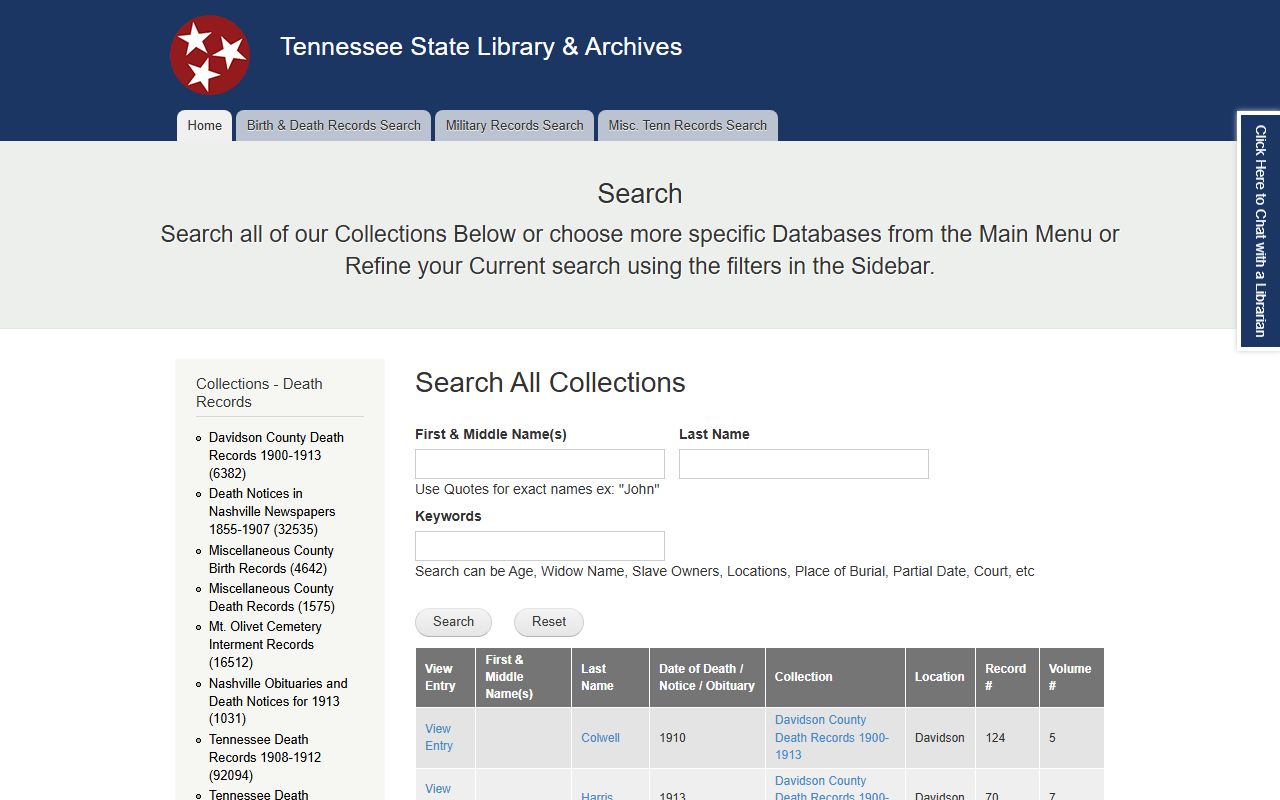
The Tennessee index image above fits the state step because it supports the last piece of a Morristown obituary search when the local file is not enough.
Hamblen County Obituary Records
The county page is the right next step when you want the larger Hamblen County record set behind a Morristown notice. It gathers the clerk, archives, and older record sources in one place so you can continue without changing the method.
Nearby Tennessee Cities
These nearby city pages can help you compare obituary sources across East Tennessee.