
Anderson County Obituary Records
Anderson County obituary records help tie together county deaths, newspaper notices, and local family lines from Clinton, Oak Ridge, and the rest of the county. Some names surface in old papers first. Others show up in a library index or a county archive file. If you are trying to confirm a death date, find a burial clue, or track down a fuller notice, Anderson County offers several good paths. The search gets easier when you start with the right name, an estimated year, and one place tied to the family.
Anderson County Quick Facts
Where to Find Anderson County Obituary Records
The main county offices in Clinton are the first stop for Anderson County obituary research. The County Clerk, Circuit Court Clerk, Chancery Court Clerk and Master, and the Anderson Archives all sit in or near the courthouse complex at 100 North Main Street. That matters because old death notices often connect to court files, probate records, and family papers. A quick check of the archive vault can save a lot of time later. The county also has early marriages from 1838, deaths from 1881, and court records that begin in 1811, so the paper trail can run deep.
Anderson County is a useful place for obituary work because the county seat, Clinton, and the city of Oak Ridge both show up in local newspaper coverage. The county was formed in 1801, and the local history scene is still active. That gives you more than one route into a death search. Start with the county offices, then move to the Clinton Public Library or the county historical society if the first pass is thin. The library has microfilm and local history material, which can help with a surname that is common or hard to spell.
For many families, the best result is not one record but a chain of small clues. A court minute can point to a probate file. A burial note can lead to a family cemetery. A newspaper item can confirm a spouse or child. Anderson County records reward that kind of slow search.
Anderson County Obituary Sources
One strong starting point is the county genealogy site at Anderson County TNGenWeb. It is one of the best local hubs for names, cemetery notes, and family leads. If you are tracing a death notice, the county web pages can point you toward older home-grown indexes that do not show up in a broad web search. That is useful when a person died in Coal Creek, Lake City, Norris, or Oak Ridge and the notice never made it into a statewide database.
That site is worth checking first when you need a name, a burial place, or a local family line. It can save you from chasing the wrong county.
The Tennessee Genealogical Society county page is another good local guide. It helps frame the county context and gives you a second path if one set of notes is thin. For deeper local work, the Anderson County Archives can help connect obituary research with court and probate records. That matters when a death notice names heirs, a farm, or a place that can be matched to a deed or settlement file.
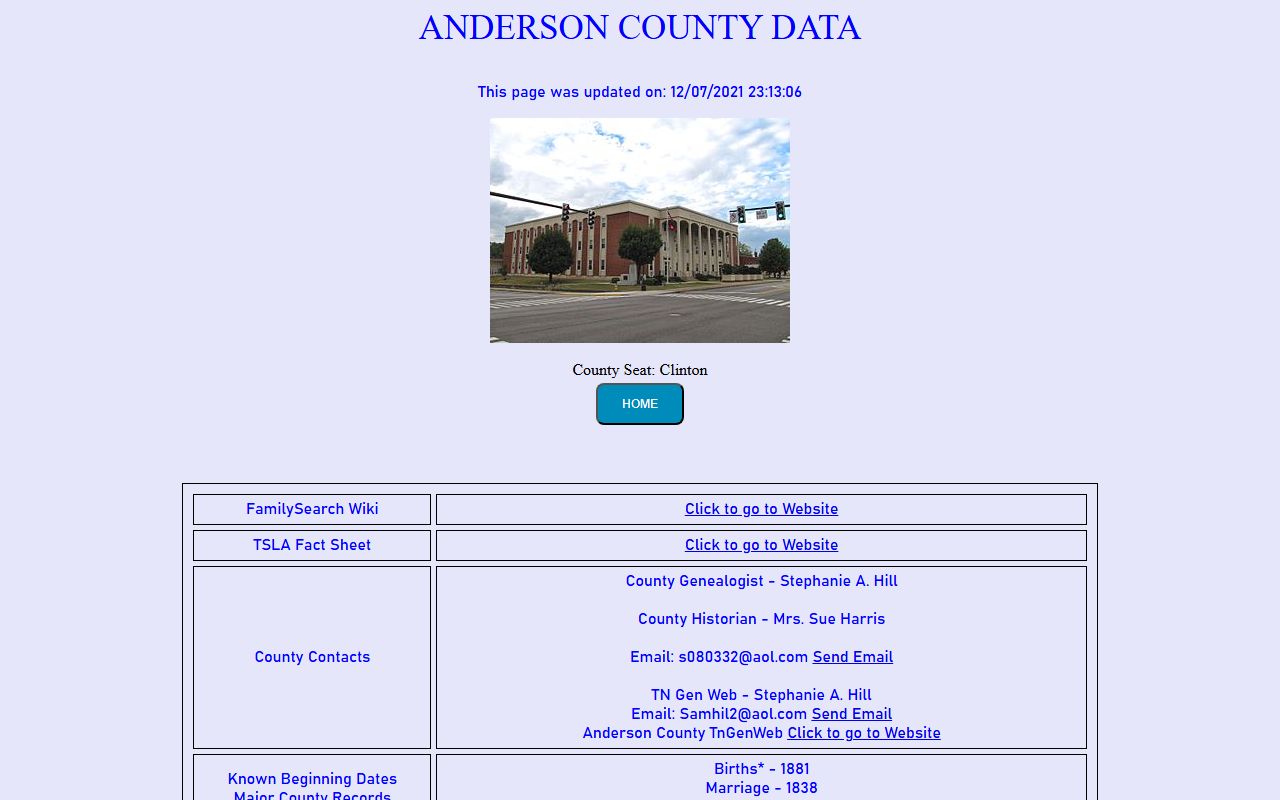
Use those two sites together. One often supplies the name, and the other helps confirm the family story.
The archives itself is housed at the courthouse, in room 204, and the county historical society meets at the Clinton Public Library. That mix of public office and local memory makes Anderson County a strong place to narrow down an obituary search. It also helps when a funeral home file or a cemetery clue points to a branch of the same family that lived in different parts of the county.
The TSLA Anderson County fact sheet is the state-level backstop if local indexes do not finish the job. TSLA keeps county material, microfilm, and related surname work that can fill in what a county office does not have online.

The archive copy can matter more than a short notice in print. It may show the full family trail.
Search Anderson County Death Records
When an obituary is thin, a death record search can close the gap. Tennessee State Library and Archives has key tools at Genealogy Index Search. That portal brings several databases into one place. It is useful when you want to move from a newspaper hint to a death entry with a county, year, and certificate number. For older work, the TSLA guide at Vital Records at the Library and Archives explains how the records are split between the state office, TSLA, and local sources.
Anderson County deaths begin in the local research notes in 1881, but statewide death record access starts later for full civil registration. That means your obituary search may need both local and state records. The Tennessee Department of Health keeps the official office records at Vital Records and through Vital Records Help Center. Those pages are useful when you need a certified copy, know the death date, or need to see whether a certificate is still under access limits.
Under Tennessee law, death and marriage records are restricted for fifty years, while births are restricted for one hundred years. Certified copies are not open to every requester. That is why it helps to know whether you need a public obituary, a state death certificate, or a full court record. The state rules are described in Entitlement Guidelines and the statutes linked through Tennessee code access. For obituary work, the practical answer is simple. Start with the public sources, then move to the certified record if you have a direct need.
- Full name, including maiden name if known
- Approximate death year or obituary date
- Town, church, or cemetery tied to the family
- Spouse name, if you have it
- Any clue from a funeral home or court file
Anderson County Obituary Research Tips
Newspapers were published in Clinton, Coal Creek, Lake City, Norris, and Oak Ridge, so the same family can appear in more than one place. Some early issues survive only in scattered form, and the complete run begins later. That makes exact dates important. If you do not have one, work from a cemetery note, a probate clue, or a surviving relative. A state digital archive can also help with material tied to history and local memory.
The state library portal can also help residents who need broader genealogy tools, newspaper access, or indexed death collections. If you use the state portal and a local archive together, you often move faster than if you search one source at a time. Another TSLA database shows how death notice research is organized and why exact spellings matter. The same habit helps when you search Anderson names in county sources.
Note: Anderson County obituary work often runs through a mix of local archive files, library microfilm, and state indexes, so it pays to check each source in turn before deciding a name is missing.
When the first search is incomplete, do not stop at the headline. Read the full notice, then follow the names inside it. That is where most of the useful proof hides.
Anderson County Public Access Notes
Public access is usually broad for obituary research, but the kind of record still matters. Newspaper death notices are generally open. Court files are usually open unless sealed. State certificates can be limited for a period of time. The Tennessee Public Records Act at T.C.A. § 10-7-503 supports access to government records, but it does not remove all privacy rules for vital records. For that reason, a local obituary search and a certified death record search are related, but they are not the same thing.
That distinction matters in Anderson County because the county archive, the courthouse, and the library each serve a different role. One may hold a file copy. One may hold a newspaper run. One may hold a family history packet. If you keep those roles straight, you will waste less time and miss fewer clues. For many families, the obituary is the bridge between the death and the rest of the record set.