
Bedford County Obituary Records
Bedford County obituary records often start with Shelbyville paper notices, then move into county court books, family history files, and cemetery work. That matters here because Bedford County lost a lot of early material to tornado and fire damage. You can still build a strong search if you begin with the right name and the right place. The county seat is Shelbyville, and the local library, clerk offices, and historical society all help fill in the gaps. A careful search can connect one short notice to a much larger family story.
Bedford County Quick Facts
Where to Find Bedford County Obituary Records
The Bedford County Court Clerk, Circuit Court Clerk, Chancery Court, and Register of Deeds all help support obituary research in Shelbyville. The county had tornado damage in 1830 and major fire loss in 1863 and 1934, so not every old file survives. That is why obituary work here often starts with a paper notice, then widens to probate, wills, and reconstructed indexes. The Bedford County Public Library on South Jefferson Street is a good stop when you need a local search hand or a place to work through newspaper notes.
Bedford County was formed in 1807, and a few record runs survive from before the county's biggest losses. Marriage records begin in 1863, while births and deaths are noted from 1908 in the local research. Even when the court file is thin, the obituary may still name a spouse, a farm, or a church. Those details matter because they can point you back to a land record, a family burial site, or an older court minute. If you are lucky, the obituary will also name the newspaper that printed it, which makes the second search much easier.
Start with the county offices, then move to the library and the local history society. Bedford County works best when the search stays local first and state-level second.
Bedford County Obituary Sources
A strong local starting point is Bedford County TNGenWeb. It is useful for family names, cemetery clues, and older volunteer transcriptions. When a notice is short or a surname is hard to read, the county page can point you toward a related line or a local place name you might otherwise miss. That can matter a lot in Bedford County, where some record runs were damaged and later rebuilt through indexing.
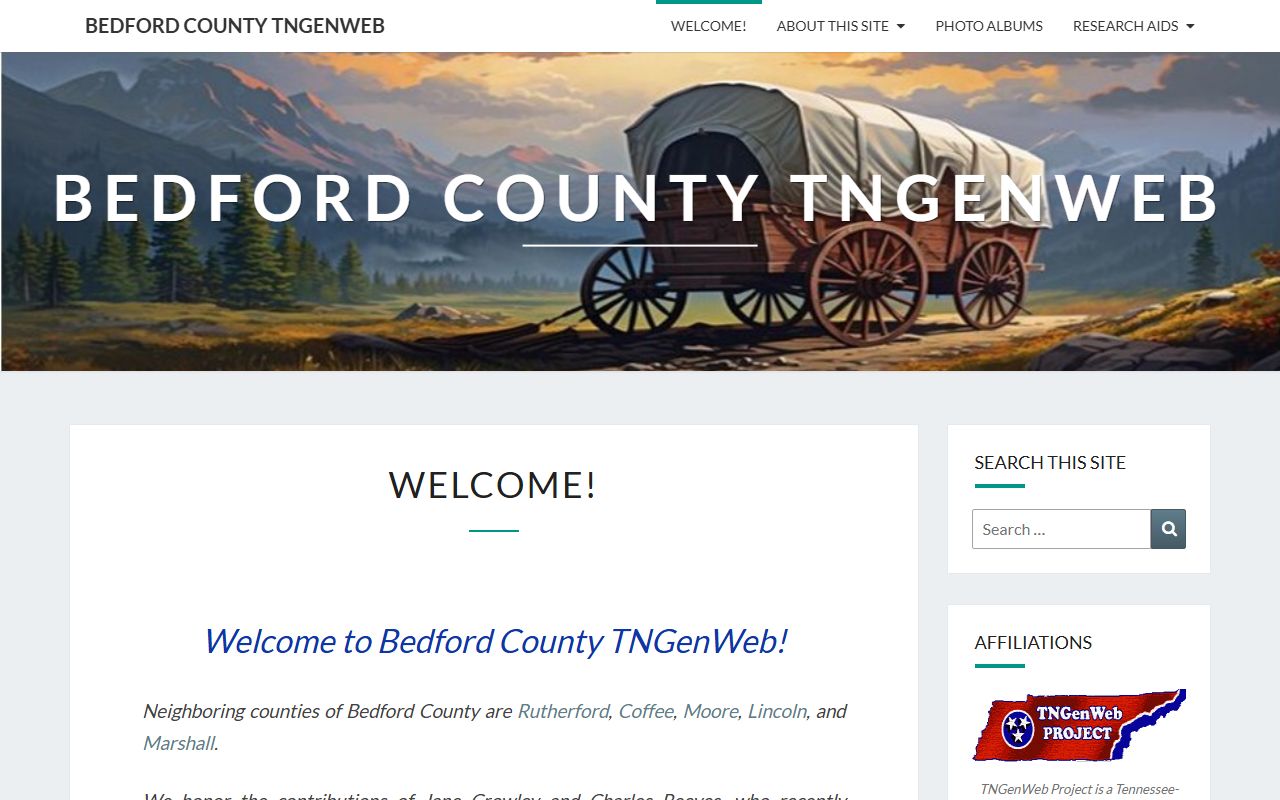
The TNGenWeb page is a practical first pass for Bedford County. It can help you match a family name to a local death clue.
The Tennessee Genealogical Society county page gives another local route into the county. That page works well with the TSLA Bedford County fact sheet, which is the state backstop when a local obituary search stalls. The fact sheet is useful because it ties county history to record types, and Bedford County has more than one period of loss. A good search plan should account for that from the start.
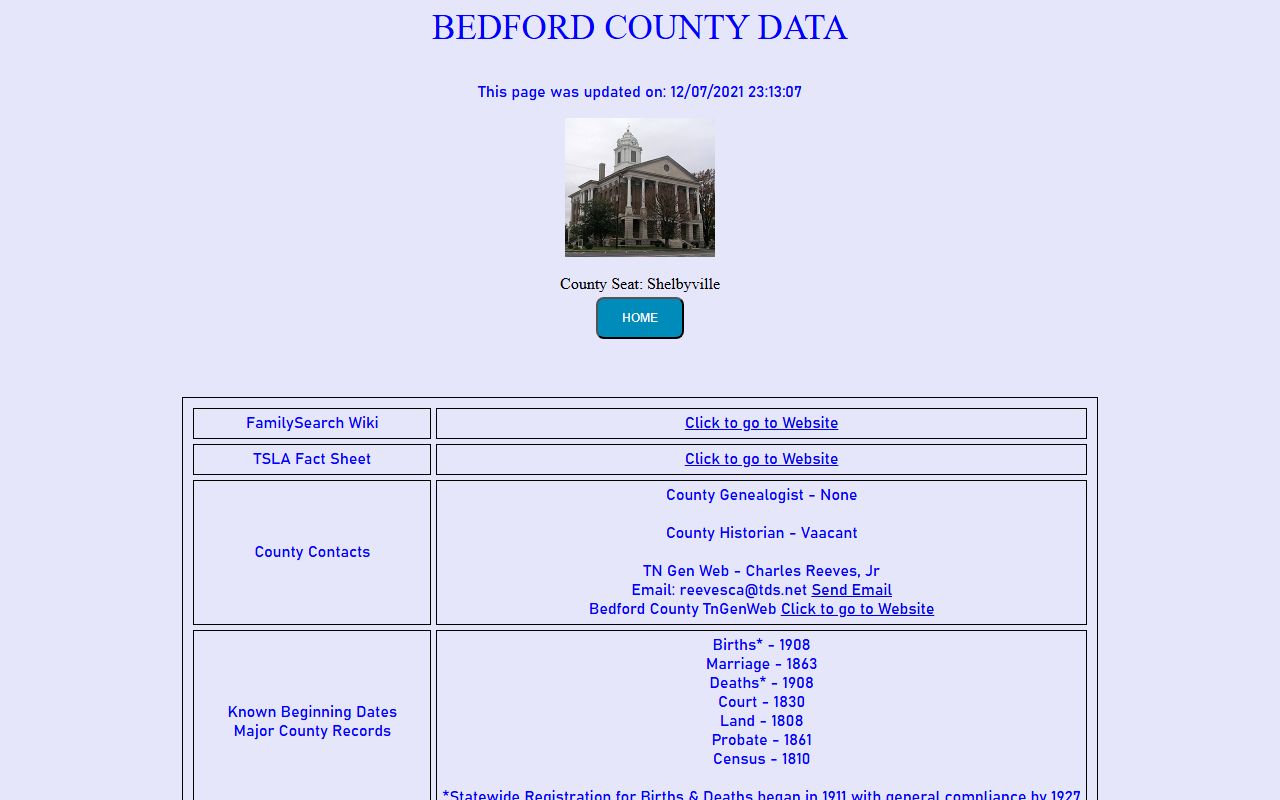
Use both local pages when you can. One can show the family trail, and the other can show the county context.
Bedford County also has a strong published obituary tradition. TSLA holds Obituaries of our Ancestors as Transcribed from the Shelbyville Gazette and the Shelbyville Gazette obituaries collection. Those resources are important because they turn a newspaper line into a searchable family record. If the death happened in Shelbyville or nearby, those indexes can save a lot of time. They also help when a local paper run is incomplete or scattered.
For local work, the Bedford County Historical Society and the Shelbyville-Bedford County Public Library are both worth checking. The library has local history material, and the historical society can add family memory that never made it into print. That kind of help is often the difference between a partial clue and a solid identification.
Search Bedford County Death Records
Bedford County obituary searches usually improve when you step from the paper notice into the state death record system. The TSLA Genealogy Index Search lets you move across linked databases instead of checking one database at a time. That saves time if you only know the surname or a rough year. The same is true for the Tennessee Virtual Archive, which can surface digital history material that supports a death search.
If you need a certified copy, the Tennessee Department of Health keeps the office at Vital Records and the help center at Vital Records Help Center. The office handles modern certificates and explains how to order them by mail or through the approved vendor. Under Tennessee law, death, marriage, and divorce records are restricted for fifty years, while births are restricted for one hundred years. That does not block most obituary research, but it does affect what kind of copy you can request and who can request it.
The key Tennessee statutes are helpful here because they explain the difference between a public obituary and a certified record. The access rules under entitlement guidance and T.C.A. access matter most when you are trying to get a copy rather than a citation. For Bedford County research, the practical path is to use the local obituary, then move to the state record if you need proof.
- Full name and any nickname used in print
- Approximate year of death or burial
- Town, church, cemetery, or funeral home clue
- Spouse, child, or parent names from the notice
- Any newspaper title or clipping reference
Bedford County Obituary History and Record Loss
Bedford County record loss is not a side note. It changes how you search. The courthouse was hit by tornado damage in 1830, then burned in 1863 and again in 1934. That means some deeds, court books, and early county papers do not survive in full. The research notes also say all records before 1837 were lost except deeds. Because of that, the obituary can become the best surviving link between a person and the rest of the family record. A short death notice may be the only place a maiden name survives.
That is why county newspapers matter so much here. The obituary may show up in the Shelbyville Gazette, then reappear in transcribed county collections, then turn up again in a family history book. The result is not duplication for its own sake. It is proof. When the same name appears in several places, the record becomes easier to trust. Bedford County has enough surviving sources to do that work, even with the loss.
Note: In Bedford County, do not assume a missing county file means the person cannot be traced. The obituary, the Gazette index, and the reconstructed deed or probate notes often tell the same story in different ways.
Bedford County Public Access Notes
Most obituary research here is public, but you should still separate the notice from the certificate. Public newspaper items are easy to read. Court files are usually open unless sealed. Vital records can be limited by age and requester status. The Tennessee Public Records Act at T.C.A. § 10-7-503 gives the public a broad right to inspect government records, yet the vital records rules still control who gets an official copy. That is especially important for death certificates used in legal work.
For Bedford County, the best approach is steady and local. Use the county offices in Shelbyville, then the library, then the TSLA tools. If the obituary is tied to an older line, the historical society can help you understand what got lost and what was later rebuilt. That order saves time and keeps the search focused.