
Search Blount County Obituary Records
Blount County obituary records help connect a name to a place, a date, and a family line. In Maryville and the smaller towns around it, the trail can start with a newspaper notice, a cemetery list, a county archive file, or a state death index. Because early county records were damaged in courthouse fires, you often need to search more than one source. The best results usually come from mixing local papers, library files, and TSLA indexes with the county offices that still hold old books and court material.
Blount County Quick Facts
Blount County Obituary Sources
Blount County was formed in 1795, before Tennessee became a state. That long run matters when you are chasing obituary clues, because older family names can show up in court books, land work, and cemetery notes before they appear in a modern death index. The county seat is Maryville. The courthouse and the justice center in Maryville still anchor most local searches, while the county archive, public library, and genealogical society fill in the gaps that a clipped death notice cannot cover.
The county office trail is simple once you know where to look. The Blount County Courthouse is at 345 Court Street, Maryville, TN 37804, and the Circuit Court Clerk is at the Blount County Justice Center at 930 E Lamar Alexander Parkway. The county archive at 1229 McArthur Rd. and the Blount County Public Library on N. Cusick Street are both useful when a name does not turn up in the first search. Under TSLA's vital records guide, death records and related records moved into statewide systems over time, so local and state research work best together.
| Courthouse | 345 Court Street, Maryville, TN 37804 |
|---|---|
| Circuit Court Clerk | 930 E Lamar Alexander Parkway, Maryville, TN 37804 |
| Archives | 1229 McArthur Rd., Maryville, TN 37804 |
| Library | 508 N. Cusick St., Maryville, TN 37804 |
One early clue often leads to another. If a death notice names a farm, a church, or a burial ground, compare it with the Blount County Archives holdings and the library microfilm collection. That is often faster than starting with a broad web search. The county was also hit by courthouse fires in 1879 and 1906, so some family lines need a wider search than the surviving paper file suggests.
The Blount County TNGenWeb page at tngenweb.org/blount is a practical first stop when you want a name fast. It points to cemetery lists, family notes, and local record helpers that can save time on a hard search.
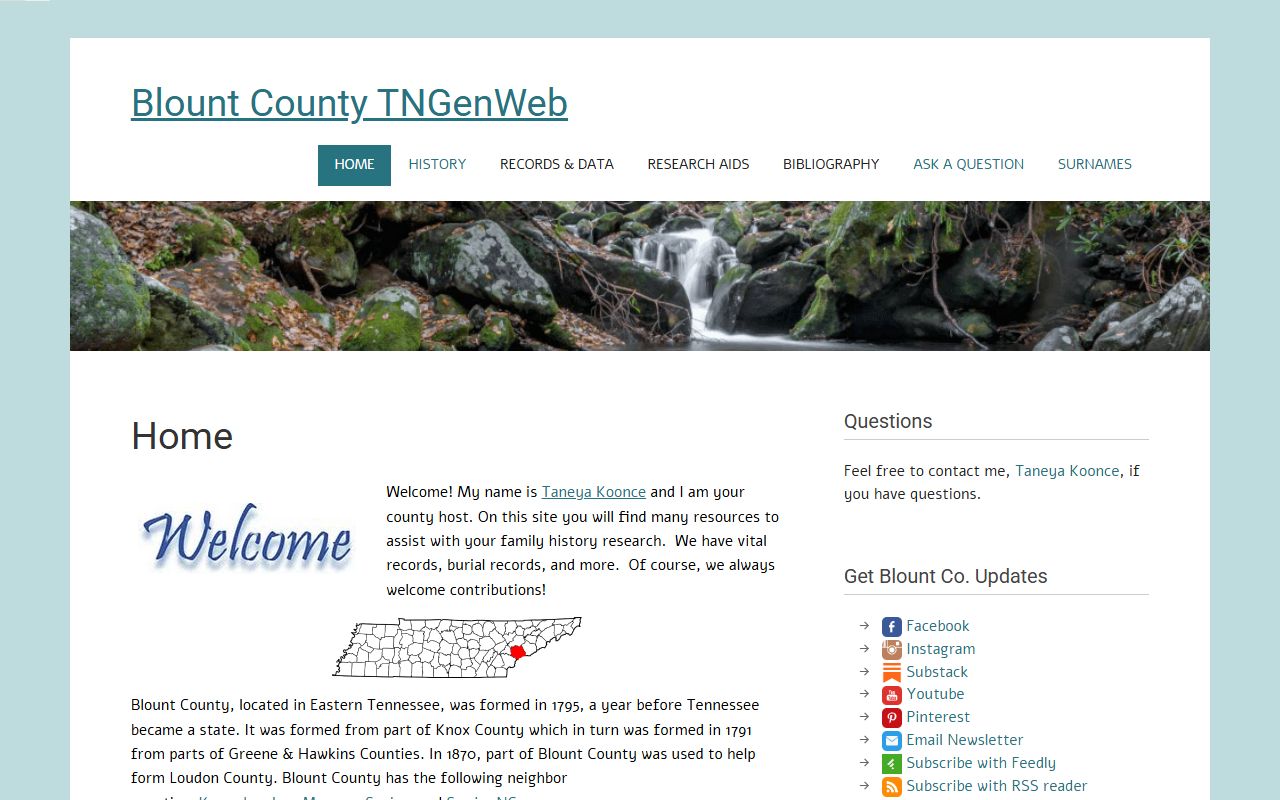
That page is especially useful when a surname keeps showing up in the same church or burial ground. It gives you a local trail to follow instead of forcing you to guess.
How to Search Blount County Obituary Records
Start with the easiest local sources. The Blount County Public Library has an 800-plus volume genealogy and local history collection, with newspaper microfilm, court records, and census schedules that can be copied. The county records-data page at tngenweb.org/blount/records-data is another strong lead, because it gathers county-specific reference material in one place. The county TN Gen Society page at tngs.org can also point you to useful local collections.
If you are tracing an obituary from a newspaper clipping, the local library is often the best place to start. The Maryville Times ran from 1885 to 1899, and more than 500 issues are listed online. Those issues can fill in a missing date or confirm a burial detail. When a notice names a cemetery, check the Blount County cemetery indexes held at TSLA. The Tennessee State Library and Archives also keeps the Genealogy Index Search, which lets you move through several databases from one place.
The county archive and historical museum matter too. The Blount County Archives holds records that can support an obituary search, while the historical museum can help you place a family in Maryville or one of the older communities in the county. If the death happened after the period covered by older books, use the county trail first, then move to the state indexes and the Tennessee Virtual Archive for scanned public material.
The search usually works best in this order: local paper, cemetery reference, county archive, then state death index. That path saves time and cuts down on false matches. It also helps you spot the same person in more than one source, which is useful when a notice gives only initials or a married name.
For recent or certified records, the Tennessee Department of Health Office of Vital Records at tn.gov remains the state point of contact. Under T.C.A. 68-3-205, death and marriage records are restricted for 50 years, so older obituary work often fills the gap when a recent official certificate is not yet open for broad access.
The Office of Vital Records also explains ordering methods on its ordering page. Same-day in person requests, mail requests, and VitalChek orders each have different timing, which can matter when you need a death record to match a newspaper notice.
The Blount County public trail works best when you keep the person's full name, spouse name, burial place, and approximate death year in front of you. If one detail is wrong, switch spellings and try again.
Note: In Tennessee, older death records and related files often move from local custody to state systems over time, so one search rarely finishes the job.
The county search trail can also include the Blount Genealogical & Historical Society, which has local knowledge that is hard to replace. A brief call or visit can save hours if the surname is common or the burial site is private.
The same approach also works for family names tied to Alcoa, Townsend, Louisville, or other Blount County communities. Most of the time, the record turns up when you combine a local clue with a state index and a county holding.
The Blount County Public Library is one of the strongest local research stops for obituary work. It puts county history, microfilm, and copyable paper in the same room.
The Blount County Public Library at blountlibrary.org also gives Maryville-area researchers a direct way to confirm a newspaper obituary before they ask the archives for more. That is useful when a Blount County obituary records search starts with only a surname and a rough date.
That library page fits the county search flow because Blount County obituary records often move from a local paper lead to a county archive follow-up.
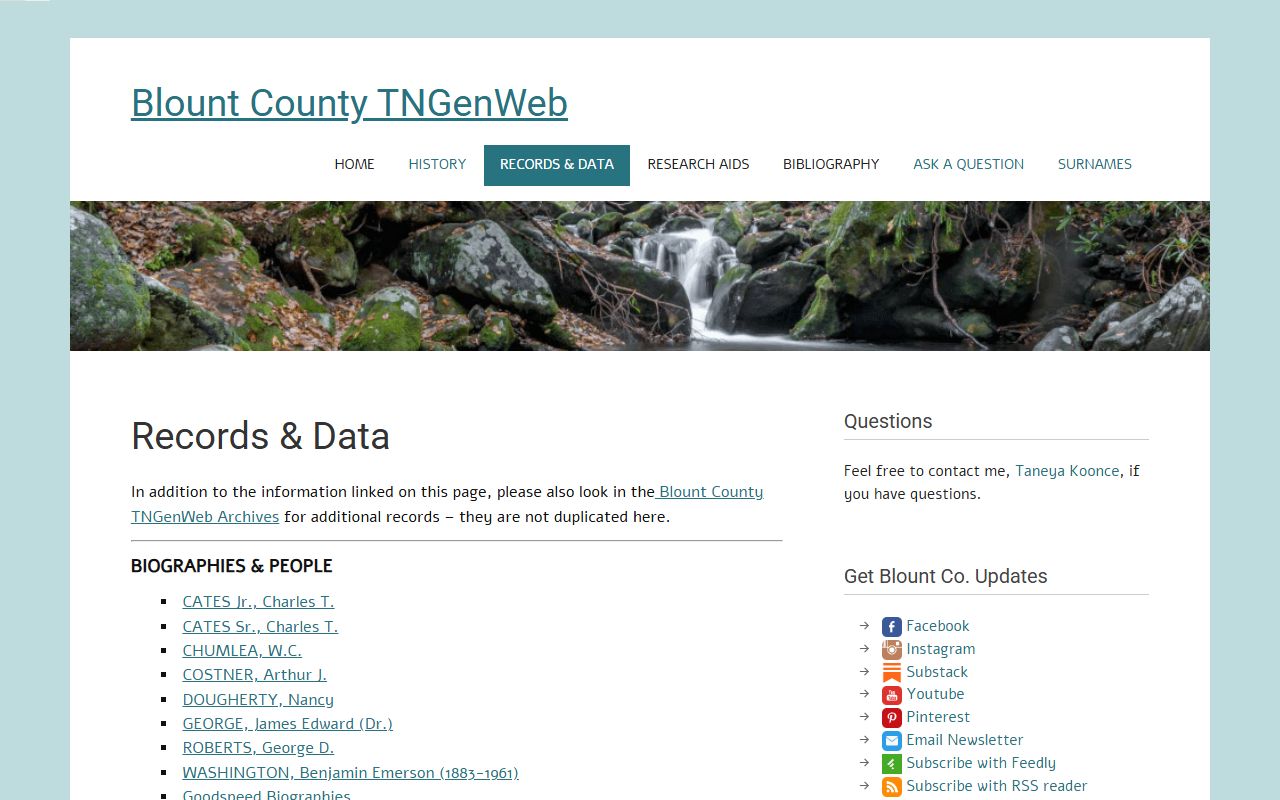
That combination makes it easier to move from a name in a newspaper to a burial place, then to a family file or court reference that proves you found the right person.
Blount County Obituary Records and Death Indexes
Blount County obituary records often show more than a death date. They can include the name of the spouse, children, church ties, service date, and burial site. In a county with damaged early records, those details are valuable. They help you line up a family across a newspaper line, a cemetery marker, and a state death index. When a local obituary is thin, use the county books and TSLA indexes together so you can confirm the match with fewer guesses.
The Blount County records list begins early. Births and deaths are noted from 1881, marriage records from 1881, and court, land, probate, and census work stretch much farther back. The county also lost the 1810 and 1820 censuses, so a family may appear in land and marriage work before it shows up in a neat printed index. The county TNGenWeb burial lists and the WPA burial records index are good support when a newspaper notice gives only a burial ground or a family name.
For the state side of the search, the Tennessee State Library and Archives guide at sos.tn.gov/library-archives/guides/vital-records-at-the-library-and-archives explains how death records evolved in Tennessee. That guide is useful because it shows where early records live, when statewide registration became dependable, and why some searches need a one-year window at a time. The state death notices and indexes can also be checked through the TSLA search portal.
The law side is narrower than many people expect. T.C.A. 68-3-206 controls copies of records, while T.C.A. 68-3-502 explains death registration timing. Those rules matter when you are trying to understand why one record is easy to get and another is not. They do not block the obituary search itself, but they can shape what the county office or state office releases right away.
- Full name and any maiden name
- Approximate death year or burial year
- Church, cemetery, or funeral home name
- Spouse and children if listed
- Town or community inside Blount County
Those facts help you move from a loose clue to a specific person. If the notice is in a paper archive, compare it with cemetery indexes and the county will index, then make a clean note of every matching date.
The Blount County Historical Museum adds local context when a death notice names a church, farm, or old neighborhood. A short place name can tell you which family branch to follow.
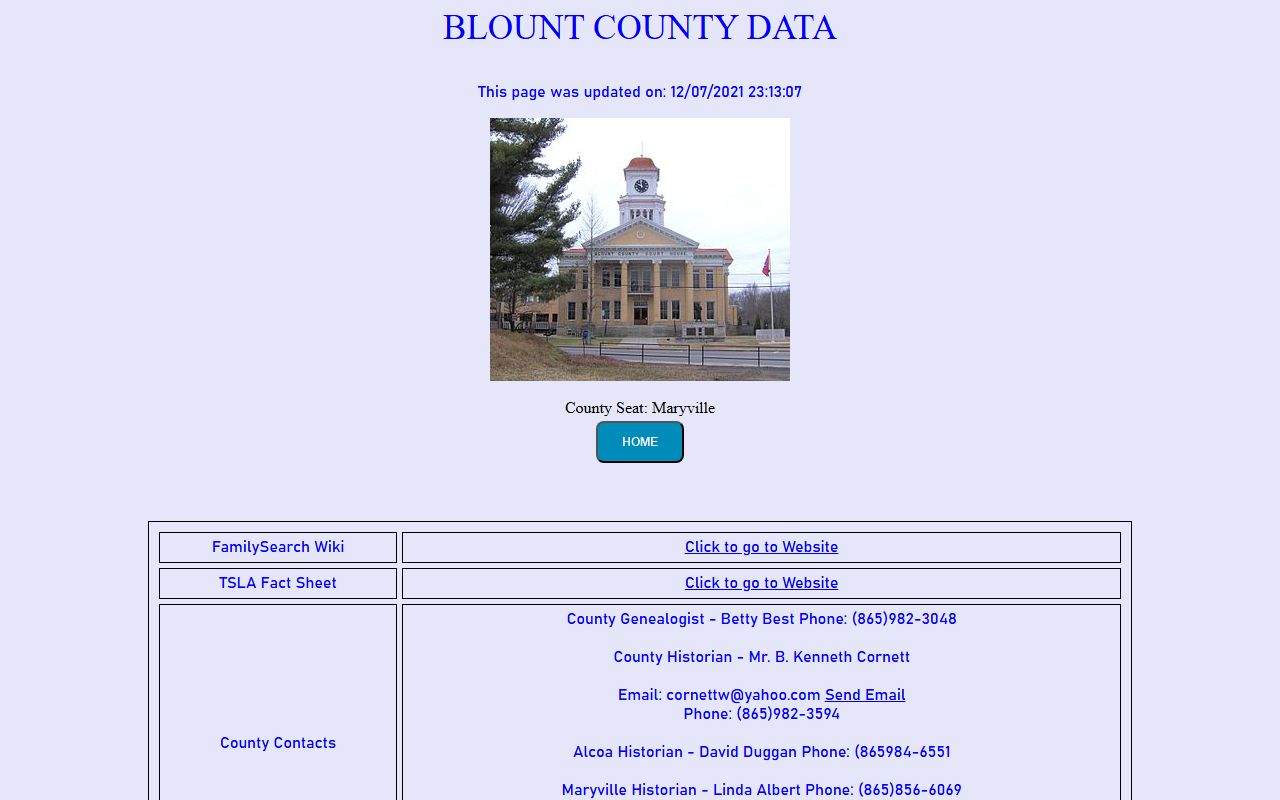
That kind of context is often what turns a useful obituary into a full family trail. It is also why Blount County research works best when the county and state sources are used together.
When you need a certified death record rather than a newspaper notice, the Tennessee Department of Health charges $15 per certified copy, and the office explains mail, online, and in-person order options on its site. That official copy can be the final check when an obituary has a common surname or a vague burial reference. If you need the public version of a record after a 50-year window, the state rules in T.C.A. 68-3-205 are the right place to start.
Note: Blount County searches go faster when you start with the county archive or library, then move to state indexes only after you have a clear name and date.
Help With Blount County Obituary Copies
Most obituary work is simple once you know what you want. If you need a newspaper clipping, the library is often the best place. If you need the official death record behind the notice, the state office is the cleanest path. If you need to confirm a burial site or a family line, the archives and cemetery indexes are usually faster than a broad internet search. That mix of local and state sources is what makes Blount County searches reliable.
Keep your request short and exact. Give the full name, the likely date, and the place. Ask for a copy, a scan, or a search note if that is all you need. The county offices can work faster when you are specific, and the same is true for the state office in Nashville. If the name is common, add a spouse name, church, or cemetery to narrow the search.
Note: Obituary work is usually best when you treat each record as a clue, not as the final answer.
Browse More Tennessee Records
Blount County sits inside a wider Tennessee research network. Use the state and browse pages when you want to compare a county trail with other local record sets.