
Search Campbell County Obituary Records
Campbell County obituary records often begin with local papers, then shift to county books, the historical society, and statewide death indexes. That is useful here because the county seat is Jacksboro, but the paper trail can also run through LaFollette and the Cumberland Plateau communities around Norris Lake. When a death notice is short or missing, the county office trail and the state archives can still fill in the date, the burial place, and the family name. A strong search starts with a person, a year, and one local clue.
Campbell County Quick Facts
Campbell County Obituary Sources
Campbell County was formed in 1806 from parts of Anderson and Claiborne counties. That older base means family lines can run deep, even when a direct obituary is hard to find. The county courthouse is at 590 Main Street in Jacksboro, and the Campbell County Circuit Court Clerk, Chancery Clerk and Master, and Register of Deeds all sit in the same county record system. The county research also notes that some office websites are under construction, so in-person or phone contact can matter more than a web form.
The Campbell Historical Society in LaFollette is one of the most useful local stops. It holds books on genealogy and local history, microfilm of court records, deeds, marriages, census schedules, and old copies of the LaFollette Press. That mix is excellent for obituary work because a death notice often points to a spouse, a cemetery, or a church that can be traced through those local holdings. The Jacksboro Public Library is another practical stop when you need a nearby place to compare names or dates.
| Courthouse | 590 Main Street, Jacksboro, TN 37757 |
|---|---|
| Historical Society | 235 East Central Ave., LaFollette, TN 37766 |
| Library | 585 Main Street, Jacksboro, TN 37757 |
| Chancery Clerk & Master | 570 Main St., Suite 110, Jacksboro, TN 37757 |
Campbell County began keeping marriages in 1838 and deaths in the statewide system much later, so a local obituary search may need a newspaper clue from the same time period as a cemetery book. The county trail is not just about one record type. It is about joining the paper, the court, and the burial place into one line of proof.
The Campbell County TNGenWeb site at tngenweb.org/campbell is a straightforward place to start. It can point you to county-specific record notes before you spend time on a courthouse request.
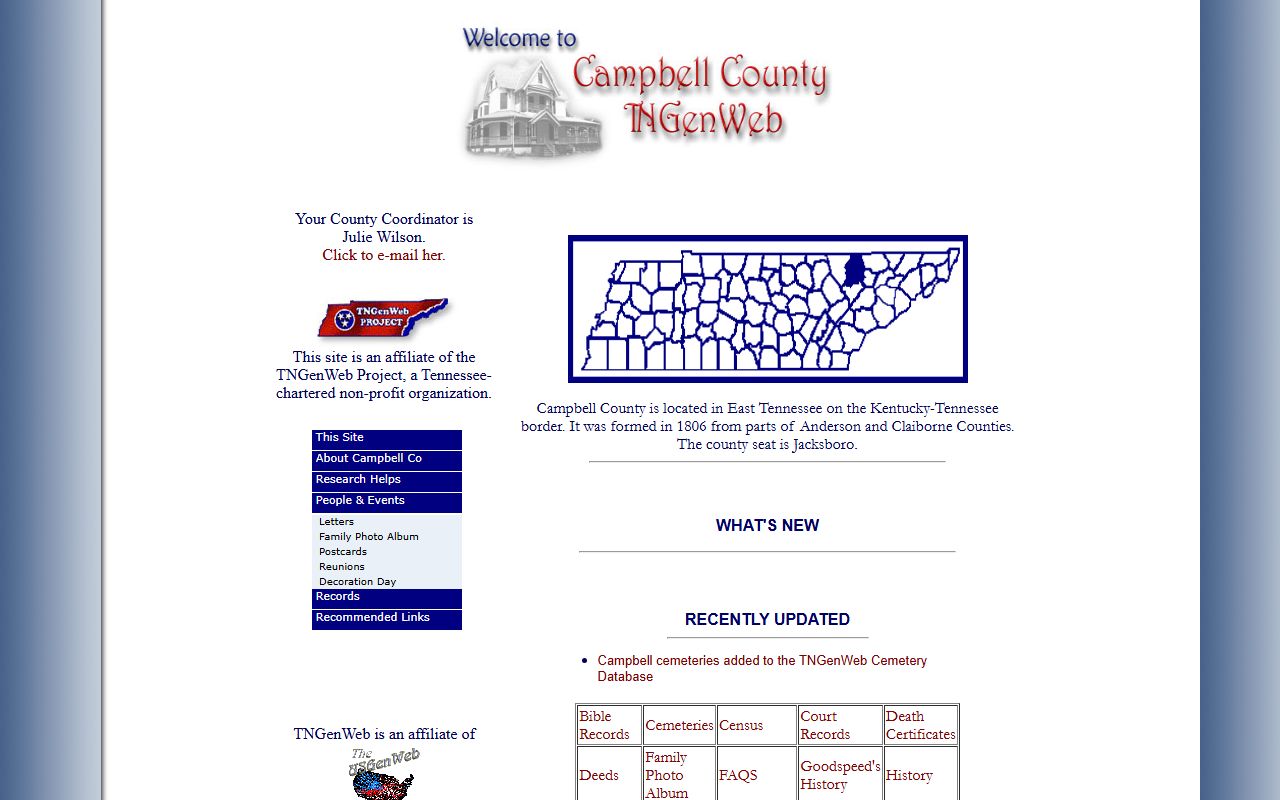
That matters in Campbell County because the best clue may be a cemetery list, a church item, or a name that appears only once in a local transcription.
How to Search Campbell County Obituary Records
Start with the county books you can reach fastest. The Campbell Historical Society has the kind of local material that makes an obituary search more precise, and the Jacksboro Public Library can support a name check before you ask for copies. The county TN Gen Society page at tngs.org gives another broad county reference when you want to confirm the local research path.
Because the county site notes that some office websites are under construction, do not assume the web is the only path. A direct call to the court clerk or the courthouse may be faster. For Campbell County obituary work, the local courthouse can still help with court minutes, marriage books, and probate references that support a death notice. If a funeral home name appears in an obituary, write it down and search that name with the person.
Statewide sources matter even more when the county trail is thin. TSLA's Genealogy Index Search and the Tennessee Virtual Archive are useful when a death falls in the 1908-1912 or 1914-1933 index periods. Those records can confirm the county and year, which often turns a vague local clue into a usable obituary search.
Recent death records follow state rules, not county guesswork. Under T.C.A. 68-3-205 and T.C.A. 68-3-206, access to copies depends on age and request status. That is why an obituary search and a certified record search are related but not the same task.
The county record dates also help you know where to focus. Marriage records begin in 1838, court records in 1838, and land records in 1807. If the obituary names an old farm or a child who inherited land, those older books can give the proof you need.
- Full name and alternate spellings
- Approximate year of death or burial
- Town, church, or cemetery name
- Any spouse or parent listed in the notice
- County office or newspaper clue
Use those facts in the same order each time. It keeps the search clean and cuts down on wrong matches.
The Campbell County TNGenWeb and Tennessee Genealogical Society pages complement each other well. One gives local transcriptions, the other gives a broader county frame. The county page at tngenweb.org/campbell is still the quickest local map.
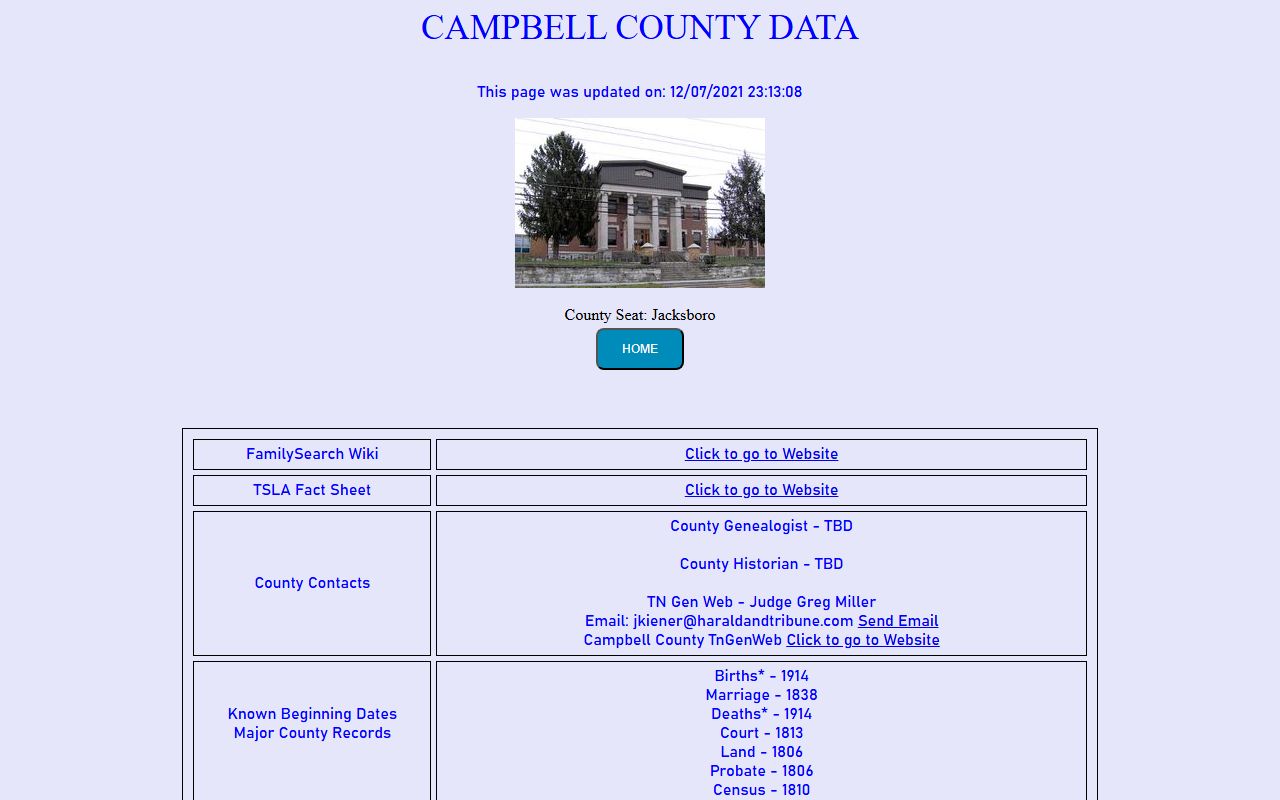
That page helps when you need to decide whether the name belongs in Campbell County or in a nearby county line area that fed the local newspaper trail.
Campbell County Obituary Records and State Indexes
Campbell County obituary records can be thin in older decades, so the state indexes are important. Tennessee statewide birth and death registration began later, and the TSLA death indexes fill a big gap. When you are tracking a person in Campbell County, the 1908-1912 index and the 1914-1933 statewide index can give you the county, the year, and the volume or certificate number. That is enough to move from a paper clue to an official record request.
The Office of Vital Records in Nashville is the official state source for certified copies. The office location, order methods, and $15 fee are outlined at vitalrecords.tn.gov and the state health page at tn.gov. If you need a death record to match a county obituary, those pages tell you what to send and how fast each method usually moves. Under Tennessee rules, recent records are still controlled by the state, not the county newspaper trail.
Campbell County also has a strong local history culture. That helps because obituary research is often about small details, like a church, a veteran note, or the name of a spouse. The historical society, the library, and the county books are all useful when the obituary is more of a clue than a full answer. The more local the fact, the more likely it is to live in a church book or cemetery note rather than in a broad statewide index.
Note: Campbell County obituary searches go smoother when you pair a local paper clue with a state index number.
The county's older records start in the 1830s and 1800s, which means a family may appear in the paper long before it shows up in a clean modern database. Keep the older spellings handy.
Help With Campbell County Obituary Copies
If you need a copy, start with the office or collection that actually holds the record. The historical society may have the fastest local answer, especially for a name that appears in a church or cemetery note. The courthouse is the next stop for court and probate material. The state office is the best stop for a certified death certificate. Each source has a different role, and the right one saves time.
Give the date, name, and place whenever you can. If you do not know the full date, give a year range and the cemetery or newspaper name. That is usually enough for a good first pass in Campbell County.
Browse More Tennessee Records
Campbell County fits into the larger Tennessee obituary and death record system. Use the county and city browse pages to compare your clues with other local records.