
Search Carroll County Obituary Records
Carroll County obituary records are a practical starting point when you are tracing a family line, checking a death date, or trying to match a name to a burial place in West Tennessee. Huntingdon is the county seat, and the county sits between Nashville and Memphis, so local and state sources both matter. The best results usually come from a mix of county library holdings, TNGenWeb transcriptions, and Tennessee state death indexes. Those sources help you move from a bare name to a real person with dates, places, and family ties.
Carroll County Quick Facts
Where to Find Carroll County Obituary Records
Start with the county sources that are already tied to Carroll County history. The Carroll County TNGenWeb page is the fastest online lead for local names, family groups, and record clues. It often points researchers toward the right surname, cemetery, or related line before a courthouse trip is needed. The TN Gen Society Carroll County page is another useful guide when you want a broader county history view.
The county seat is Huntingdon, and the Carroll County Courthouse, County Clerk, Circuit Court Clerk, Clerk & Master, and Register of Deeds all sit inside the same local research network. Those offices matter when you need a death date, burial trail, or a related court file. The county library in Huntingdon and the Carroll County Historical Society at the Gordon Browning Museum and Genealogical Library in McKenzie are also important. They can help you turn a short obituary lead into a fuller family story.
The 1931 courthouse fire did not destroy county records, which makes Carroll easier to work than many burned counties in Tennessee. That said, older obituary work still benefits from state help. The TSLA Vital Records Guide explains where death records begin and how to use the statewide indexes. The Genealogy Index Search is a useful bridge between local and state collections.
The first image below points back to the county research portal, which is often the cleanest place to start when you want a local obituary trail in Carroll County.
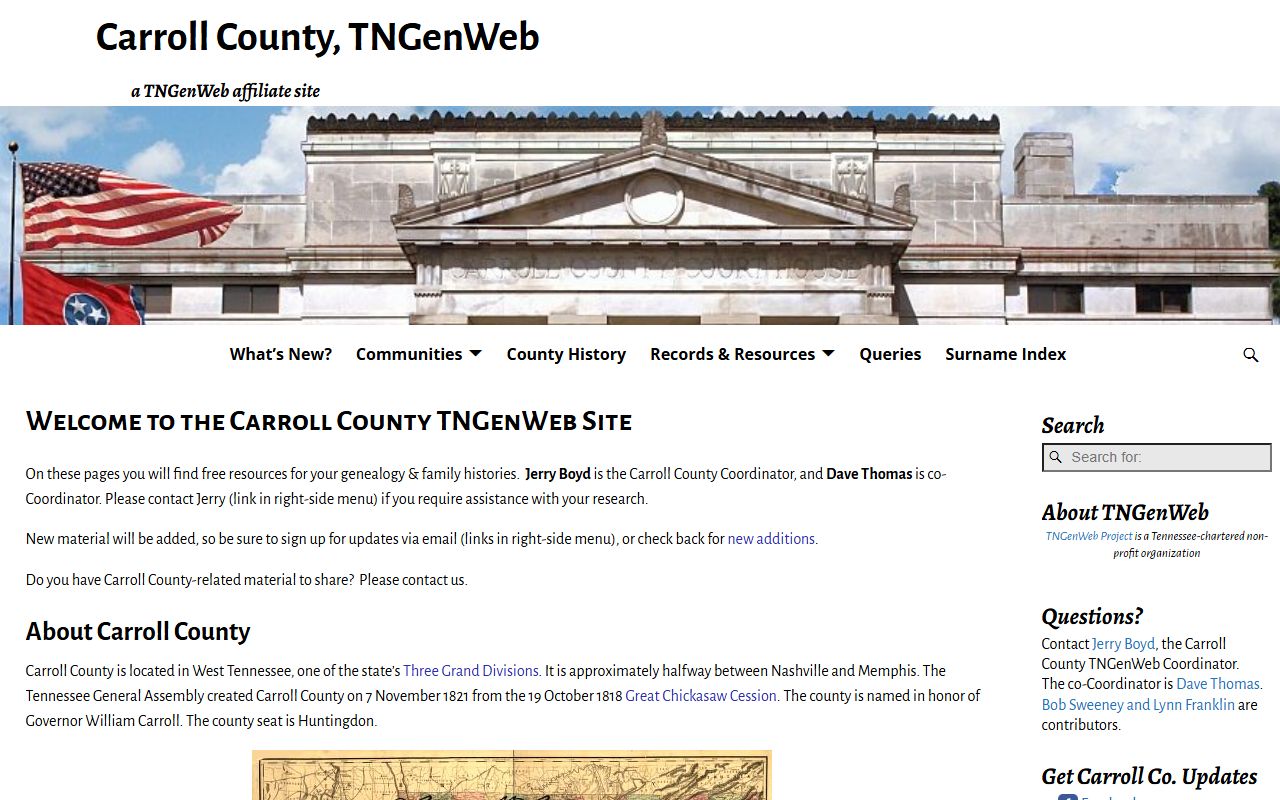
That site is useful for surnames, family links, and quick local clues before you move to the courthouse or library.
How to Search Carroll County Obituary Records
Good Carroll County obituary searches start with a name, but they work better when you also know the town, the family line, or a rough date range. Old notices can be short. Newer ones may give you a spouse name, service place, or cemetery. If a family lived near Huntingdon or McKenzie, try both town names. If the surname is common, add a church, cemetery, or parent name to cut the noise.
You can move through the search in a simple order. That keeps the work clean and saves time when one source points to another.
- Use the TSLA Genealogy Index Search for state collections tied to the same family.
- Move to the Carroll County Public Library and local historical society when you need a paper copy or a surname check.
- Use the county research trail to compare names, places, and burial notes.
- Check state death indexes when a local name is too thin or too common.
- Return to the county clerk if a probate or court file might confirm the line.
That order matters because obituary research often grows one clue at a time. A death date from one record can open a newspaper notice. A newspaper notice can point to a cemetery. A cemetery note can lead you back to a county clerk record or a family line in the library stacks. If you can only visit one local office first, the library is usually the best bet for speed and context. If you need an official death record, the county and state offices should be checked next.
Carroll County Obituary Sources and Archives
The Carroll County Historical Society, housed at the Gordon Browning Museum and Genealogical Library in McKenzie, is one of the stronger local places to ask for help. The museum setting matters because local surname files and community memory often give context that a plain index cannot. The Carroll County Public Library in Huntingdon also belongs on the list, since local history shelves and newspaper references can save hours of guessing.
The second image below points to the Tennessee Gen Society county page. It is a good reminder that some of the best Carroll County obituary work comes from combined local and statewide sources, not from any one office alone.
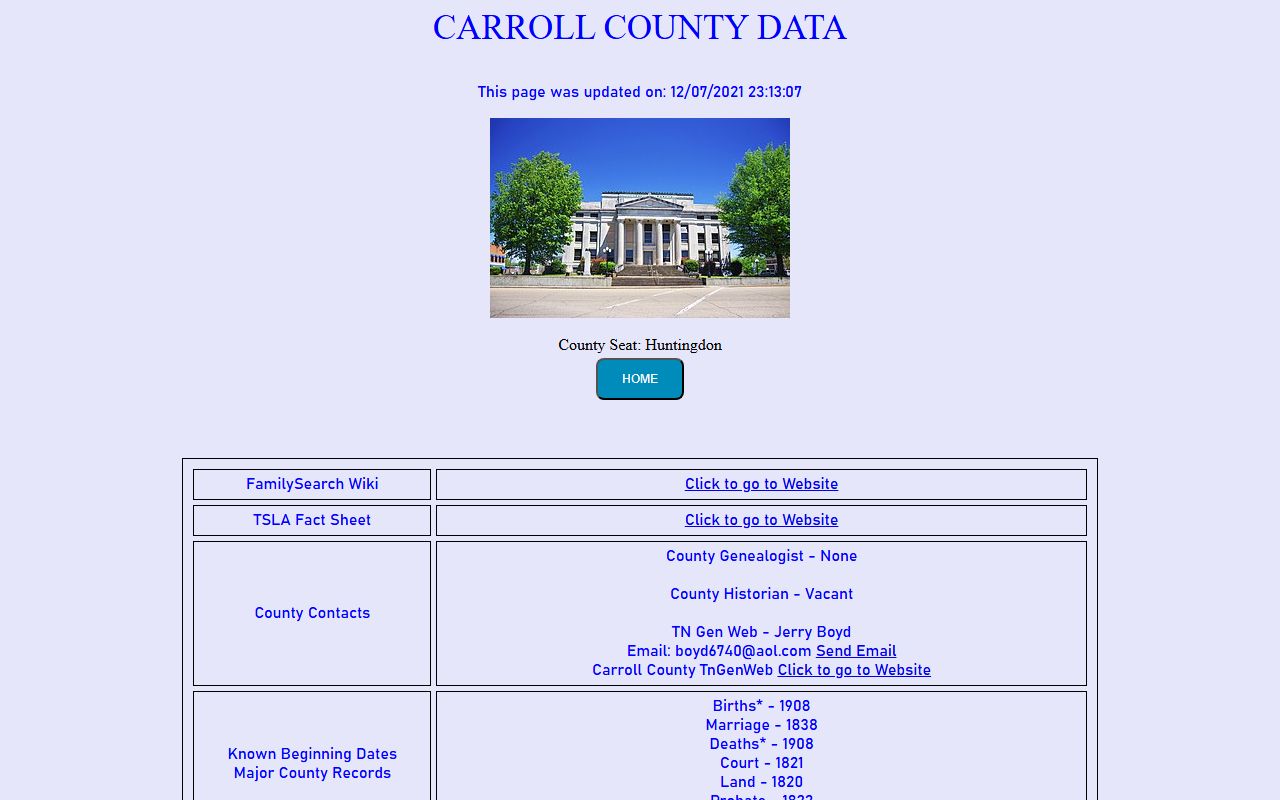
That mix helps when a name shows up in one place but the full life story is spread across the county library, cemetery notes, and state indexes.
Carroll County records begin early for a rural West Tennessee county. Marriage records start in 1822, land and court records also begin in 1822, and death records begin in 1908. Those dates matter because an obituary can often be matched to a marriage line or a probate file. If you find a family in an older county record, you can often use that lead to confirm the same surname in an obituary notice or death record.
For broader state work, the Tennessee Department of Health Vital Records pages are useful. The state office explains how death records are handled, where certified copies come from, and how older records move into the archives. For obituary researchers, that means a county hint can become a state record without losing the local context.
Public Access to Carroll County Obituary Records
Most obituary material is open to the public, but the record type still matters. A newspaper obituary is usually easy to read. A death certificate may be limited by state rules, and a newer file can contain more privacy controls than an older one. Tennessee treats death, marriage, and divorce records as restricted for fifty years under T.C.A. § 68-3-205. Certified copies are handled under T.C.A. § 68-3-206. That is why a newspaper obituary and a certified death record often work best together.
If you need an official death certificate, the Tennessee Department of Health Office of Vital Records is the state source. The office is in Nashville at 710 James Robertson Parkway, and the department explains in its ordering guide that the fee is $15 and that VitalChek is the official online vendor. For Tennessee researchers, the Vital Records help center is the fastest way to confirm the current process.
Older deaths may also show up in the statewide indexes at TSLA. The 1908-1912 death index and the 1914-1933 index are both worth checking when a family line extends beyond the local newspaper run. For a county like Carroll, those records can fill the gap between a surname in a local obituary and the official death entry that confirms it.
Note: If a lead is thin, go back to the county seat, the museum library, and the state index together. That is usually faster than trying one source at a time in isolation.
Getting Copies in Carroll County
Once you have the right name, the next step is usually a copy. The Carroll County Clerk and Circuit Court Clerk can help with county records, while the county library and historical society can help with local obituary leads that are not filed in a courthouse. If you need a certified death certificate instead of a newspaper notice, move to the Tennessee Department of Health Office of Vital Records. For family history work, it is common to need both. One gives the story. The other proves the date.
You can also use the Tennessee Virtual Archive for digitized state material, especially when you want to compare names, places, and dates across collections. That helps when one obituary uses a nickname while another record uses a formal name. It also helps when you are trying to sort two people with the same surname in the same town.
The easiest path is often local first, state second. Start with TNGenWeb, then check the library, then verify with the state index or certified record. That sequence keeps your research tied to Carroll County while still using the wider Tennessee record system.
Browse More Tennessee Records
Carroll County fits into the wider Tennessee obituary trail. Use the statewide browse pages when a family moved, a burial happened elsewhere, or a local clue points beyond Huntingdon or McKenzie.