
Find Carter County Obituary Records
Carter County obituary records often lead researchers into some of the oldest families in upper East Tennessee. Elizabethton is the county seat, and the county has deep record roots that reach back before the 1933 courthouse fire. That makes Carter a strong place to research both newspaper notices and older burial clues. A good search usually begins with TNGenWeb, then moves to the local library, then closes with state indexes and county record books. The Watauga area has long family lines, so small details matter.
Carter County Quick Facts
Where to Find Carter County Obituary Records
The first local stop is Carter County TNGenWeb. That site points to marriage records, birth and death record inventories, and the local research paths that make obituary work easier. For Carter County, that matters because the county has a long record history and many families appear in more than one source. The birth and death records inventory is especially useful when you want to know what exists online and what still needs a courthouse or library visit.
Elizabethton/Carter County Public Library is another important stop. It can help with local history, family names, and news references that do not always show up in a quick web search. The Watauga Association of Genealogists also gives Carter County research a local base. When you are trying to identify the right obituary notice, local groups can tell you which family papers, church notes, or cemetery references deserve a second look.
The first image below comes from the county TNGenWeb page. It is a good place to start because it leads you into Carter County names and local research notes before you move to state indexes or old newspapers.
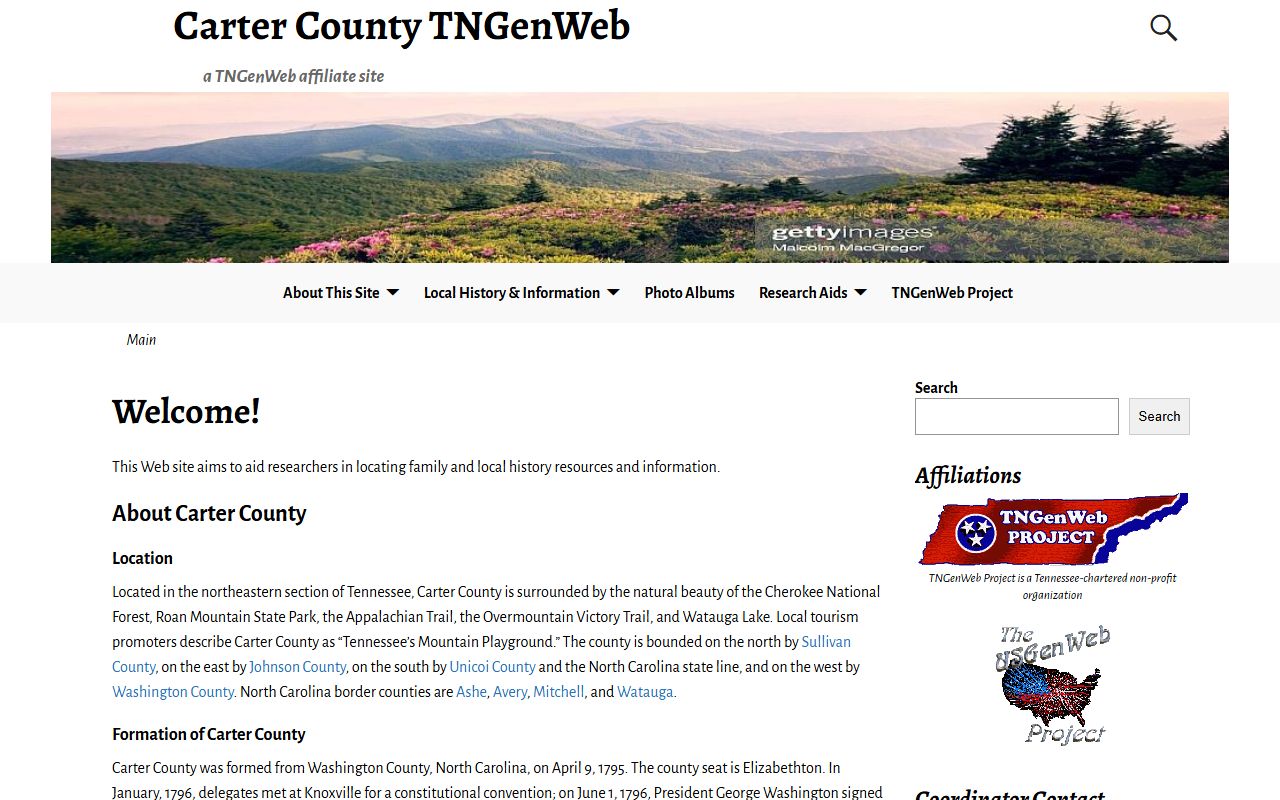
That page is useful for surname work, local clues, and the kind of lead that can turn a death date into a full family history trail.
Carter County records are early enough to matter for obituary work. Marriage records begin in 1790, probate in 1794, land in 1795, and court records in 1804. The 1933 courthouse fire is a reminder that some files may need backup sources, but it does not erase the value of the surviving county records. If you are tracing an older death notice, those early books can tell you which branch of the family to follow.
How to Search Carter County Obituary Records
Start with the name, then add a place if you know one. Carter County names often repeat across generations, so a town, church, or cemetery can make the difference between a clean hit and a pile of false matches. Elizabethton newspapers also matter, because the county has scattered early newspaper issues from 1838 and a more complete run beginning in 1947. That gives you a wide time range to test.
The next image points to the Carter County birth and death records page. It is a useful second stop because obituary work often depends on a death record, a date, or a record inventory before you can move to a paper notice.
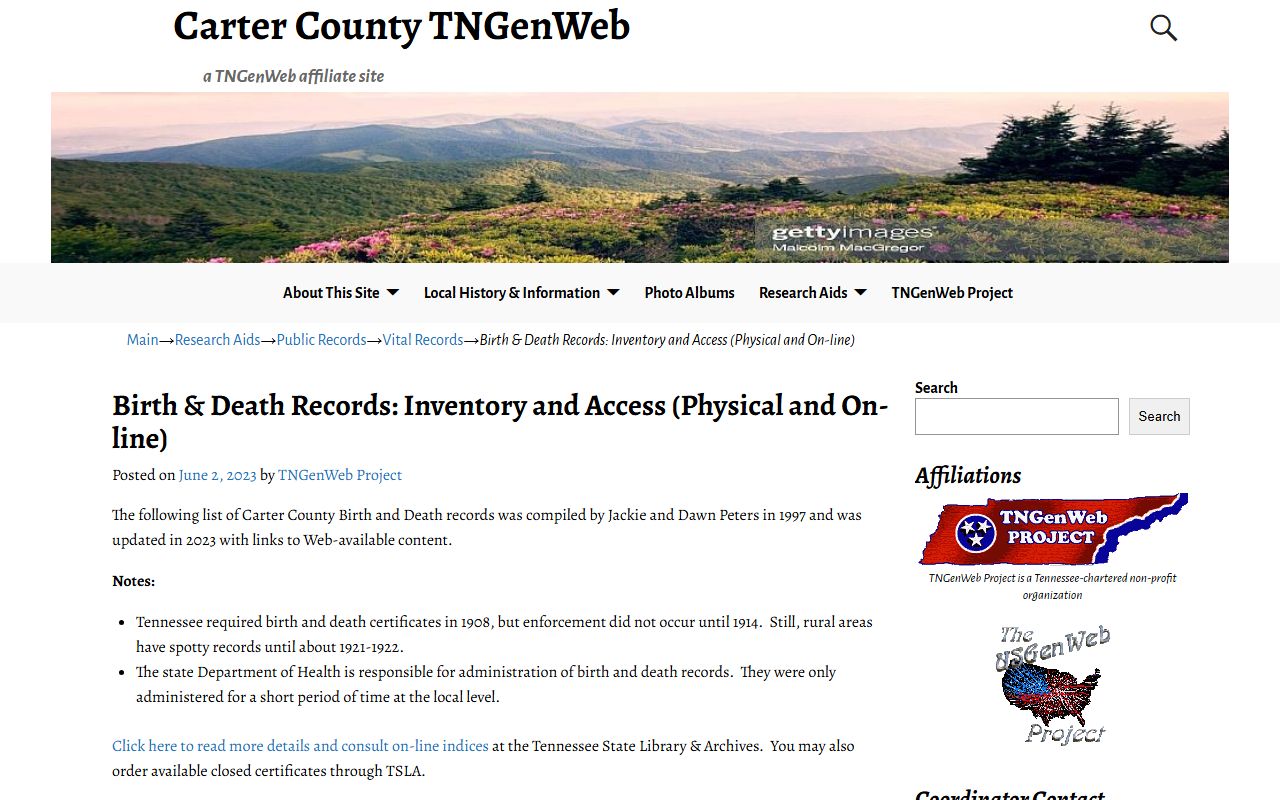
The inventory helps you see what is available online and what still lives in county or state files.
Use a simple research order when you work this county.
- Use the county pages to gather names and note every death clue that appears.
- Search TSLA Genealogy Index Search for state-level name matches.
- Use the local library and genealogists when a surname needs a careful read.
- Look at newspaper clues and death records together when one source is vague.
- Keep the county inventory in view so you know what still needs a paper visit.
That order works because Carter County obituary research usually grows from one clue to the next. A family name in TNGenWeb may point you to a death record. A death record may point to a cemetery. A cemetery can lead to a church note or a newspaper obituary. The goal is not just to find a notice. It is to prove the line and keep the family group together.
Carter County Obituary Records and TSLA Sources
The third image below points to the Tennessee Genealogical Society county page. That page is a strong companion source when you want a broader view of Carter County record work and local history. It helps connect obituaries to cemeteries, marriages, and probate trails.
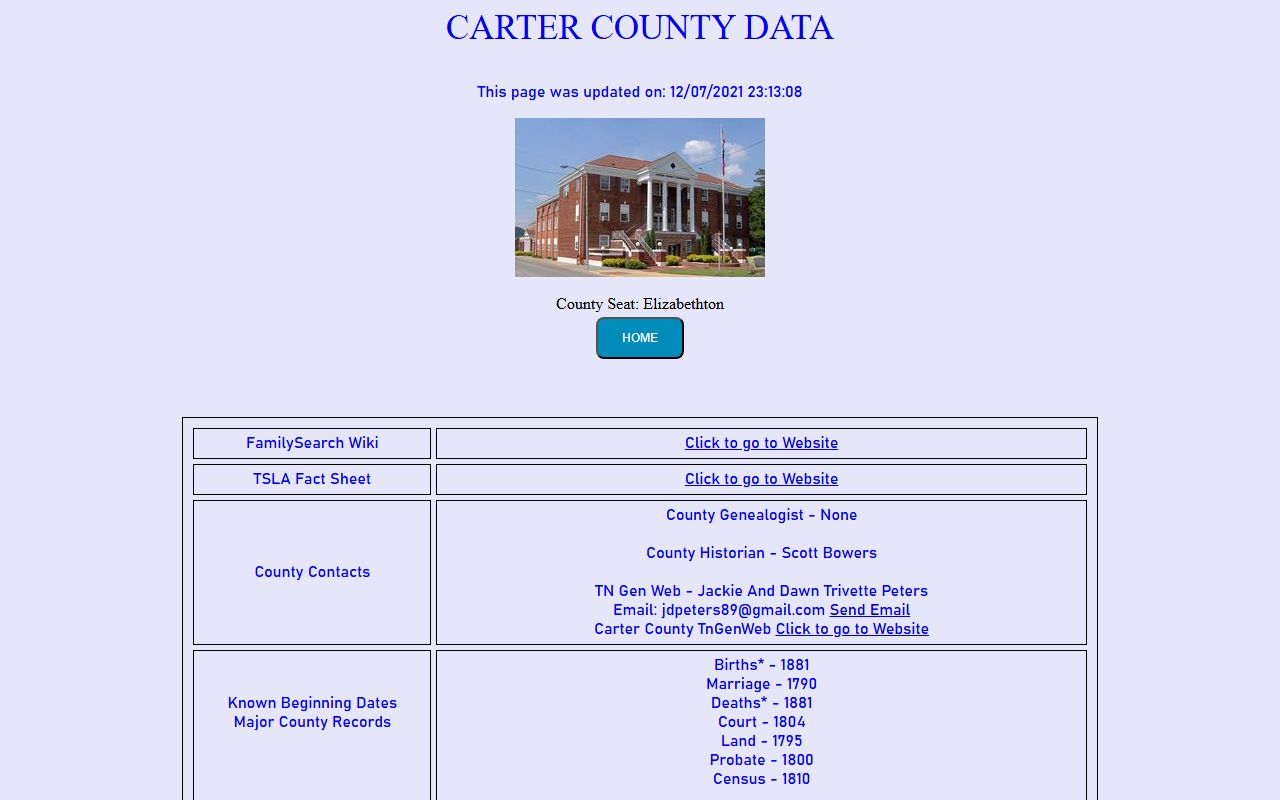
Pairing that page with TNGenWeb and the local library gives you a more complete picture of the county.
The TSLA holdings listed in the research are especially helpful here. Carter County has death record abstracts for 1908-1925 and 1926-1934, plus vital statistics for 1914 through 1925. Those records can bridge the space between a local obituary clue and the state death index. The county also has a strong run of marriage records, cemetery records, wills, inventories, and court minutes in TSLA microfilm and book holdings. That matters when the obituary gives a spouse name, a burial place, or a family cluster but not the full story.
When you work a long Carter County line, do not stop at the notice itself. Use the obituary to find the death date, then use the death date to test the county clerk record, the library stack, or the TSLA index. That pattern is reliable in Carter County because the county has both deep local roots and a solid state archive trail.
Public Access to Carter County Obituary Records
Obituary notices are public in the normal sense, but the official records behind them still follow Tennessee access rules. Death certificates are limited under T.C.A. § 68-3-205, and certified copy rules are covered by T.C.A. § 68-3-206. That means a newspaper obituary, a county death record, and a certified state copy do not always show the same level of detail. For Carter County research, you often need all three to get a clean result.
If the state record is needed, the Tennessee Department of Health Office of Vital Records in Nashville is the place to request it. The office explains the $15 fee and the VitalChek online option on its ordering page. The help center and ordering guide are the fastest sources for current process details. For older deaths, the 1908-1912 index is worth a look. The 1914-1933 state index can help when the death falls a little later.
Note: In Carter County, the best research path is usually local first, then state verification. That keeps the record tied to Elizabethton while still giving you a certified result when you need one.
Getting Copies in Carter County
You can request county copies through the Carter County Clerk, Circuit Court Clerk, or Chancery Court office when the file you need is held locally. That is often the right move for old probate notes, marriage work, or a court file that gives context to an obituary. The Elizabethton/Carter County Public Library can also help with local history references, and the Watauga Association of Genealogists may point you toward a cemetery, church, or family file that is not obvious from the main indexes.
For a death certificate, move to the state office. For a newspaper notice, stay with the local library and county research sources. For a full family trail, use both. That is the safest way to avoid missing a spouse, a child, or a burial detail in a county with a long history and many repeated surnames.
The final step is to compare the record types. A state death file confirms the date. A county source may show the family circle. An obituary may show the place of burial. When those three match, your Carter County research is usually solid.
Browse More Tennessee Records
Carter County connects to the wider Tennessee obituary trail. Use the statewide browse pages when a family line crosses into Johnson County, Unicoi County, or another nearby record set.