
Clay County Obituary Records
Clay County obituary records are often easier to approach than in many older Tennessee counties because the county has no known courthouse disaster history. That does not mean every answer is on one shelf. It means the county offices, local museum, and public library give you a stable place to begin. Celina is the county seat, and the county’s record set starts with the county’s formation in 1870. That helps when you are moving from a death notice to a record copy or from a family clue to a newspaper search.
Clay County Quick Facts
Clay County Obituary Sources
Clay County was established in 1870 from Jackson and Overton counties. The county seat is Celina, and the record dates are fairly clean: marriage, court, probate, and county death work begin around the same period as the county itself. That makes local obituary research a little more direct. You can use county office records first, then use newspapers and local history groups to fill in names, burial places, and family links.
The Clay County Museum and Clay County Public Library are both useful for this kind of work. The museum can help with place history and community memory, while the library can help with local reference material. The Middle Tennessee Genealogical Society and Upper Cumberland Genealogical Association also matter here, because Clay County sits in a region where researchers often cross county lines to follow family names.
Use the county and society pages at Clay County TNGenWeb and TN Gen Society county page for a quick first pass. Those sources are useful for names, family notes, and a map of what is already transcribed. They do not replace the original file, but they save time and help you avoid blind searching.
Clay County Obituary Records
Clay County obituary records connect to the County Clerk, Circuit Court Clerk, Chancery Court Clerk, and Register of Deeds. The county clerk has marriage work, while the broader county record set gives you court and probate material. Births and deaths begin in 1908, and the county’s court and probate records begin in 1870. That is enough to support a layered obituary search when a newspaper notice is short or when the family name is common.
The county has no known courthouse disasters, which means surviving books and files may be more complete than in some neighbors. That matters when you need a burial lead, an executor name, or a kin link that only appears in a later probate file. The Clay County Tennessee Museum at 805 Brown Street is a useful bridge between local memory and formal records. It can help point you toward a church, cemetery, or old family line tied to an obituary.
State indexes still matter. Tennessee death records at TSLA can confirm dates and counties, and the Tennessee Department of Health can provide later certified copies. The county office and the state office do different jobs. Used together, they let you move from an obituary hint to a document you can trust.
Start with the county research site at Clay County TNGenWeb. It is the fastest route to local transcriptions and surname notes.
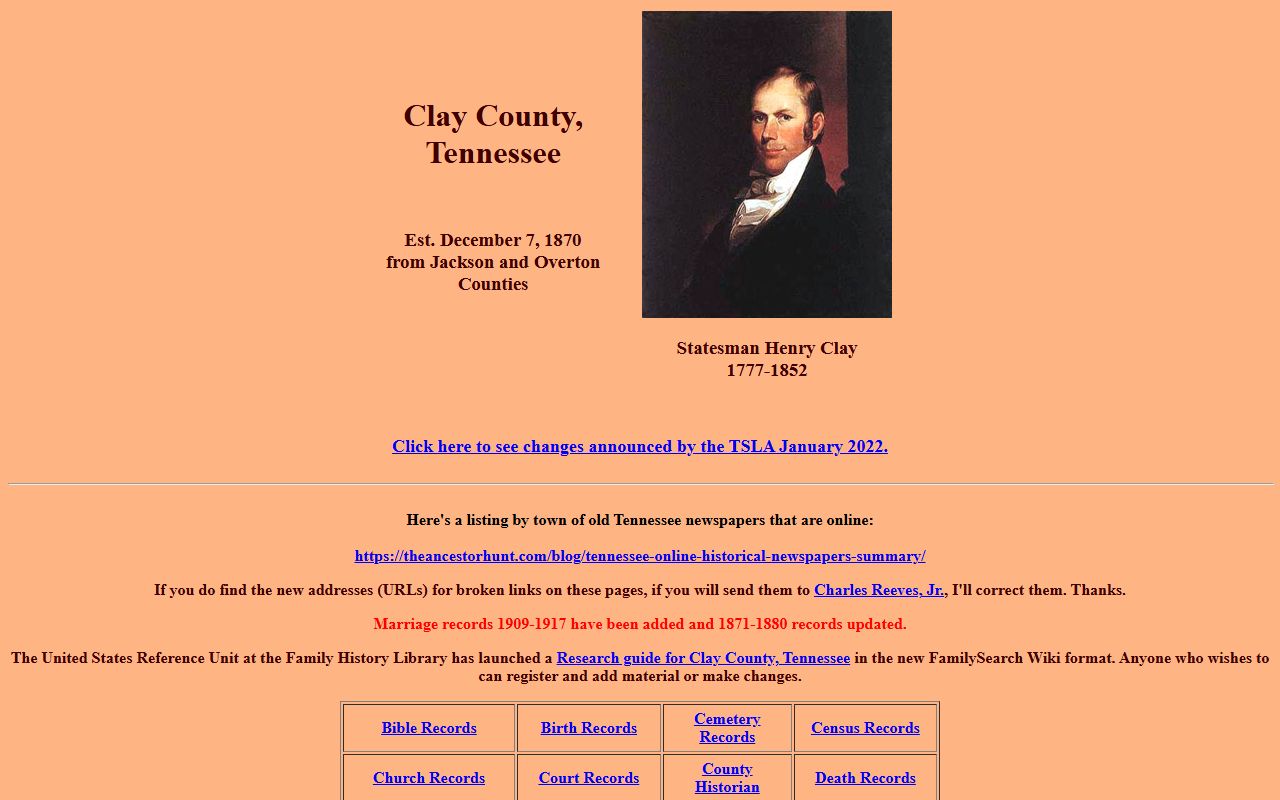
That page works well for a first search by surname or community.
Then check the Tennessee Genealogical Society page at Clay County TN Gen Society page. It can help narrow the hunt when the obituary mentions a church, settlement, or branch family.
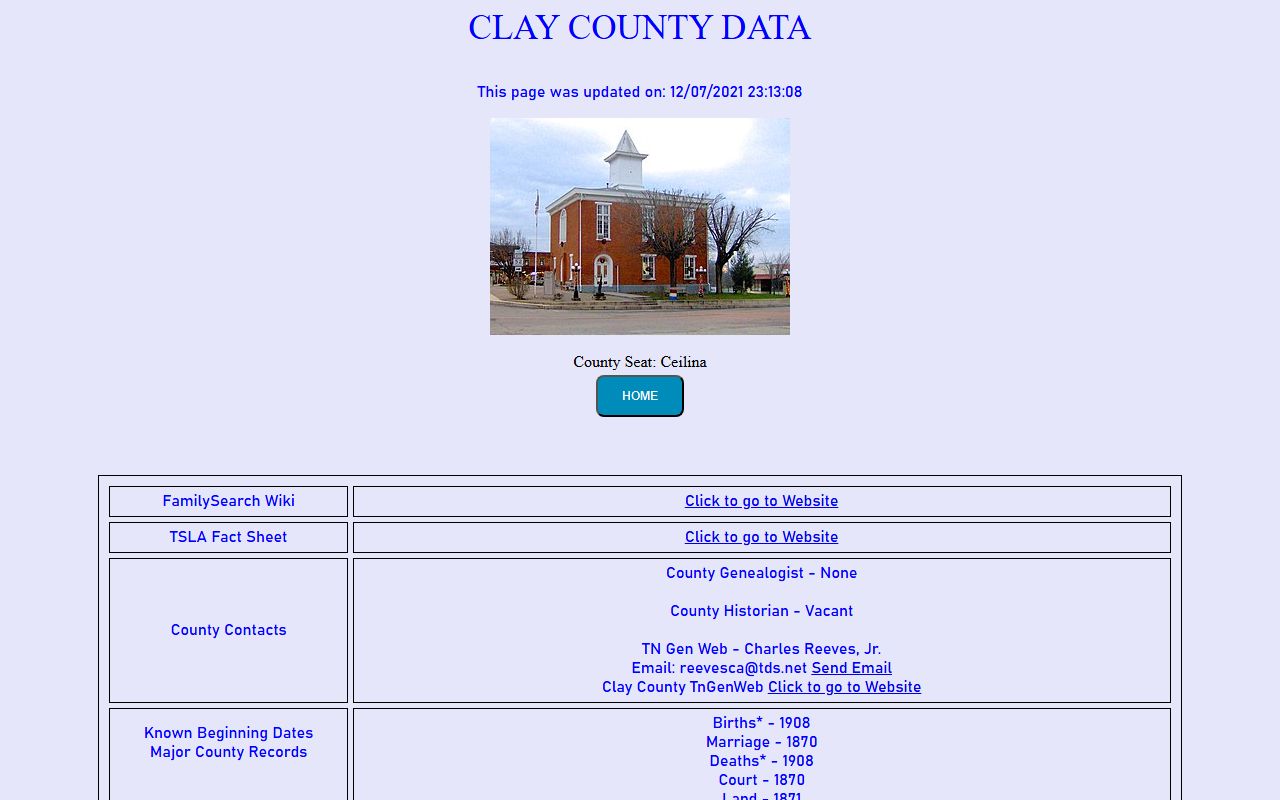
That second view is often the tie-breaker when two names look alike.
Search Clay County Obituary Records
Search Clay County obituary records by starting with the exact name and then widening to likely family members. The county office set is straightforward, so a good query often comes down to date range and community name. The Clay County Public Library, 116 Guffey Street, can help with local reference sources. The museum can also support the search with local memory and history. Together, they give you a usable local map before you move to the state indexes.
When you need state help, TSLA’s death indexes at TSLA death records 1908-1912 and TSLA death records 1914-1933 are the best place to confirm a death year. Move next to the Tennessee Department of Health for later certificate requests. The Vital Records office explains the current process, and the ordering guide shows how to request a certified copy. That can close the loop when a newspaper clue needs proof.
Clay County is a good example of why local and state sources work best together. The obituary gives the lead. The county record confirms the family. The state index confirms the death date. Once those pieces line up, the search becomes much easier.
Clay County Help
The Clay County museum, library, and genealogy groups are the best local help for obituary work. The county has a smaller footprint, so a careful search can move quickly if you ask for the right thing. Give the full name, probable community, and a rough year. If you know a spouse or parent, include that too. Many obituaries in rural counties mention family ties first and formal details second.
The county’s records begin in 1870, and that makes it easier to separate true county material from older records in Jackson or Overton counties. That separation matters because Clay County was formed from those counties. When you hit a dead end, check both the county itself and the parent counties for earlier family paper. That is often where the obituary trail starts to make sense.
Note: For Clay County, a local newspaper clue and a county office record are often enough to build a reliable obituary search path.
Clay County Access
Clay County obituary records are not hidden behind a hard wall. Most of the work is about knowing which office, book, or index to ask for. The county clerk and related offices can help with vital records and legal copies, while the library and museum help with local context. Statewide records then add proof. That route is practical and efficient, and it fits the way Clay County records are arranged.
If you are checking a family line across county lines, use the Tennessee Genealogical Society page and the county research site together. They are the fastest way to find where a surname appears next. That can matter as much as the obituary itself when you are trying to tie one person to the right family branch.