
Coffee County Obituary Records
Coffee County obituary records are a strong example of how local and state sources can work together. Manchester is the county seat, and the county keeps a broad mix of books, microfilm, and historical material. There is no known courthouse disaster history here, so the local trail is often steadier than in some nearby counties. That helps when you are trying to move from a newspaper notice to a certificate or from a family name to a burial place. A careful search usually begins with the county clerk, library, and newspaper collections.
Coffee County Quick Facts
Coffee County Obituary Sources
Coffee County was formed in 1836 from Bedford, Franklin, and Warren counties. That history matters because some family lines may still show up in the older parent counties. The county seat is Manchester, and the county clerk office at Hillsboro Boulevard is the first local stop for many searches. For obituary work, the Manchester Public Library and Lannom Memorial Library are especially useful because they carry local history, cemetery material, and newspaper microfilm collections.
The Coffee County Historical Society is another valuable local contact. Its records, photo files, and family history help can turn a bare name into a real search path. The county also has strong research support from TSLA. Coffee County was the kind of place where death notices, funeral home records, and will books can be used together. That is why you want to look at the county sources first, then move to the state indexes for confirmation.
Use Coffee County TNGenWeb and the statewide Tennessee Genealogical Society resources when you need a quick local map. The county research file also points to TSLA microfilm, newspaper runs, and request steps that can help when a notice is not online.
Coffee County Obituary Records
Coffee County obituary records connect to county clerks, probate books, deeds, wills, and library holdings. Marriage records begin in 1853, land records in 1836, and probate and will work are part of the county’s early paper trail. Birth and death registration begins in 1908, and the county clerk can help with copies and index work. That makes Coffee County a good place to search both backward and forward from a death notice.
The local research file notes TSLA microfilm holdings such as deed indexes, marriages, marriage bonds, wills, and WPA records. That is useful when the obituary mentions a spouse, an inherited farm, or a probate matter. The TSLA death records index can confirm a death year, and the funeral home records can show service details that a newspaper clipping leaves out. Put another way, Coffee County obituary work is strongest when you use every layer the county offers.
Because the county is larger than a small rural place but still locally grounded, you may find the obituary in a newspaper while the county will book gives you the legal close. If you need one place to start, begin with Manchester, then widen to Tullahoma and the parent counties if the surname is older than the county line itself.
Start with the county research site at Coffee County TNGenWeb. It ties the local county story to the names and places that matter most.
Then use the Tennessee Genealogical Society page at TN Gen Society county page. The page helps when a family moved across county lines or used a nearby town newspaper.
If a notice points to a formal death record, the TSLA index pages at death records 1908-1912 and death records 1914-1933 are the next step. Those entries can confirm the death date, county, and certificate number.
That sequence is often the cleanest path when the obituary itself is only partly indexed or clipped.
Search Coffee County Obituary Records
Search Coffee County obituary records by using the county clerk, the library, and the historical society together. The county clerk can guide you to official records, while the Manchester Public Library can help with local newspapers and family history material. The Lannom Memorial Library in Tullahoma gives you another local history option. That is useful because the obituary may mention a city or community that is not the county seat.
The Coffee County research file gives practical request advice. Keep your request narrow. Give the full name, a likely death year, and any family name or town clue. If you have a burial place, include that too. That lets the clerk or librarian move faster. If you need a copy, the state Vital Records office explains the process for certified records, and the ordering page shows how to submit a request.
For a statewide index path, use the Tennessee State Library and Archives genealogy search at TSLA Genealogy Index Search.
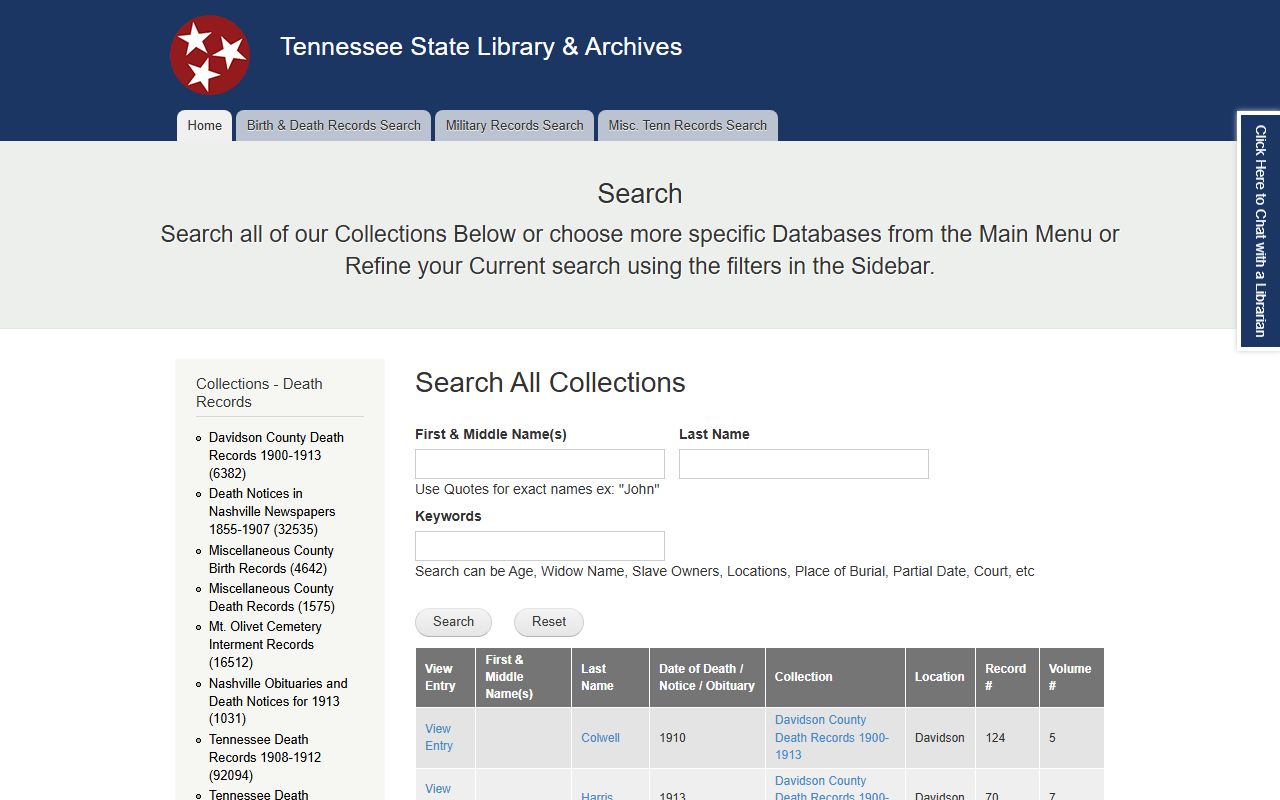
That search portal helps when a Coffee County name needs a county and year match before you request a copy.
For people who want to verify an obituary against the death record, the county and state work best as a pair. Use TSLA death records 1908-1912 and TSLA death records 1914-1933 when you need a date anchor. One gives the local notice, the other gives the formal confirmation. In Coffee County, that combination is often enough to solve the search without guesswork.
Coffee County Help
The Coffee County Historical Society, the county clerk, and the two libraries are the best local help for this county. The historical society can point to photo files, family histories, and community memory. The libraries can point to newspaper microfilm and local collections. Those sources are especially valuable for obituary work because a notice often contains only a few direct facts and a lot of family context.
Use the county file to narrow the search, then use the state file to prove the date. That is the basic rhythm here. It works because Coffee County has enough local record strength to support a real search but still benefits from the statewide death indexes and vital records office when you need proof.
Note: Coffee County obituary searches often move fastest when you begin with local library material and then confirm the death in a TSLA index.
Coffee County Access
Coffee County obituary records are accessible through a mix of public county offices and state records. The county’s clerk and library resources can help with local research, while TSLA and the Tennessee Department of Health cover statewide confirmation and certified copies. That means the search does not stop at one office. It moves from local clue to state proof.
If the obituary is tied to a funeral home or a will, the county’s microfilm and manuscript material may be enough to finish the trail. If not, the state indexes will usually give you the missing piece. Either way, the county gives you a solid path into the records.