
Search Crockett County Obituary Records
Crockett County obituary records are built from county registers, TSLA indexes, and local genealogy work tied to Alamo. The county is small, but the record trail still reaches back to its 1871 start. That means a surname may show up in county court, a death index, or a family note before it ever appears in a neat obituary clipping. Searchers do best when they keep the county seat, a rough year, and any family name in view. Those small facts are often enough to crack the first lead.
Crockett County Obituary Records
Crockett County was formed in 1871 from Haywood, Madison, Dyer, and Gibson counties. It was named for David Crockett, and the county seat is Alamo. That history matters because the earliest county records begin with the county itself. Marriage, land, court, and probate records begin in 1871, while birth and death registration begin in 1908. A person who died before county death registration may still leave traces in a newspaper notice, a cemetery record, or a family line in the TSLA files.
The county clerk is the place to start when you need the county copy trail. TSLA notes the courthouse in Alamo, and it advises researchers to request specific names and approximate dates in writing. That is a good practice in a small county because the clerk may need a narrow search window to find the right paper quickly. The TSLA guide also points to microfilm copies of county court, circuit court, deed, marriage, and probate records from the county's early years.
If you want a local starting point, the Crockett County records page at tngenweb.org/crockett/records-resources/ is a direct entry into community research. It is not a replacement for the clerk, but it can show where names and families already appear online.
The Crockett County records page is a practical first step for local names and family clues.
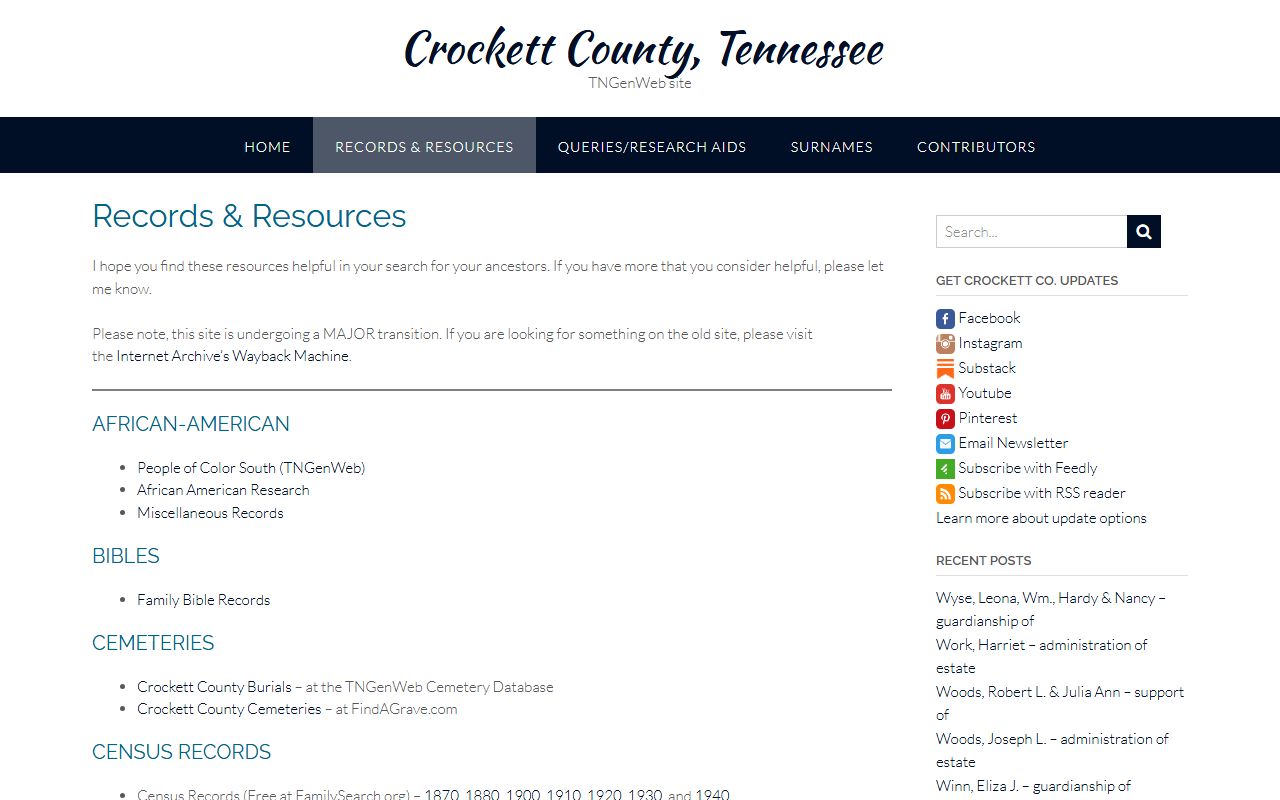
That page can help you spot a family before you move into county or state indexes.
Search Crockett County Obituary Records
A careful search in Crockett County starts with the simplest pieces first. Use the full name, then trim to initials or a spouse name if the first try does not work. Add a date range when you can. Small counties often have tighter paper trails, so even a one-year guess can help. If a name is common, pair it with a likely cemetery, church, or place of death. That saves time and cuts down on false matches.
The request procedure in the research is clear. Send a written request to the county clerk, include the names and approximate dates, and add a self-addressed stamped envelope plus copy fees. The usual copy rate is $0.25 per page. For a researcher who is far from Alamo, that one detail matters. It makes the first request faster and gives the clerk a clean target.
When you need state help, the Tennessee Department of Health and TSLA together cover the next step. The state genealogy index at sos.tn.gov/products/tsla/genealogy-index-search pulls many TSLA collections into one place. The vital records guide at sos.tn.gov/library-archives/guides/vital-records-at-the-library-and-archives explains how the archive and health office fit together.
To keep the search tight, use these facts first:
- Full name of the deceased
- Approximate death year
- Alamo or another known place name
- Spouse, parent, or sibling name if known
Crockett County Obituary Sources
TSLA is the backbone for older Crockett County death work. The 1908-1912 death index and the 1914-1933 state index both help with names that may not have a clean obituary clipping. The 1908-1912 death certificate format can include the deceased person's name, date and place of death, birth data, age, sex, race, marital status, occupation, parents' names, cause of death, burial location, and the informant. That is a lot of context for one record, and it can confirm that a newspaper notice belongs to the right person.
The Crockett County TNGenWeb records page at tngenweb.org/crockett/records-resources/ can be paired with the Tennessee Genealogical Society county page at tngs.org/resources/Site/Custom_HTML_Files/TCD/County/Crockett.html. Those two pages make a good local pair. One is aimed at community records. The other gives a county-level genealogy frame.
The county's older records can also be searched through the statewide death indexes at tslaindexes.tn.gov/death-records-database-name and sos.tn.gov/products/tsla/statewide-index-tennessee-death-records-1914-1933. Those index pages matter when an obituary gives only a rough date and you need to match it to the death record.
The TN Gen Society county page is another solid guide for county research.
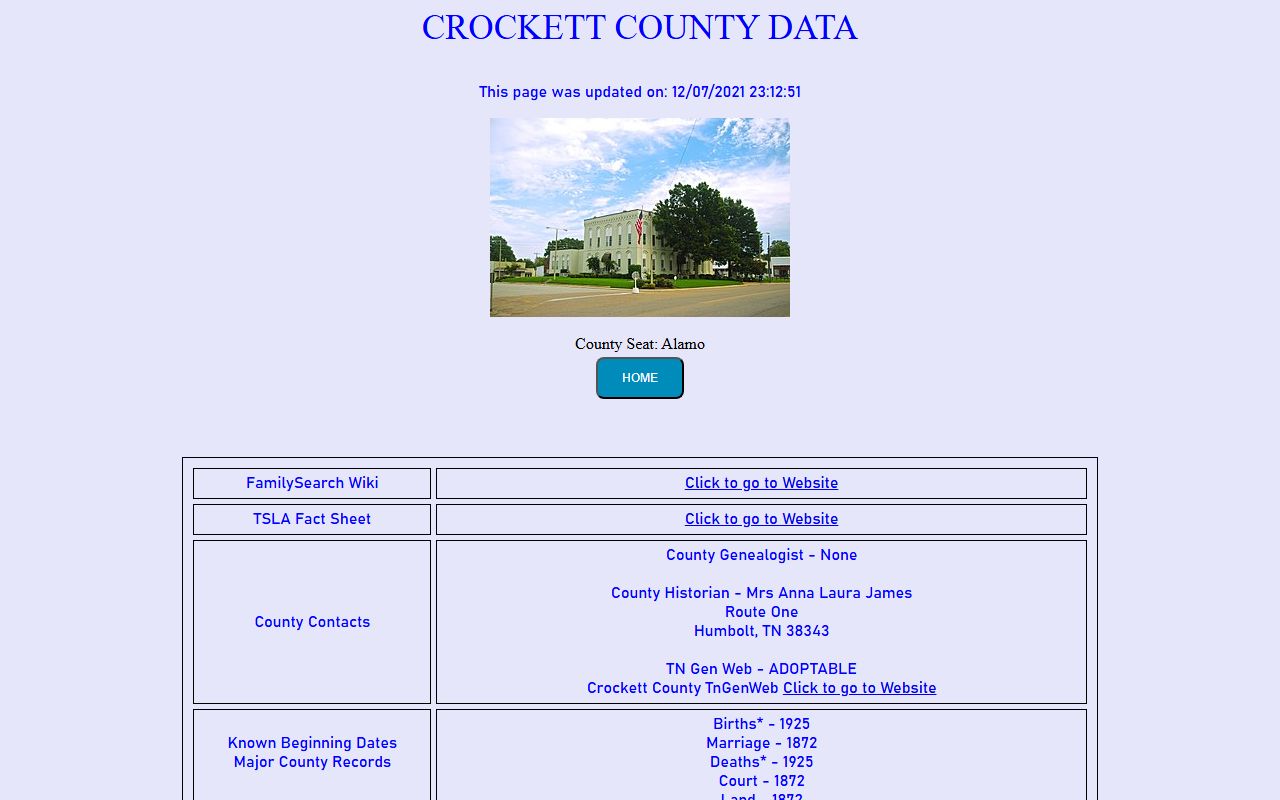
That county guide is useful when you want a second path after the first name search.
Alamo and County Records
Alamo is the county seat, so it remains the practical center for local record work. If you are working from home, write down the exact name and the date range before you contact the clerk. That saves time on both sides. The county clerk's office can point you toward marriage, probate, court, and land records that may help identify the right family line. Those records often sit just next to obituary clues in a family tree.
For a broad state view, the Tennessee Virtual Archive at teva.contentdm.oclc.org is worth checking if you want digitized historical material. It does not replace the county clerk, but it is a clean backup when a local book or microfilm copy is hard to reach. The archive can help turn a county name into a search path instead of a dead end.
The county research works best when you move from local to state and back again. A name in a county file can point to a newspaper notice, and a newspaper notice can point back to a county death record. That round trip is slow, but it is the surest way to avoid guesses.
The TSLA fact sheet gives another county-level reference point.
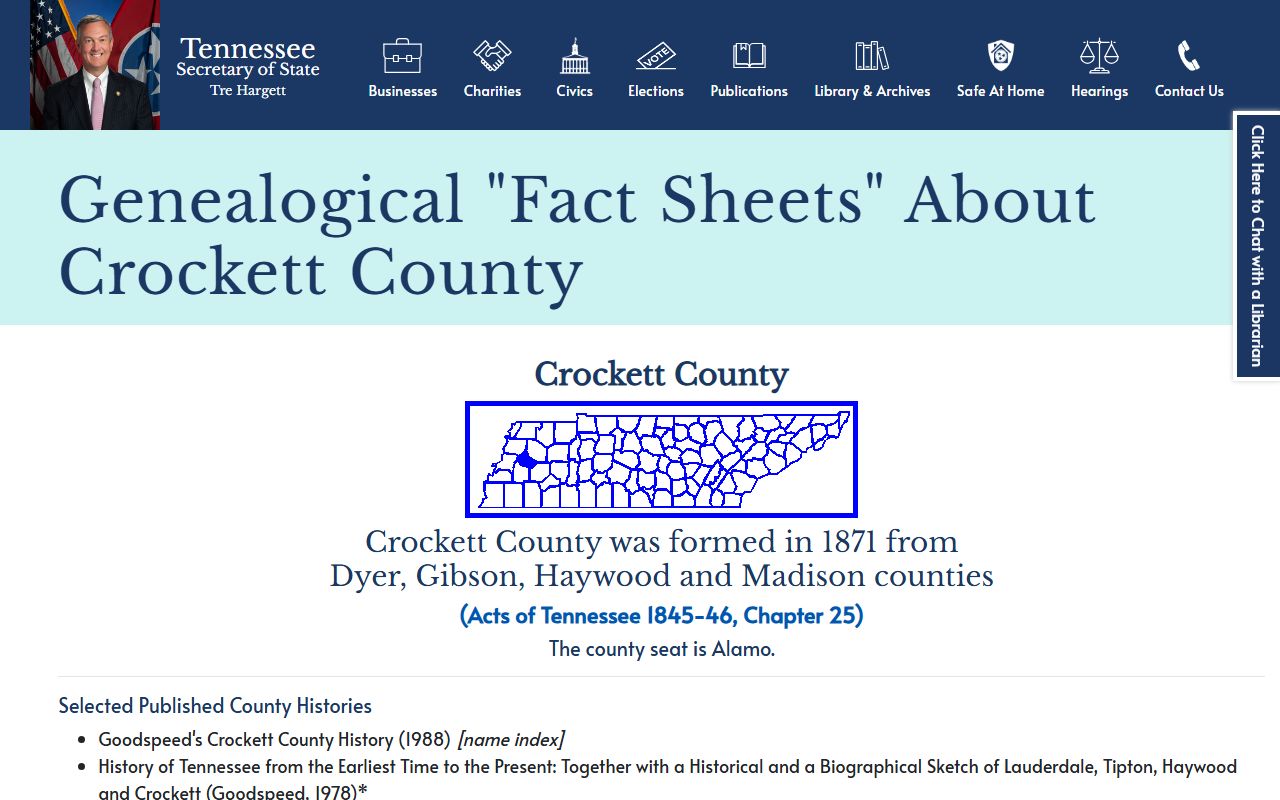
That fact sheet is handy when you want the county summary before ordering copies.
Crockett County Obituary Access
Obituary work in Tennessee sits between public access and certified copy rules. Under T.C.A. § 68-3-205, death and marriage records are restricted after 50 years, and under T.C.A. § 68-3-206, certified copies go only to eligible requesters or people who can show a proper need. That does not block obituary research, but it does shape how you ask for the record you want.
The entitlement rules at vitalrecords.tn.gov/hc/en-us/articles/45896937912595 explain who can ask for a certificate and what proof may be needed. That is useful in Crockett County because a death certificate often confirms the same family lines that an obituary hints at. The two records work best together.
If you need an actual certified death record, the Tennessee Vital Records order page explains mail, in-person, and vendor ordering. The county obituary trail may start with a newspaper note, but the certified record is what gives the clean legal proof.
Request Crockett County Copies
For local copies, begin with the county clerk and give the clearest request you can. For older search work, give the surname, a year range, and the record type. For state copies, use the vital records office or the TSLA indexes depending on what you need. If you only need the content of an obituary, TSLA and the local genealogy pages may be enough. If you need a certificate, go through the state order process.
Researchers who want a broader first pass can also start at the TSLA vital-records guide. That page keeps the archive and health office roles clear. It is a good reminder that a county obituary search often depends on more than one office.
Note: In a county this small, a single extra clue can save a long search. A spouse, a farm name, or a cemetery hint often narrows the field enough to find the right record the first time.