
Cumberland County Obituary Records
Cumberland County obituary records are easy to miss if you only look in one place. Crossville has county clerk files, a public library with genealogy material, TSLA indexes, and historical society work that all overlap. That gives researchers several ways in. A death notice may begin with a newspaper clipping, move to a county death index, and end with a cemetery note or family history. Keep the surname, a likely decade, and the Crossville location in mind. Those are usually enough to open the first door.
Cumberland County Obituary Records
Cumberland County was formed in 1856 from Bledsoe, Rhea, Roane, and White counties. The county seat is Crossville. That matters because the county clerk, court clerk, and register of deeds all begin their useful run with the county's own creation. Birth and death records start in 1908, while marriage, land, probate, and court records begin in 1856. Older obituary work often depends on those county files because a death notice may point to a family line that lives in the marriage or probate books.
Crossville's local research scene is deeper than it first looks. The Cumberland County Public Library holds family histories, census records, local cemetery records, historical newspapers on microfilm, and county history books. Those collections can confirm a burial place or a surname variant when a newspaper clipping is too thin. The county historical society also adds cemetery transcriptions and family history work, which is often the missing link in a small search.
The Tennessee Genealogical Society county page at tngs.org/resources/Site/Custom_HTML_Files/TCD/County/Cumberland.html is a useful local pointer when you want a county-level outline before you order or visit.
The Cumberland County TN Gen Society page at tngs.org/resources/Site/Custom_HTML_Files/TCD/County/Cumberland.html gives a good county-level overview.
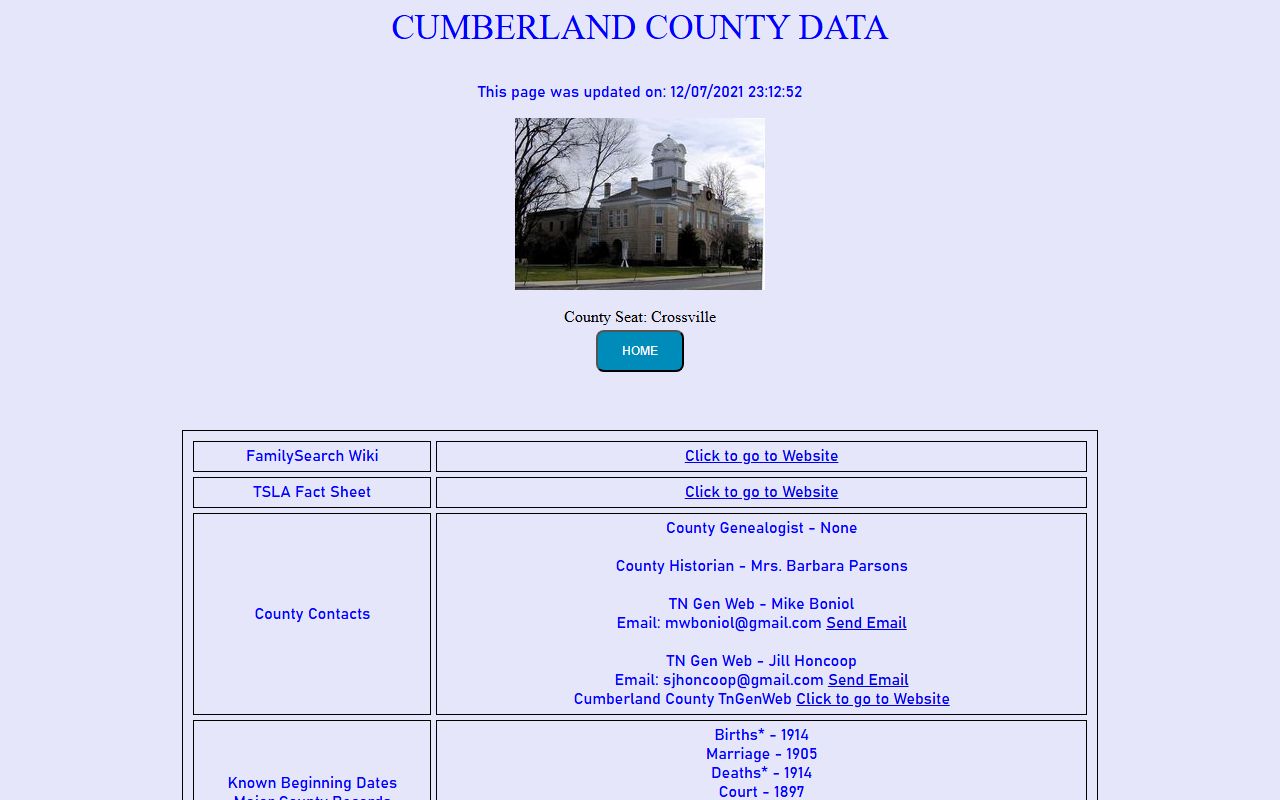
That page is a clean starting point when you want the county laid out before you dive into names.
Search Cumberland County Obituary Records
A smart Cumberland County search uses short steps. Start with the name. Then add the likely decade. Then try a spouse, parent, or cemetery name if the first pass does not land. Obituaries and death notices in a county like this often show up in more than one file, and the second search is where the match usually appears. Be ready for small spelling shifts too. One branch may use a full middle name while another uses initials.
The TSLA index page at tslaindexes.tn.gov is important here. It carries the 1908-1912 death records, the 1914-1933 state index, and related genealogy tools. The state archive guide at sos.tn.gov/library-archives/guides/vital-records-at-the-library-and-archives explains how the archive and health office divide the record trail, which helps when a notice turns into a certificate request.
Use the search clues below when the first result is weak:
- Full surname and any maiden name
- Approximate death year or burial year
- Crossville, a church name, or a cemetery name
- Spouse or child name when it is known
If you want digitized state material, the Tennessee Virtual Archive at teva.contentdm.oclc.org can help with older scans and browsable files. It is a good backup when a county search needs a wider view.
Cumberland County Obituary Sources
TSLA death indexes are a key source for Cumberland County obituary work. The 1908-1912 index is searchable by name, and the 1914-1933 index helps fill in the state record gap. The 1908-1912 certificate format can include the deceased person's name, residence, occupation, birth and death dates, parents' names and birthplaces, cause of death, burial place, and informant. That kind of detail often confirms whether a clipped obituary belongs to the right person.
The historical society adds another layer. Its cemetery transcriptions and family histories can explain why a burial place appears in a newspaper notice even when the county record is thin. The published genealogical notes from Crossville newspapers also matter, because they can turn a brief notice into a family map. When you are working from home, that can save a long trip.
For broader state access, the genealogy index at sos.tn.gov/products/tsla/genealogy-index-search pulls many TSLA databases together. Use it when you want to move from one clue to several record types at once.
Crossville Libraries and History
The Cumberland County Public Library is one of the most useful local stops in the county. Its genealogy collection includes family histories, cemetery notes, historical newspapers, and county history books. That mix is useful because an obituary often gives you the name, while the library can supply the follow-up. A funeral home name may lead to a family file. A burial place may lead to a cemetery record. The library can help bridge those gaps.
Local history and county history books also matter because they often name families that show up again in later obituaries. If you are tracking one surname across several generations, that wider family picture helps you avoid a false match. It also helps when the obituary only names a spouse and a child. The library collection can show how those names fit into the county.
Note: Cumberland County research works best when you keep the library, TSLA, and the county clerk in the same search path. Each one holds a different piece of the record trail.
Cumberland County Obituary Access
Most obituary and death-notice material is open to search, but certified vital records follow Tennessee rules. Under T.C.A. § 68-3-205, death and marriage records are not treated the same as open newspaper clippings, and under T.C.A. § 68-3-206, certified copies go only to eligible requesters or those who can show a proper need.
The entitlement guide at vitalrecords.tn.gov/hc/en-us/articles/45896937912595 spells out who may order a certificate. That is the right page to use when an obituary points to a death certificate request. For older research, the archive guide and the state indexes usually get you to the same family faster.
Certified records, search indexes, and obituary clippings work together in Cumberland County. Use the one that fits the question. A clipping helps with the story. A certificate helps with proof.
Request Copies and Next Steps
When you need a copy, start with the source that holds the clearest version. The county clerk can help with county records, the public library can help with local newspaper work, and TSLA can help with state indexes and manuscript holdings. If you need a certified death record, the state vital records office is the correct route. If you need a research copy, an index or archive note may be enough.
For a quick reminder of the local path, the Cumberland County genealogy page at tngs.org/resources/Site/Custom_HTML_Files/TCD/County/Cumberland.html stays useful. It keeps the county frame clear while you move between the newspaper, cemetery, and county files.
Keep your request short and clear. Give the name, the record type, and the date span. That keeps the first search round tight and raises the odds that the right obituary or death record turns up quickly.