
DeKalb County Obituary Records
DeKalb County obituary records are often most useful when you already have a name, a rough year, or a place tied to Smithville or a nearby community. The county's record set begins in the 1800s and includes marriage, probate, land, and death material that can support a death notice search. That matters when the obituary itself is short. A church line, a burial place, or a spouse name can lead you into the county clerk's records or the local genealogy library. Start with the local trail, then move to the state indexes if the county source is incomplete.
DeKalb County Quick Facts
Where to Find DeKalb County Obituary Records
The DeKalb County Clerk office in the courthouse is a practical place to start. The office keeps marriage records from 1848, probate records from 1838, and land records from 1837. Those records matter because obituary research often needs a second proof point. A notice can name a spouse, and a probate file can confirm the same family. If you are trying to connect a death to a place, the county clerk's office can help you build that bridge. The local history also helps because DeKalb County is small enough that a single surname may show up in several record types at once.
USGenWeb is another good route because the county research notes point to free transcriptions of vital records, deeds, censuses, and obituaries. That kind of volunteer work is useful when a death notice is buried in a family line and not in a formal index. DeKalb County also has Tennessee State Library and Archives microfilm for marriages, probate, deeds, court minutes, and tax records. If a family lived in Smithville for a long time, the obituary often makes more sense once you place it beside those older county records.
DeKalb County keeps its obituary research grounded in local records first. That is a good thing. It lets you work from the county clerk to the state index without losing the thread.
DeKalb County Obituary Sources
The county genealogy library at DeKalb Genealogy Library is the best local web lead in the manifest. It gives you a place to search when the obituary is not in a broad state database. The library page is especially useful because county obituary research often depends on local memory, not just official records. A simple surname search can turn into a family group if the library has clipping notes or researcher files.
The Tennessee Genealogical Society county page is the other successful local manifest source. It is useful when you need a second path into the county and when the first search only gives you a partial clue. The local county page and the genealogy library together are usually enough to move from a name to a death date, then from the death date to an obituary trail.
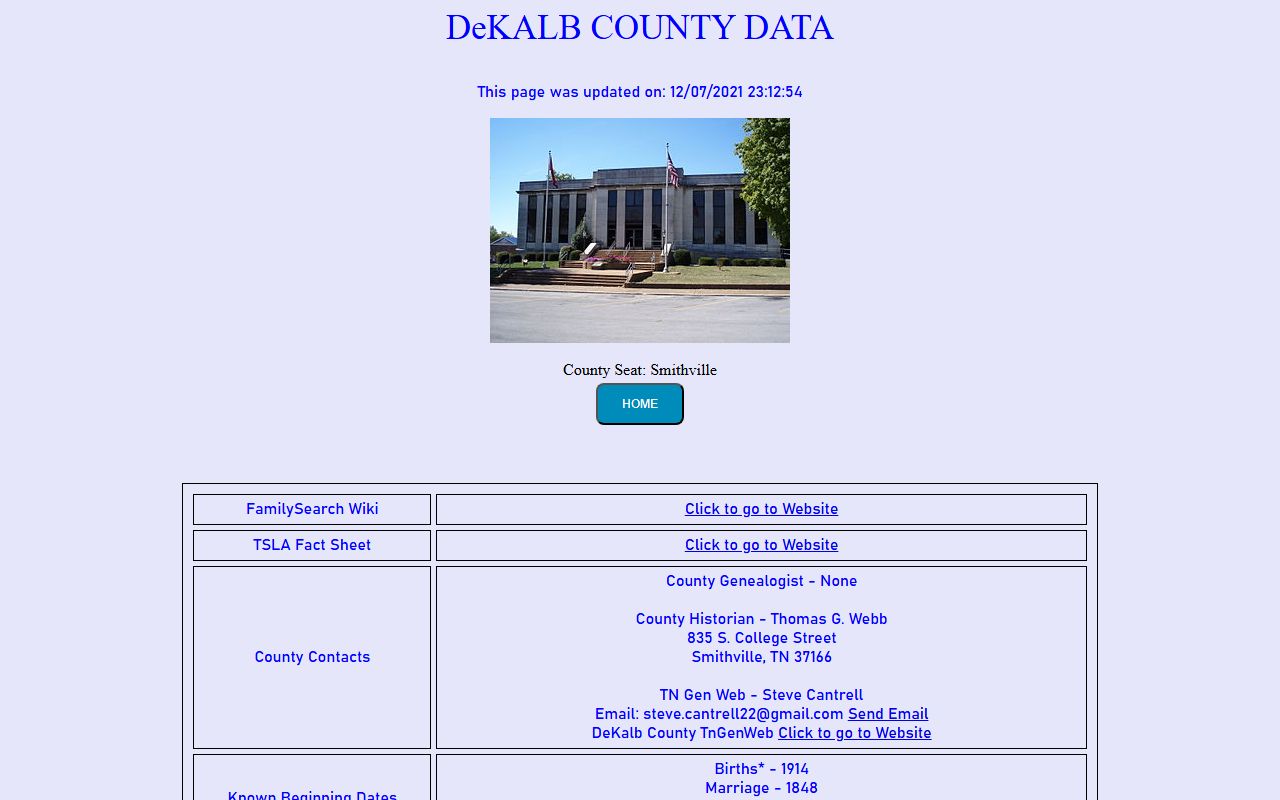
Use the county page as a bridge, not an endpoint. It helps you move from the local clue to the official record trail.
DeKalb County's death records also connect to the Tennessee State Death Index. The research notes show coverage for 1908-1912 and 1914-1933, and the certificate fields are detailed enough to help when a notice is sparse. If you need the wider Tennessee framework, the TSLA vital records guide and the Tennessee Department of Health's Vital Records page explain where those records sit and how to request official copies.
That matters because an obituary is public and a certificate may not be. The public notice can guide the search, but the official copy still follows state access rules. In DeKalb County, that distinction is worth keeping clear.
Search DeKalb County Death Records
When an obituary does not give enough detail, the county death record search becomes the next step. DeKalb County records begin with county registrations in 1908, and the state death index covers the early twentieth century in a way that can still resolve a family question. The certificate fields in the research are useful because they show what a death record can add: parents' names, birthplace, occupation, cause of death, burial place, and the undertaker. That is more than a standard obituary may give.
For certified records, Tennessee's vital records system still governs access. Death, marriage, and divorce records are generally restricted for fifty years, while births are restricted for one hundred years. The rules are explained through the state help center at Vital Records Help Center and the entitlement guidance at Tennessee entitlement guidance. Those pages matter when you need proof rather than a newspaper notice. Use the obituary to identify the person, then use the state certificate or index entry to confirm the details.
The county clerk, local genealogy library, and TSLA all work together here. That is the strongest way to handle a DeKalb County obituary search without overreaching or guessing.
- Full name and any alternate spelling
- Approximate death year or obituary date
- Spouse, parent, or child names
- Smithville, church, cemetery, or funeral clue
- Any link to a probate or marriage record
DeKalb County Obituary Research Tips
Because DeKalb County records are fairly broad, you can usually solve a search by staying local. If the name is common, look at the county clerk's marriage files and probate records first. If the name is uncommon, the genealogy library may have a quicker answer than the state index. That is why the county research notes point to free transcriptions. They are not a substitute for official records, but they are excellent for narrowing the field.
Another practical step is to remember that obituary spelling can drift. A county index might use one version of a name and the paper might use another. Searching both ways is worth the time. When the local trail is thin, use the state archive and the state death index, then come back to the county source. That loop often finds what a one-pass search misses.
Note: DeKalb County obituary work is usually faster when you treat the genealogy library, county clerk, and TSLA as a single research chain rather than three separate searches.
DeKalb County Public Access Notes
Most obituary work is public, but the actual record type controls what you can see. Newspaper obituaries are open. County court and probate files are usually open unless sealed. Certified death records can carry the Tennessee restrictions described in the state access rules and in Tennessee code access. That is why a public obituary search and a certificate request are related but not the same job. If you know what you need before you start, you will avoid the wrong office and save time.
In DeKalb County, the cleanest path is local first, state second. Start with the county library or clerk, check the obituary trail, then move to the official death index or the state office if you need a certified copy.