
Dickson County Obituary Records
Dickson County obituary records are tied closely to Charlotte, the county seat, and to the long county record run that begins in 1803. If you are searching for a death notice, the county has enough marriage, land, court, and probate material to make the search practical even when the obituary is short. That is especially true if you know a spouse name or a rough year. The local trail often starts in the courthouse and ends in a family paper, a cemetery note, or a state index entry. Dickson County rewards that kind of layered search.
Dickson County Quick Facts
Where to Find Dickson County Obituary Records
The Dickson County Clerk office in Charlotte is the core local office for obituary research. The county notes say it keeps birth and death records from 1908, marriage records from 1803, land records from 1803, court records from 1803, and probate records from 1803. That is a strong base for a county page. A death notice can point to a marriage file or a probate file very quickly. If you know the family lived in Dickson County for a while, the county record run can tell you much more than the obituary alone.
The county research notes also point to Tennessee State Library and Archives microfilm for marriages, deeds, court minutes, probate records, tax records, and cemetery records. That makes Dickson County a good place for obituary work because you can compare the notice with older local material. If a notice names an old farm or church, the county records may confirm it. If the notice is only a name and a date, the TSLA death index can fill in the official trail. A search that starts with Charlotte often ends with a much bigger family picture.
The county is not flashy, but it is solid. That is what matters when you need a dependable obituary search.
Dickson County Obituary Sources
Local help starts with Dickson County TNGenWeb. It is the manifest image source and a practical entry point for county obituary work. The county page is useful when you need a quick surname check or a local clue that is not in the county clerk records. Because Dickson County has a long record span, the volunteer material can save time by pointing you to the right branch of the family before you ask for copies.
The TNGenWeb page gives the county context and can help you move from one short notice to a usable family line.
The Tennessee Genealogical Society county page is the other successful local manifest source. It is a good second stop when the first search only gives a partial name or a rough place. Both pages are useful because Dickson County research often depends on context. A name in Charlotte may connect to a burial ground, a church, or a nearby township.
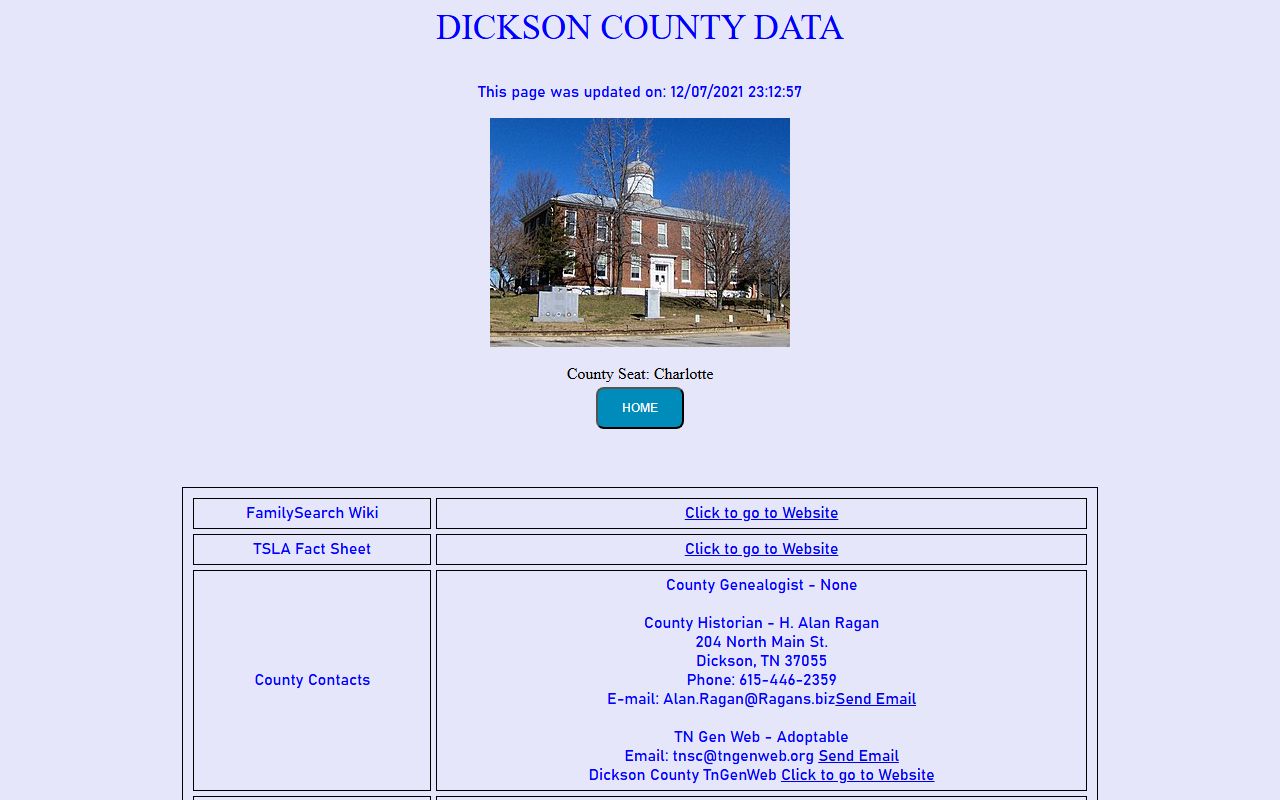
The county page gives you another local point of entry. It works well when the name is common or the place is vague.
The county also benefits from the state death indexes at TSLA. Coverage for 1908-1912 and 1914-1933 can be a clean bridge from an obituary to an official death record. If you need more help, the state archive and the vital records guide explain where the county and state copies live and how they differ.
That distinction matters because a newspaper obituary can be public while the official certificate still follows Tennessee access rules. Dickson County research works best when you keep those record types separate and use each one for what it does well.
Search Dickson County Death Records
When the obituary is not enough, the county death record search becomes the next step. The county notes show birth and death records from 1908, but the obituary itself may lead you to older marriage and probate material. Those record types are important because they help you verify the name and family line. Dickson County is a good example of why obituary research should not stop at the notice. The notice is the lead. The records are the proof.
Tennessee's vital records rules still control who can request official copies. Death, marriage, and divorce records are restricted for fifty years, while births are restricted for one hundred years. If you need an official copy, the Tennessee Department of Health and the State Library and Archives are the proper places to check. The entitlement guidance and Tennessee code access explain the access side. If you only need to identify the person or confirm the date, the obituary and the TSLA index may already be enough.
Use the county clerk, the genealogy pages, and the state index in sequence. That keeps the search organized and reduces guesswork.
- Full legal name and any spelling variant
- Approximate death year or publication date
- Charlotte, church, cemetery, or township clue
- Spouse or parent names from the notice
- Any probate, deed, or marriage clue
Dickson County Obituary Research Tips
Dickson County obituary searches often work best when you use a few record types together. A marriage record can confirm a spouse. A probate record can confirm heirs. A land record can confirm the same family lived where the obituary says they did. That is useful in a county with a long and steady record run like Dickson. The county clerk's office and the TSLA microfilm notes both point in that direction.
If the name is common, try the county sources first. If the name is unusual, go straight to the state death index and then circle back to the county page. That is often the fastest route. And if the obituary mentions a church or cemetery, use that clue right away. The place name may be the only stable part of the search.
Note: In Dickson County, the county clerk and the state death index work better together than either source does alone.
Dickson County Public Access Notes
Most obituary content is public. Newspapers, county indexes, and court files are generally open unless sealed. Official certificates can be limited by Tennessee's vital records rules. That is why the public obituary and the certified death record are different tools. The public record gives you the story. The official copy gives you the legal proof. If you know that difference before you start, the search stays simple.
For Dickson County, the cleanest path is local first, then state. Use the Charlotte office, the county genealogy resources, and TSLA's death indexes before you ask for certified copies. That keeps the search practical and rooted in the county record trail.