
Search Fentress County Obituary Records
Fentress County obituary records often depend on more than one source. The county seat is Jamestown, but the trail can begin in a newspaper notice, a funeral home volume, a county archive box, or a TSLA death index. That matters here because the courthouse burned in 1905 and many marriage and probate records were lost. When the local paper is thin, you can still move from a name to a burial place, then to a funeral home record or state index that confirms the person you are trying to find.
Fentress County Quick Facts
Fentress County Obituary Sources
Fentress County was formed in 1823 from Overton and Morgan counties. Jamestown is the county seat. The 1905 courthouse fire matters for obituary work because marriage and probate records before that year were damaged or lost, so a name may not show up in the place you expect. In this county, a good search often starts with a local clue and then moves into the county clerk, archive, public library, and funeral home records that survive the loss.
The Fentress County Clerk handles marriage records from 1905 forward, while the Register of Deeds keeps land records from 1820. The county archive at 101 South Main St. and the Fentress County Public Library on South Main are both useful when a death notice needs extra proof. The Fentress Historical Society at 103A Smith Street and the county historian, Ms. Lorraine Cargile, add local knowledge that is hard to replace. That mix helps when a notice names a church, cemetery, or family line that did not make it into a neat index.
| Archives | 101 South Main St., Jamestown, TN 38556 |
|---|---|
| Library | 306 South Main St., Jamestown, TN 38556 |
| Historical Society | 103A Smith Street, Jamestown, TN 38556 |
| Register of Deeds | Courthouse, Main St., Jamestown, TN 38556 |
Because the county lost older marriage and probate material, obituary searches here often need a wider sweep. A church name or burial place can be the key that takes you from a newspaper line to a surviving funeral home volume or an old county record.
The Fentress County TNGenWeb site at tngenweb.org/fentress is the fastest local first stop. It can point you toward transcriptions and county leads before you ask the courthouse for copies.
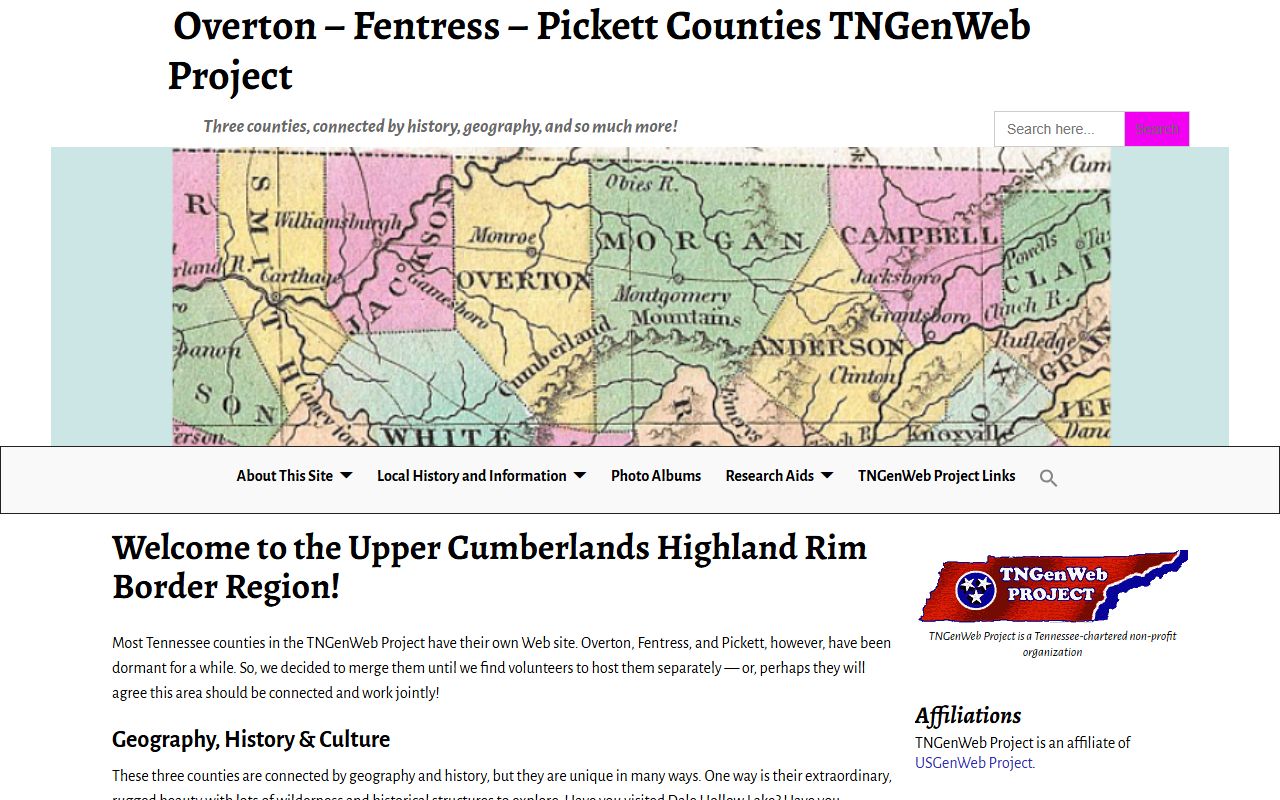
That page is especially useful when a family surname has several branches. A quick county lead can keep you from mixing up two different people with the same name.
How to Search Fentress County Obituary Records
Start with the local repository that fits the date. If the death is recent, the funeral home records can be excellent. Jennings Funeral Home has two indexed volumes covering 1957 through 1983, and those volumes list the name, age, spouse, occupation, birth data, death date, clergy, physician, parents, and burial place. Mundy Funeral Home in Jamestown is another local name to keep in mind. Those records can turn a short obituary line into a full family picture.
For older material, the Fentress County Public Library and the archives are strong supports. The library can help with local history and copy work, while the archives can help with older county material. The Fentress Historical Society newsletter also matters because it includes local history, genealogy, and cemetery records. When a notice mentions a cemetery, use that clue immediately. It is often more reliable than a broad search by surname alone.
Statewide sources matter too. TSLA's Genealogy Index Search and the statewide death index at tslaindexes.tn.gov help you confirm the county and year. Fentress County death records are indexed for 1908-1912 and 1914-1933, and FamilySearch also covers 1914-1966. That makes the state search a practical bridge when the local obituary is incomplete or missing.
The state rules are simple but important. Under T.C.A. 68-3-205, death and marriage records are restricted for 50 years. Under T.C.A. 68-3-206, copies depend on who is asking and why. Those rules do not block obituary research, but they explain why a county notice may be easier to use than a fresh certified record.
Use the county record dates as a guide. Births and deaths are at 1914 in the state system, marriages at 1905 because of the fire, court records at 1842, land at 1820, and probate at 1905. That tells you where to look first and where to move next when a name does not show up on the first pass.
Note: In Fentress County, the 1905 fire makes local obituary work more dependent on funeral home records and state indexes than in many Tennessee counties.
- Full name and alternate spellings
- Approximate death or burial year
- Church, cemetery, or funeral home name
- Spouse or parent name if known
- Jamestown or nearby community clue
Keep those facts in front of you. They help you move from the obituary to the right county file without wasting time.
The Fentress Historical Society can give context that a state index cannot. Its newsletter and local records help place a person in the county story. For some families, that is the difference between a useful clue and a dead end.
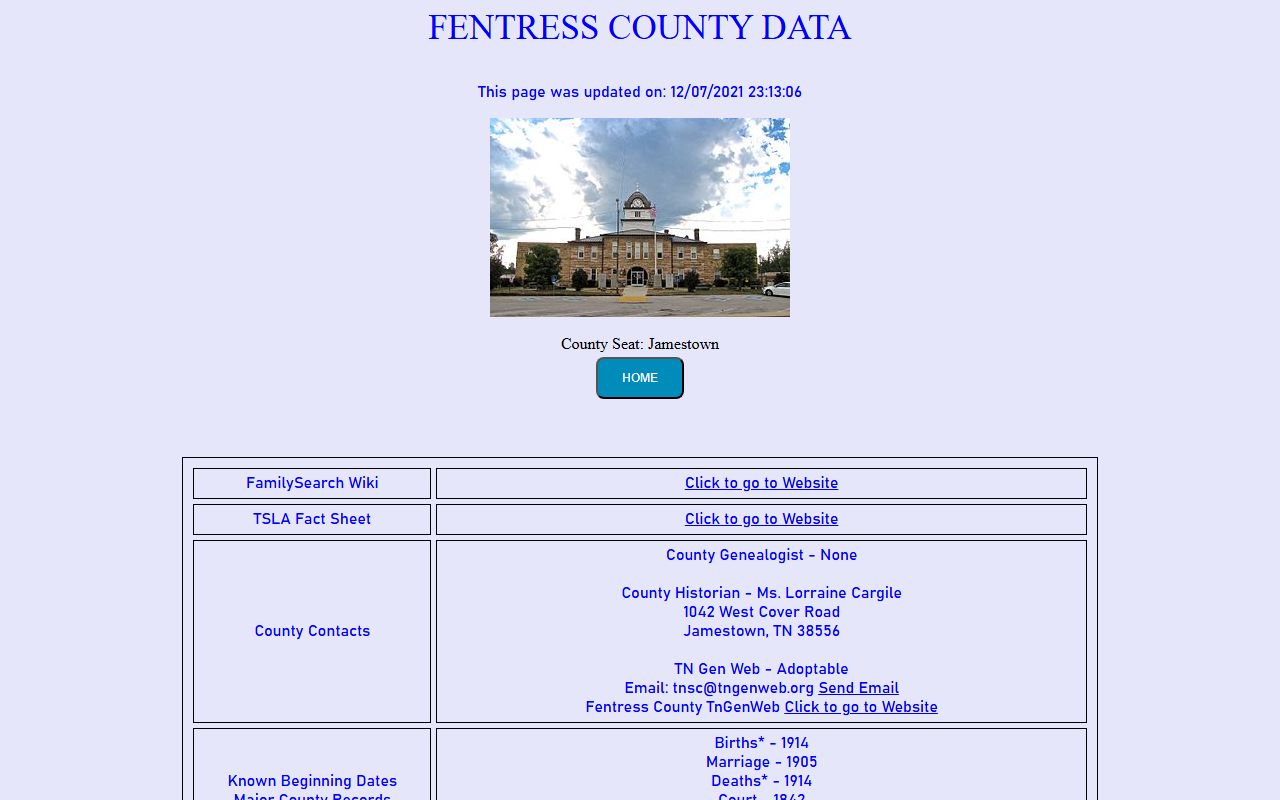
That page gives a second route into the county record set when the courthouse fire left you with only part of the picture.
Fentress County Obituary Records and Funeral Homes
Funeral home records are especially valuable in Fentress County. Jennings Funeral Home records can include the deceased's age, spouse, occupation, birth details, clergy, physician, parents, and burial place. That level of detail is often richer than a newspaper line. If the obituary is brief or missing, the funeral home volume may still give you the full trail you need to tie one family member to another.
The funeral home records also help when the death occurred in Jamestown or Clarkrange and the cemetery is private. A burial place can lead to a family cemetery or a church plot, and that can in turn point you to a county history source or obituary clipping. The county historical society and the local library are good places to compare those clues.
For official records, the Tennessee Department of Health Office of Vital Records at tn.gov and vitalrecords.tn.gov remains the state source. Certified copies are $15, and the office explains in-person, mail, and VitalChek ordering. That official record is often the best final check after you have found the obituary trail.
The Tennessee State Library and Archives guide at sos.tn.gov/library-archives/guides/vital-records-at-the-library-and-archives is also worth using because it explains how state death records evolved. That helps you know when the county is enough and when you need Nashville.
The county route is strongest when you combine the archive, the library, the funeral home, and the state index. That is the normal path in Fentress County, not the backup plan.
One more local clue can help when the same surname appears in several branches. The Fentress County Historical Society Newsletter and the Overton County, Tennessee Kin publication both cover family and cemetery material that crosses county lines. For older families, that can be the key to the right branch.
The county is one of the places where an obituary search often becomes a family reconstruction. That is not a problem. It is how the records work here.
Browse More Tennessee Records
Fentress County fits into the wider Tennessee obituary and death-record network. Use the browse pages when a family line reaches into another county.