
Search Franklin County Obituary Records
Franklin County obituary records are often easiest to trace through Winchester, the county seat, but the best result usually comes from mixing county records with funeral home volumes and newspaper microfilm. This county does not have the same fire loss story as some others, yet it still rewards a careful search. J.C. Moore & Sons Funeral Home records, local library material, TSLA death indexes, and county clerk records all work together when a notice is short or the family line is spread across more than one town.
Franklin County Quick Facts
Franklin County Obituary Sources
Franklin County was formed in 1807 from Warren and Bedford counties. Winchester is the county seat. The county record base is strong, with court records and land records beginning in 1807 and marriage licenses kept by the county clerk. That makes Franklin County a good place for obituary work because a death notice can often be tested against a county record without much guesswork.
The Franklin County Library is a key local stop. Its local history collection, genealogy references, census records, and newspaper microfilm are all useful when a name shows up in a clipped notice or a family Bible note. The county clerk, register of deeds, and court clerk can also help you place the person in the county file trail. If an obituary mentions a residence in Winchester, Estill Springs, or another nearby community, the county books often give the matching background.
| County Seat | Winchester |
|---|---|
| County Clerk | Marriage licenses and some vital records |
| Register of Deeds | Land records from 1807 |
| Court Clerk | Court records from 1807 |
Franklin County also has a useful set of funeral home holdings. That matters because many obituary searches start with a death notice but end with a funeral home book that carries more detail. Local records and TSLA microfilm often fill each other's gaps here.
The Franklin County TNGenWeb page at tngenweb.org/franklin is a fast local starting point. It can lead you toward transcriptions and county references without sending you into a broad search too soon.
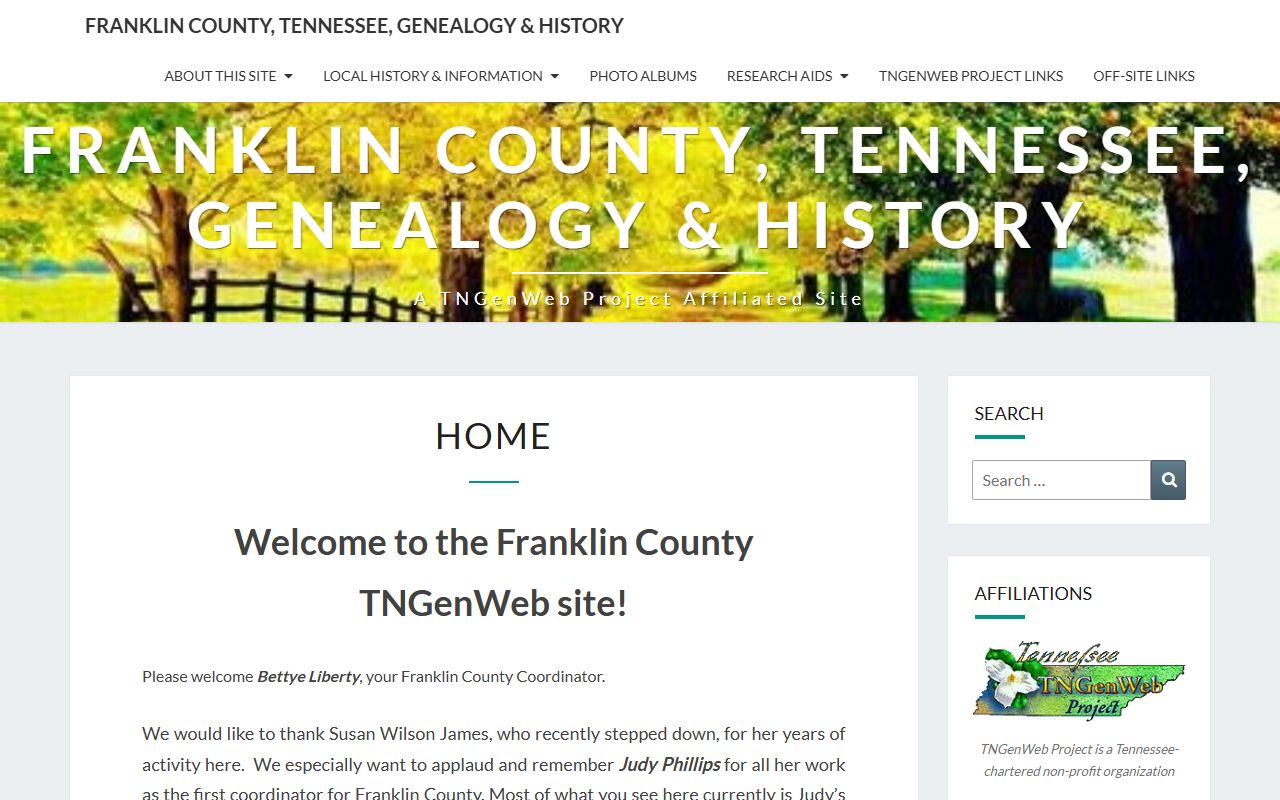
That local page is useful when the obituary only gives a surname and a rough year. A county transcription can turn that into a real record path.
How to Search Franklin County Obituary Records
Begin with the county library and funeral home material. J.C. Moore & Sons Funeral Home records cover 1931-1966 and include a wide set of details, especially in the later years. Those records can list the deceased, age, death place, burial place, cemetery, parents, occupation, residence, and clergy. The note that some August 1944 through December 1950 records were not found is important. It means a search may need a second source for those years.
The county library can help with newspaper microfilm and local history references. The Franklin County Historical Review back issues and the Middle Tennessee Genealogical Society publication are also useful when you need a local or regional angle. That is often the fastest way to connect a death notice with a burial site or family line. When the funeral home record gives a cemetery name, check that name before you expand the search.
Statewide death indexes matter too. TSLA's online index at tslaindexes.tn.gov covers 1908-1912 and 1914-1933. Franklin County researchers can use that index to confirm a county and year, then move back to the county library or a funeral home book for more detail. The state index is especially helpful when the obituary is missing a birth date or uses initials.
For certified copies, the Tennessee Department of Health Office of Vital Records at tn.gov and vitalrecords.tn.gov is the official source. The office explains how to order in person, by mail, or through VitalChek, and the certified copy fee is $15. Under T.C.A. 68-3-205 and T.C.A. 68-3-206, access depends on record age and requester status, which is why a local obituary search is often the quicker route.
The county record trail is straightforward once you know the offices. The clerk handles marriage licenses, the register of deeds handles land, and the court clerk handles court records. Those sources often help you verify a spouse or property clue that appears in an obituary.
Note: In Franklin County, a funeral home book and a newspaper microfilm roll often work better together than either source does alone.
- Full name and any middle initial
- Approximate death year or funeral year
- Funeral home, cemetery, or church
- Residence or town in Franklin County
- Spouse or parent name if available
Keep the request narrow. That usually gets you a better answer on the first try.
Franklin County funeral home records can carry more detail than a notice. The later volumes list burial place, clergy, informant, parents, and residence. That is useful when the obituary is clipped or incomplete, and it helps you confirm whether two similar names are actually the same person.
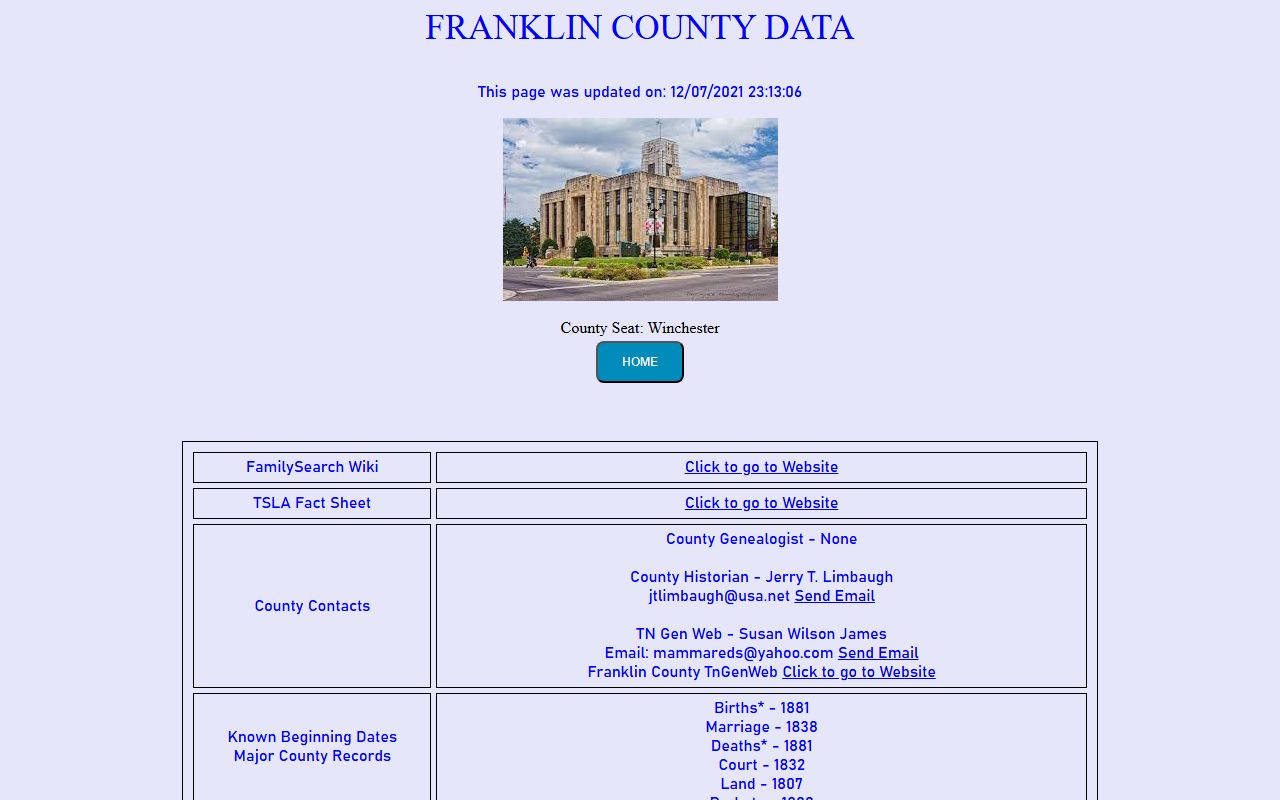
The Tennessee Genealogical Society county page gives another reference point when you need to compare a funeral home trail with a county record trail.
Franklin County Obituary Records and Funeral Homes
The funeral home sets in Franklin County are the strongest local source for obituary work. J.C. Moore & Sons covers a useful date span and gives a wide set of personal and burial details. Other funeral homes in the county also matter because a family may have used more than one provider over time. When the obituary says little, the funeral home volume can give you the rest of the story.
Those records are especially useful for matching a notice to a burial site and a family line. The record may show the cemetery, the clergyman, and the parents, which gives you enough to test against the county books and newspaper microfilm. A single line in a funeral home record can also explain why a death notice used a different town name than you expected.
For county and state balance, use the Franklin County Library, TSLA indexes, and the Office of Vital Records together. That combination is practical and fast. It is also the cleanest way to handle cases where the obituary is old but the certified copy is still under state access rules.
State law still matters here. Tennessee death records become less restricted with age under T.C.A. 68-3-205, and copy rules are set by T.C.A. 68-3-206. That is one reason Franklin County obituary research works best when you start local and move outward only when needed.
When the funeral home volume gives you a burial place, search that cemetery name next. That often takes you straight to a family cluster.
The county line is not the only line that matters. Franklin County death notices often sit beside county land and court material that can tell you who inherited what, who lived where, and how the family moved.
That broader picture can be the difference between a name on a page and a person in a family tree.
Browse More Tennessee Records
Franklin County belongs to the broader Tennessee obituary and death record network. Use the browse pages if your trail extends into another county or city.