
Search Gibson County Obituary Records
Gibson County obituary records are often strongest when you use them with funeral home volumes, newspaper extracts, and the county's online death transcriptions. Trenton is the county seat, but the record trail can also run through Milan, Humboldt, Bradford, and other towns. Because the county was formed from Indian lands in 1823, the local history is broad and the sources are spread out. A careful search here usually begins with a name and burial clue, then moves to a funeral home or a local transcription for the missing details.
Gibson County Quick Facts
Gibson County Obituary Sources
Gibson County was formed in 1823 and named for John H. Gibson. That history matters because obituary work here can draw on several branches of the record set. The Tennessee State Library and Archives holds microfilm for marriage records, deed records, court minutes, probate records, and tax records. The county also has online death transcriptions at the USGenWeb Archives. Together, those sources give you a way to move from a death notice to a fuller family picture without guessing at the right office.
The county seat is Trenton, but funeral homes in Milan, Humboldt, and other towns are part of the obituary trail too. Fields Funeral Home records for Milan cover 1910 to 1981 and list a large amount of detail, including residence, occupation, marital status, age, birthplace, religion, death data, parents, funeral details, cost, and place of interment. That is the kind of record that can replace a thin notice or help confirm the right person when the name is common.
| County Seat | Trenton |
|---|---|
| Fields Funeral Home | Milan, TN, coverage 1910-1981 |
| Online Death Transcriptions | USGenWeb Archives |
| Key Local Resource | Gibson County TNGenWeb |
Gibson County is also useful for African American genealogy. The index to the Register of Colored Marriages and the tombstone and census work give the obituary search more depth than a single newspaper line. That is especially helpful when a family appears in more than one community or when a notice uses a nickname rather than a full legal name.
The Gibson County TNGenWeb site at tngenweb.org/gibson is the obvious first stop. It points you toward county leads before you start chasing a broad state search.
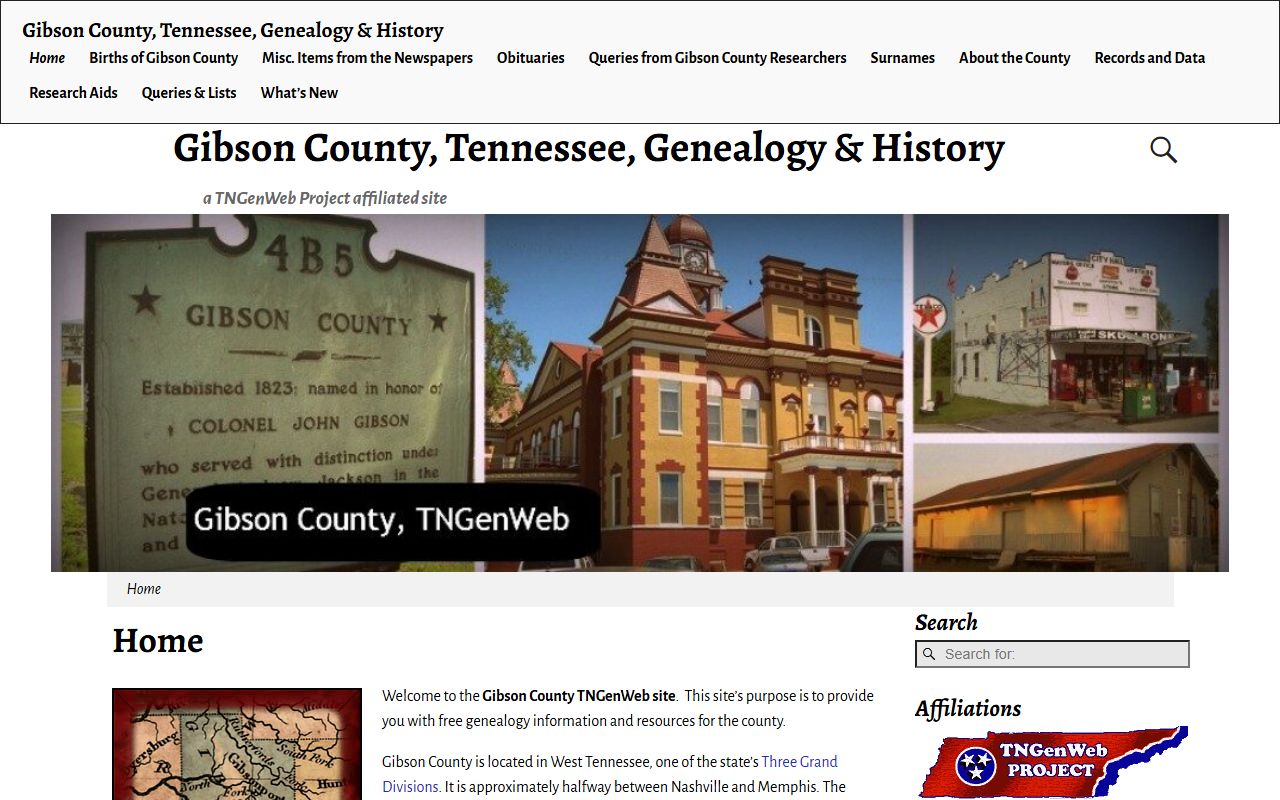
That page is especially useful when you need to see whether a surname belongs in Trenton, Milan, or one of the county's other communities.
How to Search Gibson County Obituary Records
Start with the local transcription pages and funeral home records. The Gibson County death records page at files.usgwarchives.net/tn/gibson/vitals gives online transcriptions that can confirm a death date, burial place, or parent name. A 1925 example may show the same facts you need to test a newspaper clipping. If the death notice is incomplete, those transcriptions can fill in the missing fields quickly.
The county's funeral home records are a second strong layer. Fields Funeral Home is the detailed one, but the wider West Tennessee funeral home record set also matters because it includes Gibson County material alongside Benton, Carroll, Henry, and Weakley counties. Those records can include family names, burial details, and reference material like obituaries. In a county where families often moved across nearby lines, that wider set can be the difference between a guess and a match.
For statewide help, use TSLA's Genealogy Index Search and the Tennessee Virtual Archive. The state death indexes for 1908-1912 and 1914-1933 can confirm the county and year, and that is often enough to take the next step. If you need a certified death record, the Tennessee Department of Health Office of Vital Records is the official source at tn.gov and vitalrecords.tn.gov. Certified copies are $15.
State access rules still apply. Under T.C.A. 68-3-205 and T.C.A. 68-3-206, recent records are not the same as old obituary material. That is why a county notice and a certified record often serve different research needs.
Gibson County also has good sources for African American family history. The index to the Register of Colored Marriages from 1865-1866, the tombstone work, and the free census references can all help if the obituary line is short. Those sources often reveal the family structure that the newspaper did not print.
Note: Gibson County obituary searches are often strongest when you compare transcriptions, funeral home volumes, and state death indexes side by side.
- Full name and alternate spelling
- Approximate death or burial year
- Town, funeral home, or cemetery
- Parent, spouse, or informant name
- Race, occupation, or residence if listed
Those details help you sort the right family and the right record set on the first pass.
The Gibson County funeral home trail is unusually rich. A 1925 sample death certificate can give you parent names, burial place, and the doctor, while the West Tennessee funeral home collection can add obituaries and burial references that never made it into a county index.
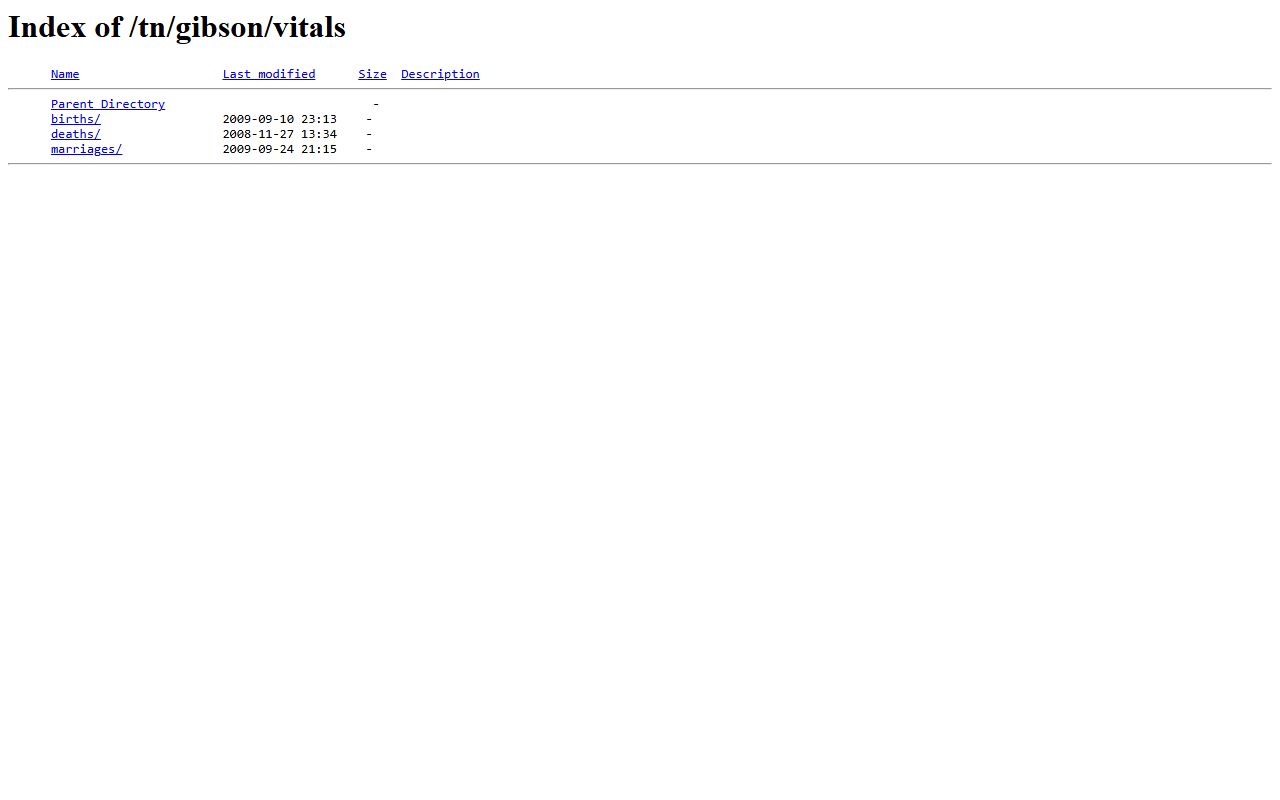
That local vital records page is useful because it points you toward the exact kind of record detail that can anchor a family search.
Gibson County Obituary Records and Funeral Homes
Gibson County funeral home records are a major part of the obituary trail. Fields Funeral Home records are detailed and cover a long span. The wider West Tennessee funeral home microfilm set also helps because it includes burial and family reference material across several counties. In many cases, that is where you find the full version of a name that only appeared as an initial in the newspaper.
The local newspaper extract set is another strong tool. Gibson County Newspaper Extracts, published in five volumes, are a useful way to spot family names and burial details. When an obituary line is thin or missing, those extracts may still give you enough of a trail to find the funeral home record or the county transcription. That is especially important in a county with many communities and several layers of local history.
The county court and probate microfilm at TSLA also matter. A death notice that names an heir or a property can sometimes be matched with a probate or court record. That is not the main obituary source, but it can be the record that proves you have the right person.
For the official copy, the Tennessee Department of Health and the state vital records office remain the right place when you need certified proof. The state office is not a substitute for a funeral home book, but it is the best final check when a family needs a government copy.
Use the county and state records together, not separately. That is the fastest path in Gibson County.
Gibson County research also benefits from the African American genealogy materials. The register of colored marriages index and the cemetery work can make an obituary search much cleaner if the family crossed record systems or used different community names over time.
Those materials are not extra. They are part of the normal Gibson County record trail.
Browse More Tennessee Records
Gibson County fits within the larger Tennessee obituary and death record network. Use the county browse pages if your family line moves west or south.