
Hancock County Obituary Records
Hancock County obituary records require patience because the county lost many early files. Sneedville is a small county seat, and the best results often come from working around the gaps instead of fighting them. That means using TNGenWeb, the county genealogy society, surviving county records, and state death indexes together. A family name may show up first in a local transcription, then in a church or cemetery clue, and only later in a county record. Start with the surname and a date range, then widen the search carefully.
Hancock County Obituary Records
Hancock County was formed in 1844 from Hawkins and Claiborne counties. It is a burned county, so many early records did not survive. That makes obituary work a little different here. Marriage and probate records begin in 1865, land records begin in 1879, and the surviving record trail is narrow. A newspaper notice, a cemetery note, or a church record may be the best early proof that a family was in the county.
The county clerk and register of deeds share the same basic contact line in Sneedville, and the county library has a limited genealogical collection. Most deep research shifts to Tennessee State Library and Archives, county transcriptions, or family history collections. Because early records are thin, even one obituary line can be valuable. It may be the first surviving record that links a person to Hancock County at all.
The Hancock County TNGenWeb page at tngenweb.org/hancock/ is one of the best local places to start. It includes census transcriptions, family files, limited obituaries, deed indexes, church records, and older notes from residents. That breadth matters in a county where the paper trail can be short.
The Hancock County TNGenWeb page at tngenweb.org/hancock/ is the best local starting point when the early record trail is thin.
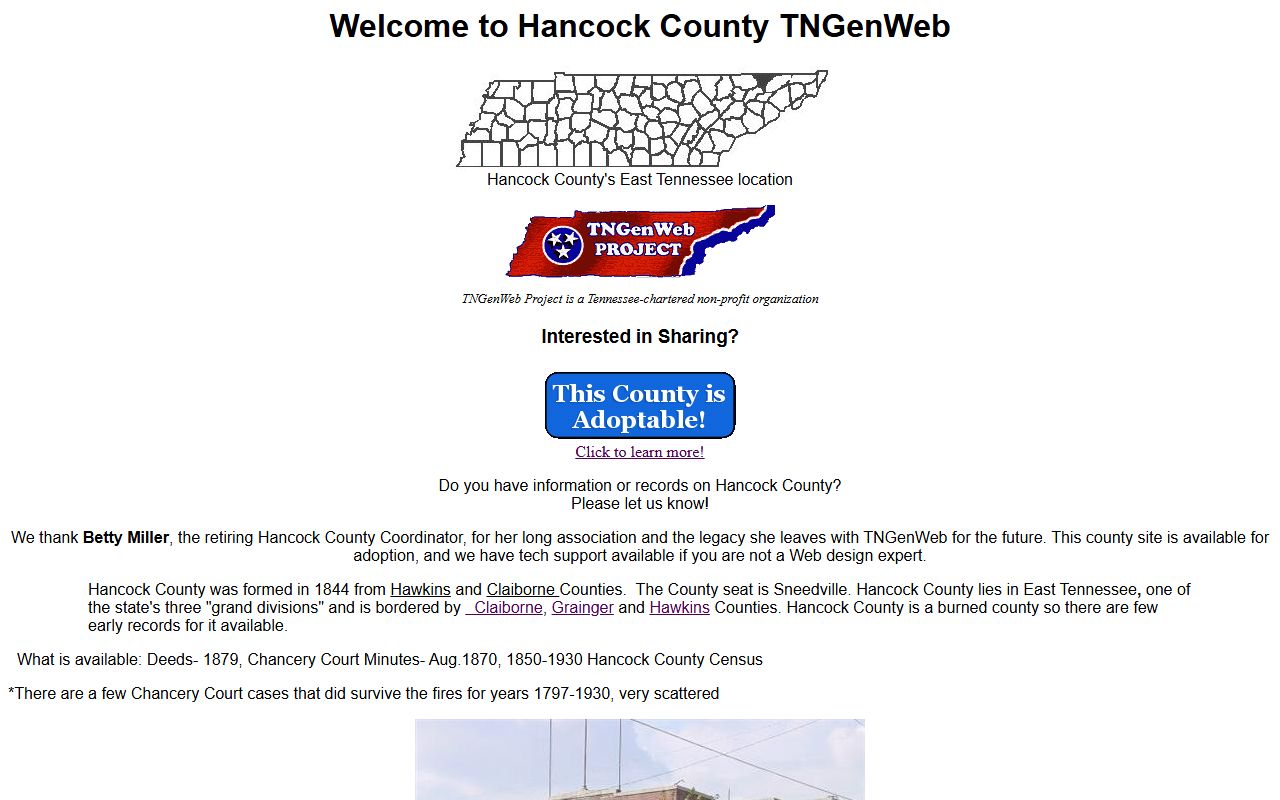
That page is especially useful when you need a first clue from a burned county.
Search Hancock County Obituary Records
A Hancock County search should be narrow at first. Use the full name, then try initials, a spouse name, or a church clue if the first pass does not work. Since the county lost many early files, a single clue can be enough to unlock the rest. If you know the family moved through Hawkins or Claiborne counties, keep those counties in mind too. The obituary trail may start outside Hancock and then return here through a burial note or a marriage reference.
The Tennessee Genealogical Society county page at tngs.org/resources/Site/Custom_HTML_Files/TCD/County/Hancock.html is another useful local guide. It helps when you need a county-level framing page before checking cemetery names or family connections. The combination of TNGenWeb and the society page is practical because one gives transcriptions and the other gives a more general research frame.
Use the points below when a name search is not enough.
- Full surname and any alternate spelling
- Approximate death year or burial year
- Sneedville, a church, or a family cemetery name
- Nearby counties if the family moved often
Because records are sparse, keep notes as you search. In Hancock County, a later obituary often depends on a much older family clue.
Hancock County Obituary Sources
The county has limited obituary coverage in local collections, but what survives can still be useful. TNGenWeb includes obituary references, the surname index, tax receipt notes, mortality schedules, and older articles about residents. Those are not full newspaper runs, but they do help place a person and a family in the county. The county historical and genealogical society also supports the local record picture through its published county history.
The county's burned status means you often have to work outward. Start with the county, then check neighboring Hawkins and Claiborne counties, then move to state sources. The Tennessee State Library and Archives remains important for surviving copies and statewide indexes. That is where many Hancock County searches end up. It is also where a family name becomes a document trail instead of a guess.
Use the Tennessee State Library and Archives genealogy index at sos.tn.gov/products/tsla/genealogy-index-search when you want to search across several state collections at once. It is a good backup for a county with gaps.
The TSLA genealogy index at sos.tn.gov/products/tsla/genealogy-index-search can help when local county files do not give enough detail.
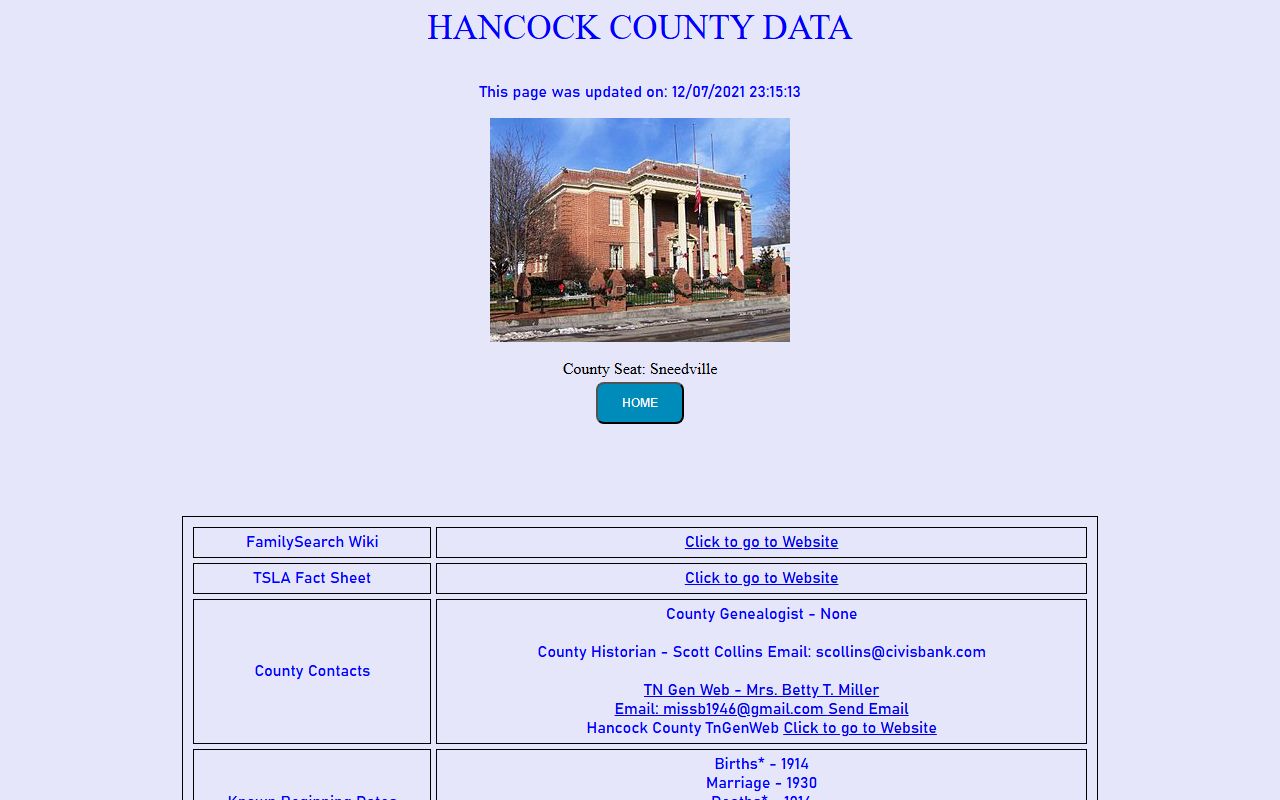
That county page is useful when you need a broader research frame after the first local hit.
Sneedville Obituary Research
Sneedville is the county seat, but it is still a small mountain county seat with a limited surviving paper trail. The local library has a limited genealogical collection, and most serious work shifts to state resources. That does not make the county unworkable. It just means you need to be careful and patient. A church name, a family cemetery, or a marriage clue can carry more weight here than in a larger county.
The Hancock County Historical & Genealogical Society has published work that can help tie families to Newman's Ridge and other local communities. Obituaries in this county often reflect close family and church ties. They may be short, but they can still tell you who the person belonged to, where they were buried, and which side of the family survived. That is often enough to reconnect a broken line.
If you are working from a name only, move back to the county transcriptions after each new clue. That cycle is often the fastest way to separate one Hancock family from another.
Hancock County Obituary Access
Obituary material is generally searchable, but certified records follow Tennessee access rules. Under T.C.A. § 68-3-205, death records have a public access framework, and T.C.A. § 68-3-206 controls who can get certified copies. That matters in Hancock County because the obituary trail may be public even when a death certificate request needs more proof.
The Tennessee vital records guide at sos.tn.gov/library-archives/guides/vital-records-at-the-library-and-archives explains how state records move between the archive and health office. For Hancock County, that state backup is often the safest route when the county file is missing or incomplete. It also keeps the search grounded in official sources instead of guesswork.
Note: In a burned county, an obituary may be the best first proof of a person's place in the record trail. Use it to build the rest of the file, not just to name the person.
Request Hancock County Copies
To request copies, start with the source that has the best surviving version. TNGenWeb can give a clue. The county society page can give a frame. TSLA can give a state index. The county clerk can confirm surviving county material, and the vital records office can handle certified modern records. Because Hancock County is small and burned, it pays to keep the request simple and specific.
Use the same source twice if needed. One search may find a date. Another may find a burial place. That is normal here. A second pass often turns an incomplete note into a clear family record. For many Hancock County families, that is the difference between a name and a real line of descent.
If you need one more starting point, return to the TNGenWeb Hancock page at tngenweb.org/hancock/ before sending a request.