
Henderson County Obituary Records
Henderson County obituary records are best approached with the fire history in mind. Lexington is the county seat, but courthouse fires in 1863, 1895, and 1896 damaged or destroyed many early county records. That makes county obituaries, local newspapers, the library Tennessee Room, and state indexes work together instead of separately. If you are tracing a Henderson County family, start with the county clues that survived and then use the obituary trail to rebuild the rest. The record set is still strong enough to help, especially for families tied to farming, church life, and the old communities around Lexington and Scotts Hill.
Henderson County Quick Facts
Where to Find Henderson County Obituary Records
The best local starting point is Henderson County TNGenWeb. That site carries birth and death records, marriage records, cemetery lists, obituaries, and family files. It is especially useful when you only have a name and a rough date. The TN Gen Society county page is a solid second stop when you want a broader county history view or need another local clue to confirm a family line.
The Henderson County Clerk in Lexington is important for marriage and death work after 1908, while the Register of Deeds can help when land or deed notes point back to the same family. The Lexington-Henderson County Everett Horn Public Library is the strongest local research space in the county. Its Tennessee Room holds ancestor charts, cemetery records, census indexes, old courthouse records, and microfilm of local newspapers and vital records. That collection is one of the main reasons Henderson County remains workable even after the record loss.
The first image below points to Henderson County TNGenWeb, which is the fastest way to start a local obituary search in the county.
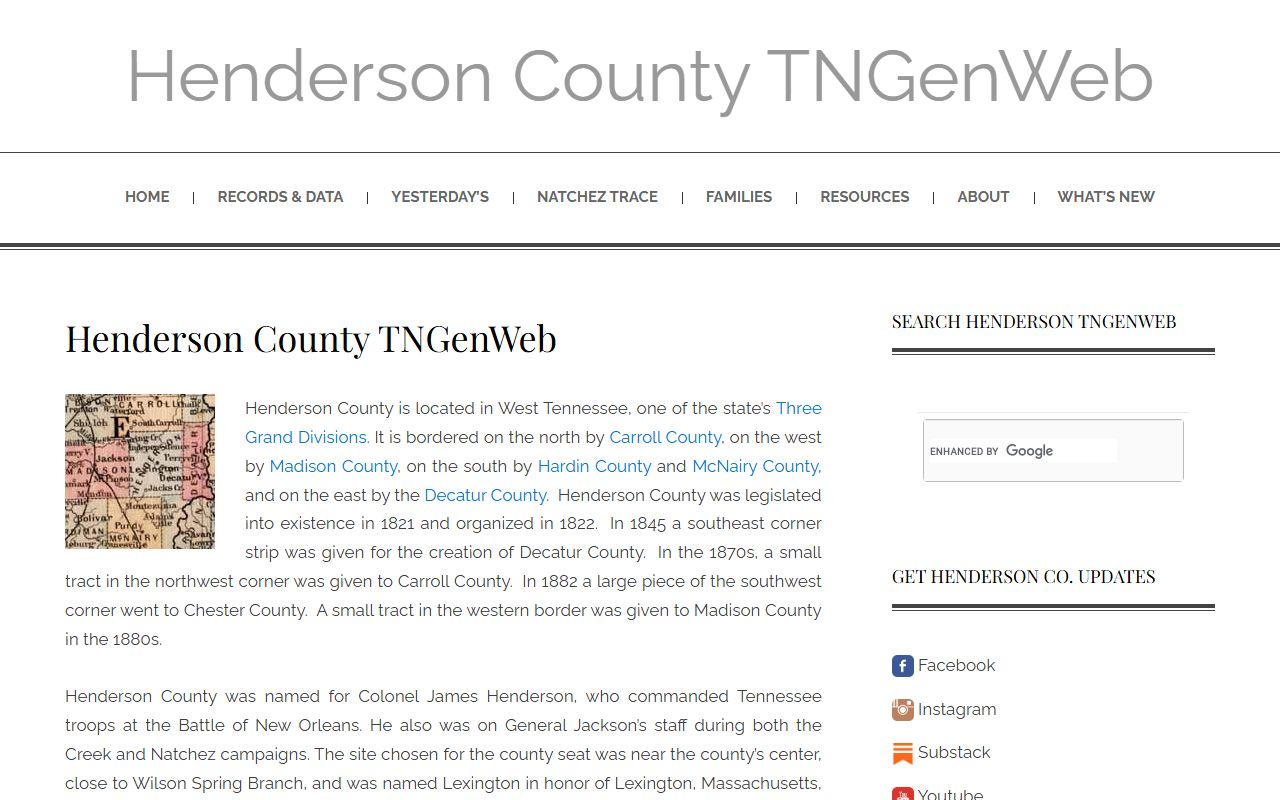
That page is a useful launch point because it can lead you from one surname to a fuller local family group.
For state support, the Tennessee State Library and Archives guide and the Tennessee Department of Health vital-records pages help confirm what survives after the county fires. Those state pages are useful when the obituary gives you a death date but the county file is thin or incomplete. In Henderson County, the local obituary often becomes the bridge back to the official record.
How to Search Henderson County Obituary Records
Search Henderson County obituary records with the county loss in mind. Older marriage, probate, and courthouse records were hit hard, so a local obituary can be more valuable than it looks at first. Names from the Lexington Progress, local cemetery notes, and the Tennessee Room can connect a person to a burial site, a spouse, or a church. If a family was tied to Scotts Hill or Parkers Cross Roads, use that place name early. In a county with fire loss, location matters as much as surname.
The second image below points to the Tennessee Genealogical Society county page for Henderson County. It works well as a cross-check when you need a second local reference before moving to state indexes.
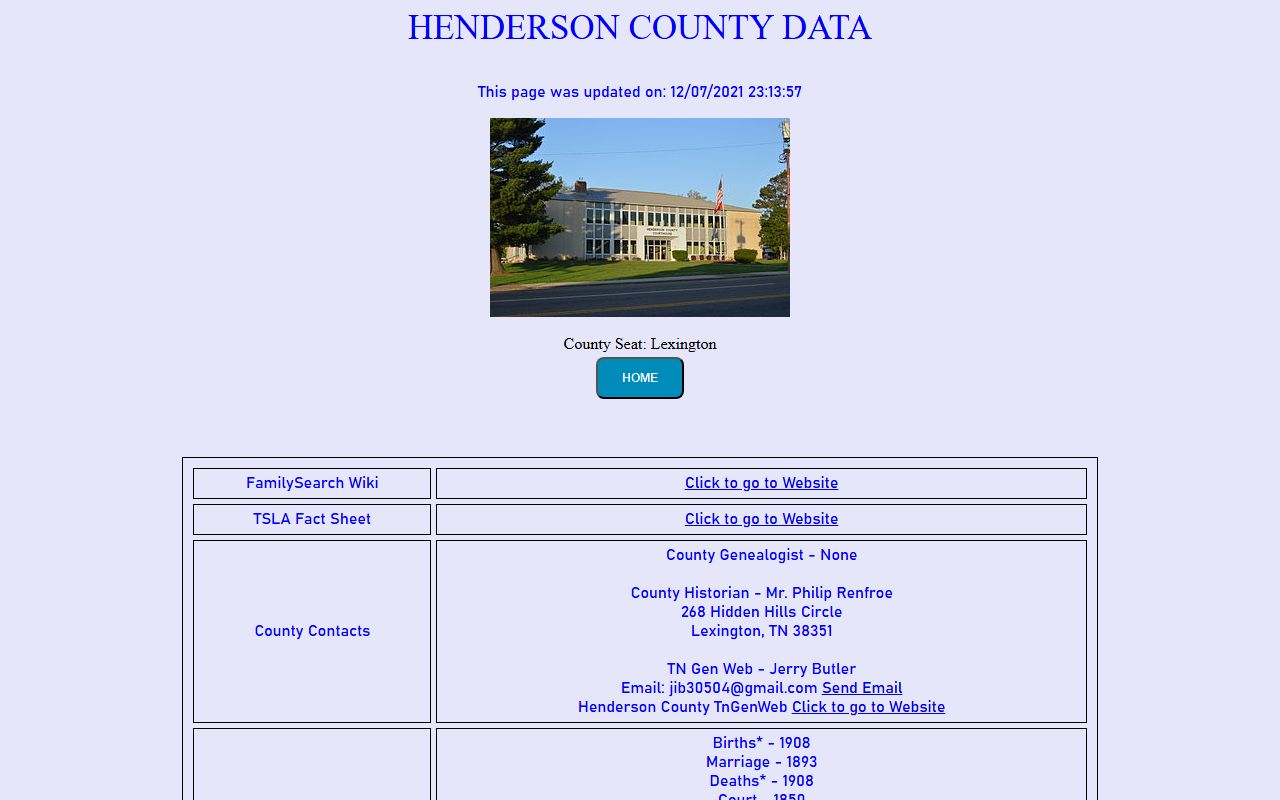
It is useful when a name is common or when the obituary only gives a few clues.
Use a simple order so you do not lose the trail.
- Check TNGenWeb for names, obituaries, and family files.
- Search the Everett Horn Public Library Tennessee Room for cemetery, newspaper, and courthouse material.
- Use the county clerk for post-1908 death records and the surviving marriage files.
- Search the state archive and vital-records pages when the county file is incomplete.
- Return to the local newspaper when you need a service date or burial lead.
That order works because Henderson County obituary research often has to replace what fires took away. The obituary gives the person, the newspaper gives the context, and the library or state index gives the proof. When those pieces line up, you usually have enough to move forward with confidence.
Henderson County Obituary Sources and Archives
The Everett Horn Public Library is the county’s strongest genealogy base. Its Tennessee Room includes local cemetery records, family histories, church abstracts, tax lists, microfilm of courts and newspapers, and older county books that still help with obituary research. The library also offers HeritageQuest and public access computers, which makes it easier to compare one name against another. In a county with major fire loss, that combination matters.
Henderson County TNGenWeb lists obituary material and family files that can shorten the search path. It also carries early birth and death record transcriptions and marriage records through 1900. Those online files are useful when an obituary gives you a spouse name or a family cluster. If you need a county historian, Henderson County has that contact as well, though it does not have a formal genealogical society. That makes the library and online county pages even more important.
For broader verification, the Tennessee Virtual Archive and the Tennessee Department of Health vital-records pages help confirm county information against state holdings. Those sources are especially useful for deaths from 1908 forward, since the county clerk and local library both point to the same general record period. A Henderson County obituary is often enough to get you started, but the state record usually finishes the job.
Public Access to Henderson County Obituary Records
Most obituary notices are public, but the records behind them still follow Tennessee rules. Death certificates are controlled under T.C.A. § 68-3-205, and certified-copy access is covered by T.C.A. § 68-3-206. That means a newspaper obituary, a county death record, and a state-certified copy can each show different detail. In Henderson County, that difference matters because the obituary may be the most complete surviving lead for an older family.
If you need an official copy, the Tennessee Department of Health Office of Vital Records in Nashville is the state source. The office help center explains how to order, and the current fee is $15 per certified copy. Older records move into the state archive system, which is why the TSLA death indexes should always be checked when the county file is thin. In Henderson County, one record often leads to another, so keep the local and state paths side by side.
Note: Henderson County research is often strongest when you use the obituary, the library, and the county clerk together instead of relying on only one source.
Getting Copies in Henderson County
For county copies, the clerk offices in Lexington are the right first stop. The County Clerk can help with surviving marriage and death records, while the Circuit Court Clerk can help with court-linked files. The Register of Deeds is useful when land or deed clues connect to the same family. If the file you need is not complete in the courthouse, the Everett Horn Public Library is the next best place to continue the search.
For state copies, move to the Tennessee Department of Health Office of Vital Records. For older death entries, use the Tennessee State Library and Archives indexes. That sequence makes sense in Henderson County because the fires damaged the old courthouse trail, but the library and state tools still preserve a lot of usable material. If the obituary mentions a burial place, cemetery records in Lexington or Scotts Hill can also help verify the family line.
Once you have the obituary, the county note, and the state copy, you can usually build a clean source trail for Henderson County and avoid redoing the search later.