
Humphreys County Obituary Records
Humphreys County obituary records are often built from a few strong local clues. Waverly is the county seat, and the county clerk, register of deeds, and local library can each add a piece to the same family story. If you are starting with a death notice, a cemetery name, or a spouse name, the county gives you a workable search path. The local records are not huge, but they are useful. In a county like this, a short obituary can lead you to a marriage book, a will, or a burial ground without much wasted motion.
Humphreys County Quick Facts
Where to Find Humphreys County Obituary Records
The main local office for Humphreys County obituary research is the Humphreys County Clerk in Waverly. The research notes show that the office keeps wills and marriages and asks requesters to send a self-addressed stamped envelope with copy charges. That is a good clue for obituary work because a death notice may lead right into a will or a marriage record. The register of deeds also keeps land records from 1809, which can help when a notice names a farm, a place, or a family home. Those county records are the backbone of a good local search.
The Waverly Public Library is another useful stop. It has a local history collection and census records, which can help place a family in the right part of the county before you ask for copies. That matters in Humphreys County because the obituary trail is usually small and local. A short notice in the Waverly Democrat or a regional Nashville paper can be enough to start the hunt, but the library is what lets you finish it with confidence.
When the name is common, the county clerk and the library together are often better than a broad web search. They keep the work local and practical.
Humphreys County Obituary Sources
The strongest local web source is Humphreys County TNGenWeb. It is the best first place to look when you need cemetery transcriptions, obituary clues, or family files. In a county where the record base is modest, the volunteer material can save time and point you toward the right branch of the family. That is important if you only know a surname or a rough death year.
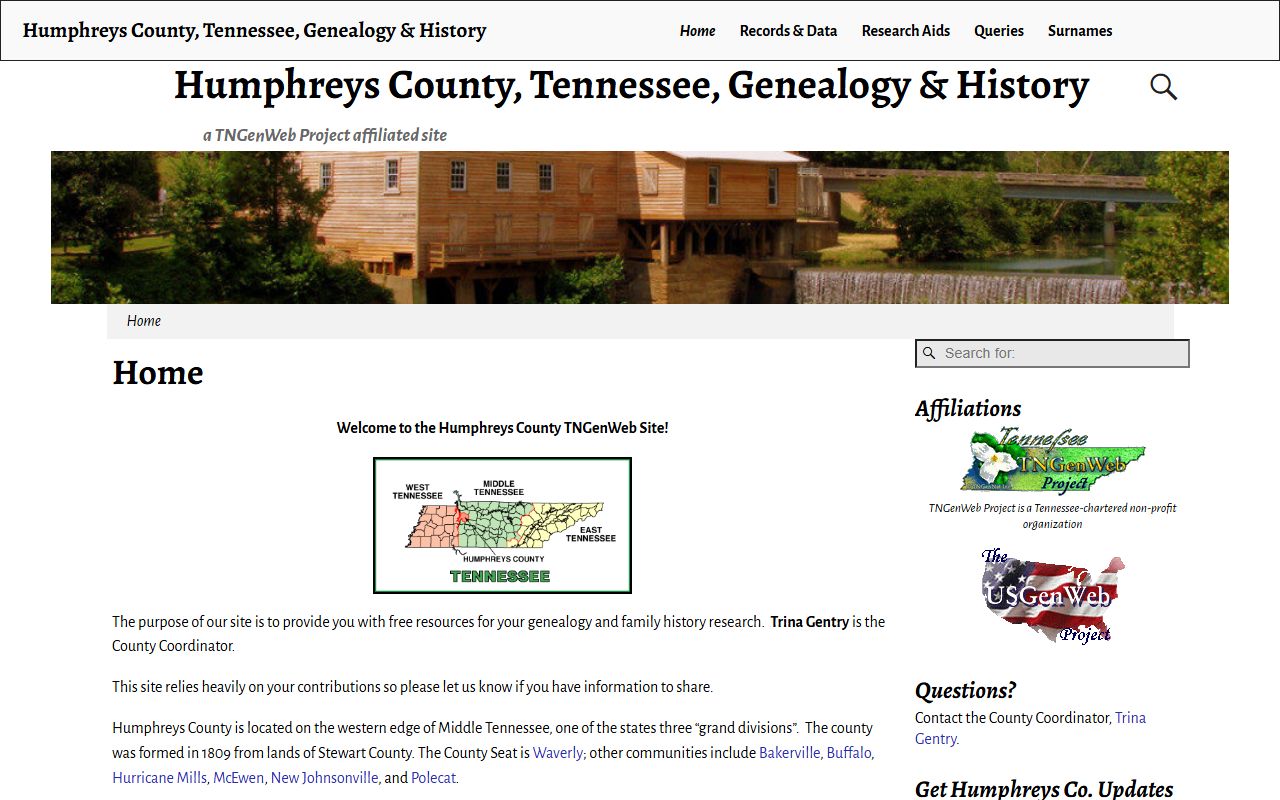
The TNGenWeb page gives you a local start point and helps narrow the search before you request copies.
The Tennessee Genealogical Society county page is the other successful manifest source. It works well with the county clerk and the local history collection because it gives you a second county-specific path when the first search stalls. Together, those two pages can point you toward the obituary source, a cemetery, or a family line that is not obvious at first glance.
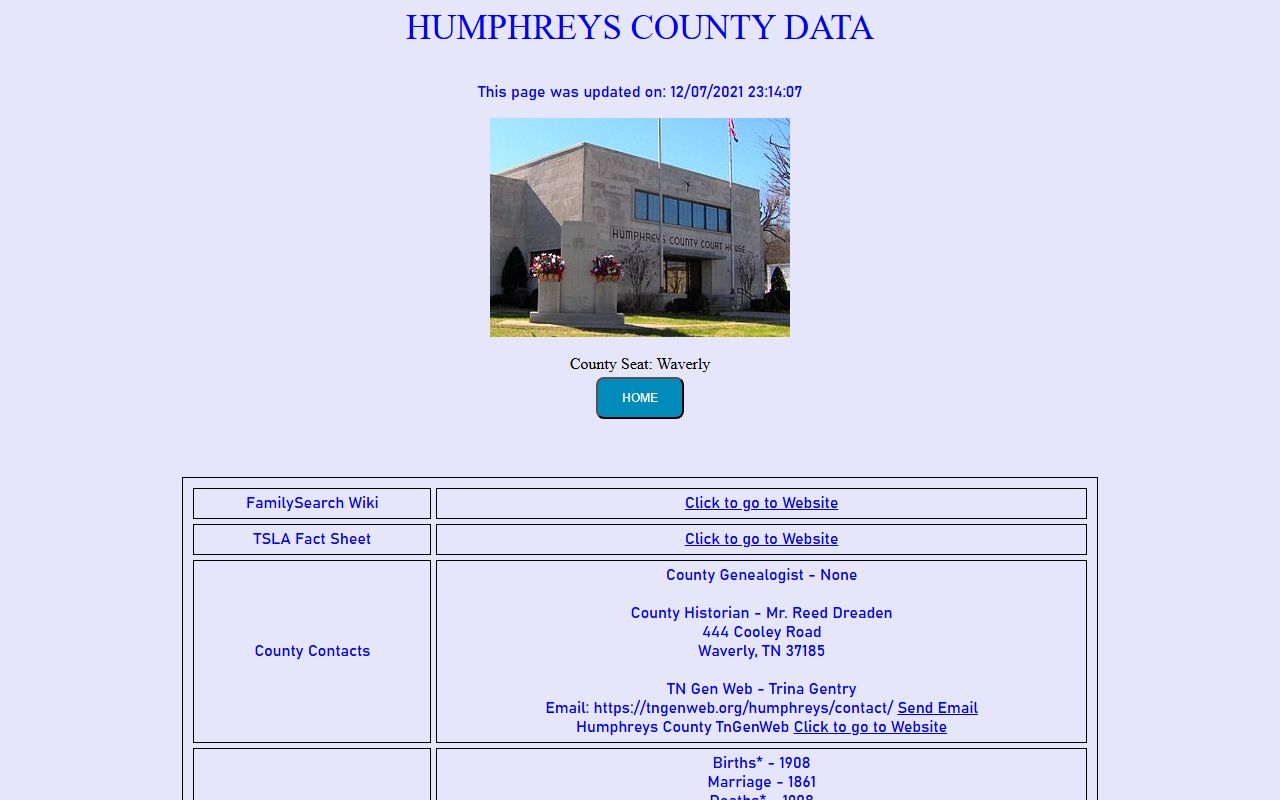
Use the county page as a bridge to the office records, not as an endpoint. It is best when it sends you to the next real record.
Humphreys County also benefits from Tennessee state support. The TSLA vital records guide explains how records move between the state office and the archives, and the Tennessee Department of Health Vital Records page explains how official copies are handled. That matters because an obituary can be public while a death certificate still follows age and requester rules. If you need the official record, the Vital Records Help Center is the right place to start.
Those state resources are most useful after the local obituary has identified the person. Once you have the name and date, the state record can confirm the details.
Search Humphreys County Death Records
Once an obituary gives you a likely death year, the next step is the Tennessee death record trail. Humphreys County uses state registration beginning in 1914, so the county obituary may need to be paired with the official state record. That is especially true when the notice is short. A death certificate can add a burial place, an undertaker, a birthplace, or a parent's name. Those extra fields make a difference when a family has lived in the county for generations.
State access rules still matter. Death, marriage, and divorce records are restricted for fifty years, while births are restricted for one hundred years. That does not stop most obituary searches, but it does shape what kind of copy you can get and who can ask for it. If you need a certified copy, use the state help pages and the Tennessee code access rules linked in the state guidance. If you only need to identify the family, the obituary and the county sources may be enough.
For Humphreys County, a good search path is simple: county clerk, county library, TNGenWeb, then the state office if needed. That order keeps the work efficient and local.
- Full name and any nickname or spelling variant
- Approximate death year or newspaper date
- Waverly, cemetery, church, or funeral home clue
- Spouse or parent names if listed
- Any marriage or will reference from the county
Humphreys County Obituary Clues
Some of the best clues in Humphreys County come from the newspapers themselves. The Waverly Democrat and Nashville papers can both hold death notices, and the county cemetery list can help you match the notice to a burial place. When a family used the same cemetery for several generations, that pattern can be enough to separate one branch from another. That is useful in a smaller county where names repeat often.
The historical society also matters because it can preserve local memory that never made it into an index. If you find a surname in an obituary and then see it again in a cemetery list or a marriage book, you are usually on the right track. Humphreys County rewards that kind of careful repetition. It is not a county where you have to force a search. It is a county where you follow the trail one piece at a time.
Note: In Humphreys County, a death notice is best treated as a lead. The county records and the local library are what turn that lead into proof.
Humphreys County Public Access Notes
Most obituary material is public, but the record type still decides what you can see. Newspaper notices are open. County wills and marriages are usually open unless a specific restriction applies. Certified death records are governed by Tennessee vital records rules and the public records statute. If you need to cite the law, the Tennessee Public Records Act at T.C.A. § 10-7-503 explains the public side of the search. In practice, that means the obituary can be read by anyone, but an official certificate may still require a valid request.
For Humphreys County, the safest approach is to use the public obituary first and the official state record second. That keeps the search grounded in the local source and reduces wasted requests.