
Jackson County Obituary Records
Jackson County obituary records often need a little more digging because the county lost a large block of early records in courthouse fires. Gainesboro is the county seat, and the local archive, library, and TNGenWeb pages are the best way to rebuild the trail. That is useful when a death notice mentions a church, a cemetery, or a family line but does not give much else. Jackson County has enough surviving material to make the search worthwhile. The key is to start with the obituary and then move into the county's surviving marriage, probate, cemetery, and newspaper records.
Jackson County Quick Facts
Where to Find Jackson County Obituary Records
The Jackson County Clerk in Gainesboro is the first office to think about when you need obituary support. The research notes say marriage and probate records survive from 1870, while earlier material was lost to fires. That means a death notice may be the only easy clue that points into the right family group. The register of deeds also keeps land records from 1817, and the archives hold local historical records. Together those offices make Jackson County a good place to work from the obituary outward instead of trying to guess the whole family story at once.
The Charles Ralph Holland Memorial Library is equally useful. It holds a complete set of microfilm for Jackson County Chancery Court cases, newspapers on microfilm, local history materials, and census records. That is a strong research mix for death notices. A notice in the local paper can be matched to a court case or cemetery note without much delay. For many county researchers, that library is what makes the search efficient after the first clue appears.
Jackson County is a fire-loss county, but not a dead end. The surviving pieces are still strong enough to solve most obituary searches with patience.
Jackson County Obituary Sources
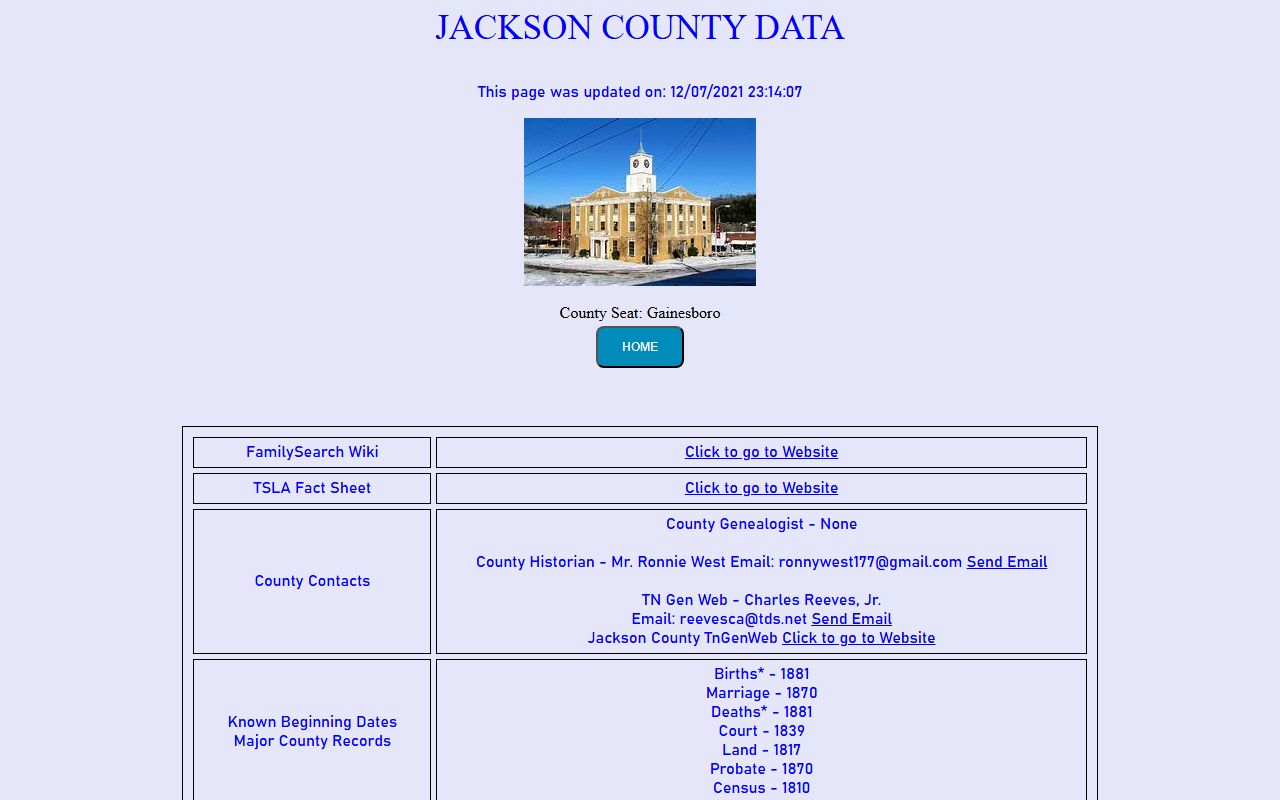
The best local web source is Jackson County TNGenWeb. The page points to death records, family files, cemetery records, and a query board, which makes it a natural starting point for obituary research. That is especially useful because the county notes say death records survive in two helpful ranges, 1881-1883 and 1908-1912. If you only have a surname or a rough year, the county web page can help you land on the right family before you move to the library or archive.
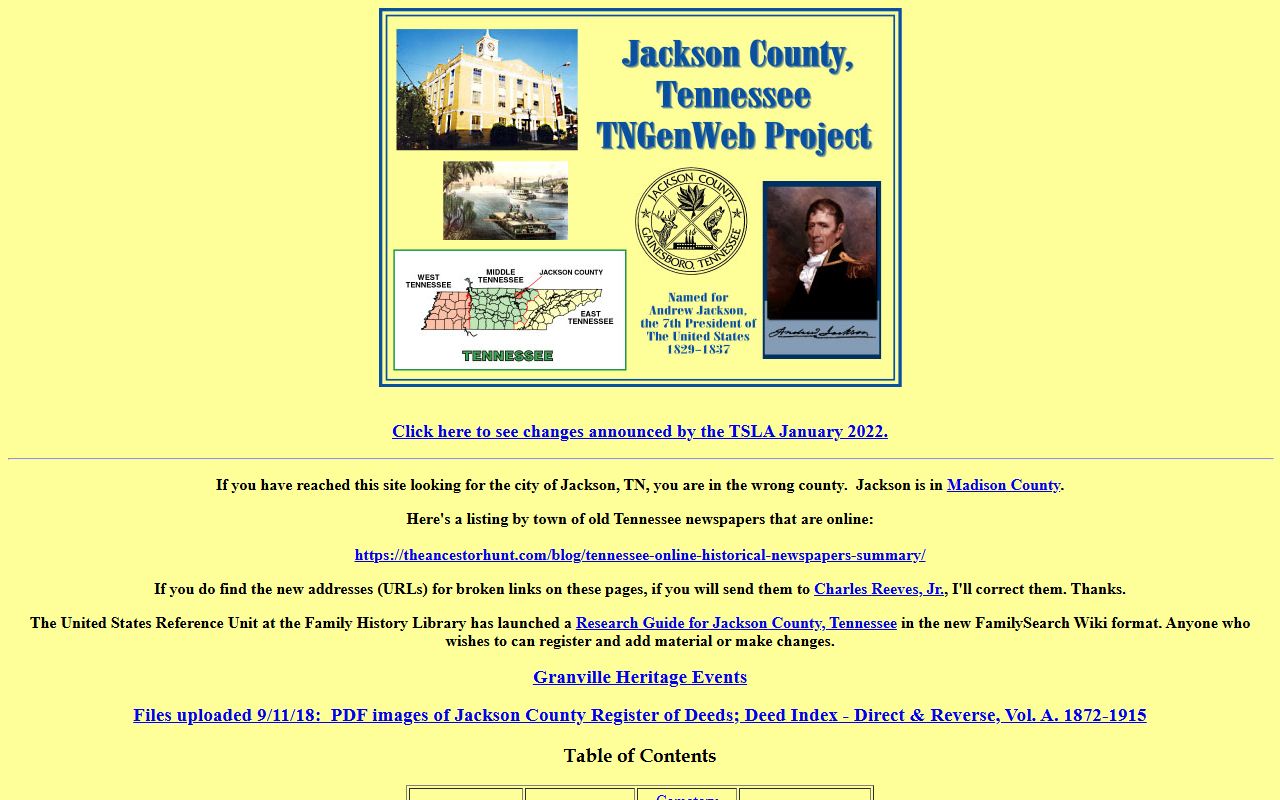
The TNGenWeb page is the best first pass when the obituary is brief or the name is common.
The Tennessee Genealogical Society county page is the other successful manifest source. It works well with the historical society and the museum because it gives you a second county-specific entry point. That can matter when the obituary mentions a cemetery, a church, or a place in the Upper Cumberland that is not obvious from the name alone. The county historian and historical society are useful here too, even when they do not have a formal URL in the research notes.
Use the society page as a second route, not a replacement for the county records. It helps when the first source only gives you part of the answer.
Jackson County obituary work also fits well with the state death indexes at TSLA. Those indexes cover 1908-1912 and 1914-1933 and are a strong bridge to a county death date. If you need to understand how the county and state records fit together, the TSLA vital records guide and the Tennessee Department of Health's Vital Records page explain the split. That split matters here because a public obituary can be easy to read while a certified copy still follows state access rules.
In a fire-loss county, the right order matters. The county note points you to the local family, and the state index confirms the date.
Search Jackson County Death Records
Jackson County death searches are easiest when you use the obituary as a doorway into the county's surviving records. The research notes say the county has local death records in 1881-1883 and 1908-1912, plus county registrations from 1914 onward. That means you may find a name in a newspaper notice, then confirm it with a county record, a cemetery entry, or a state index. The local newspaper list is especially helpful, since the Jackson County Sentinel, Gainesboro Sentinel, Jackson County News, and Gainesboro Press all provide different windows into the same family groups.
When you need an official copy, the Tennessee access rules still apply. Death, marriage, and divorce records are generally restricted for fifty years, and births are restricted for one hundred years. The state help center explains how to request copies, and the code-linked guidance explains who can receive them. That is most important when the death notice is public but the certificate is needed for a legal purpose. In Jackson County, the obituary often gives you enough to know what to request next.
The practical move is simple: start at the county library, then the archive, then TSLA. That order works because the county's surviving record ranges are uneven and each source fills a different gap.
- Full name and any alternate spelling
- Approximate death year or newspaper title
- Gainesboro, church, cemetery, or family clue
- Marriage or probate reference if one appears
- Any local book title or transcription note
Jackson County Obituary Clues
Jackson County obituary searches often get easier when you remember that the county has a strong community record culture. The museum, historical society, and Upper Cumberland Genealogical Association all help fill in local memory. A family may not show up in a simple index, but it can show up in a cemetery list, a church record, or a local researcher file. That is why the county notes point to books and transcriptions as well as official offices. The obituary is one piece in a larger county puzzle.
That puzzle is easier to solve when you use the local surname trails and the state death index together. A record that looks incomplete in one source is often clear in another. Jackson County is a good example of why local history still matters. The county material can be thin in one place and deep in another, so the search has to move with the record instead of forcing the record to fit the search.
Note: In Jackson County, surviving record ranges are uneven, so every obituary clue should be checked against at least one local source and one state source.
Jackson County Public Access Notes
Most obituary materials are public, but the record type still controls access. Newspaper notices are open. Court and probate files are usually open unless sealed. Certified vital records follow Tennessee's age rules and requester rules. If you need the legal framework, the Tennessee Public Records Act at T.C.A. § 10-7-503 is the public-access anchor, while the vital records statutes control official copies. In a county with fire loss, that difference matters because the public obituary may be easier to find than the official certificate.
Jackson County research works best when you treat the obituary as the lead and the county archive as the proof trail. That approach fits the surviving records and avoids wasting time on the wrong era.