
Jefferson County Obituary Records
Jefferson County obituary records are a strong research target because the county is one of the oldest in Tennessee and keeps a long run of local records. Dandridge is the county seat, and the county clerk, register of deeds, and library all support the search. If you start with a death notice, you can often move into marriage, probate, court, or cemetery records without losing the family thread. That is useful in a county with this much history. The obituary may be short, but the surrounding record set is deep enough to make it meaningful.
Jefferson County Quick Facts
Where to Find Jefferson County Obituary Records
The Jefferson County Clerk office is the main county stop for obituary research because it keeps marriage, probate, and court records from 1792. That long record span gives you room to work when a death notice is short or incomplete. The register of deeds also keeps land records from 1792, which helps when an obituary mentions a home place, a farm, or a transfer of property after death. Jefferson County's library adds a local history collection, census records, and newspaper archives, all of which are useful when you are trying to connect one death notice to a larger family file.
Jefferson County is one of the oldest counties in Tennessee, so its obituary work often ties into old family lines rather than one-off records. A notice in a county paper may point to a cemetery that has been used for generations. It may also point to a marriage book or a probate file that confirms the line going back to the late 1700s. That is why the county is such a good fit for careful obituary research. The records are broad enough to matter and old enough to tell a full story.
When the surname is common, the county's long memory helps. It gives you a way to sort one Jefferson County family from another.
Jefferson County Obituary Sources
The best local web source is Jefferson County TNGenWeb. It provides census transcriptions, marriage records, cemetery records, obituaries, deed abstracts, court records, and family files. That is a broad mix, and it fits Jefferson County well because the county's obituary work often depends on seeing several record types together. If you only know a surname, the county page can point you toward the family branch before you start asking for copies.
The TNGenWeb page is a practical first step because it often links the obituary clue to the county record trail.
The Tennessee Genealogical Society county page is the other successful manifest source. It gives you a second local entry point and works well with the library and county clerk when you need context before ordering copies. Jefferson County has enough history that one clue can branch into several records very quickly, so having two county-specific sources helps keep the search under control.
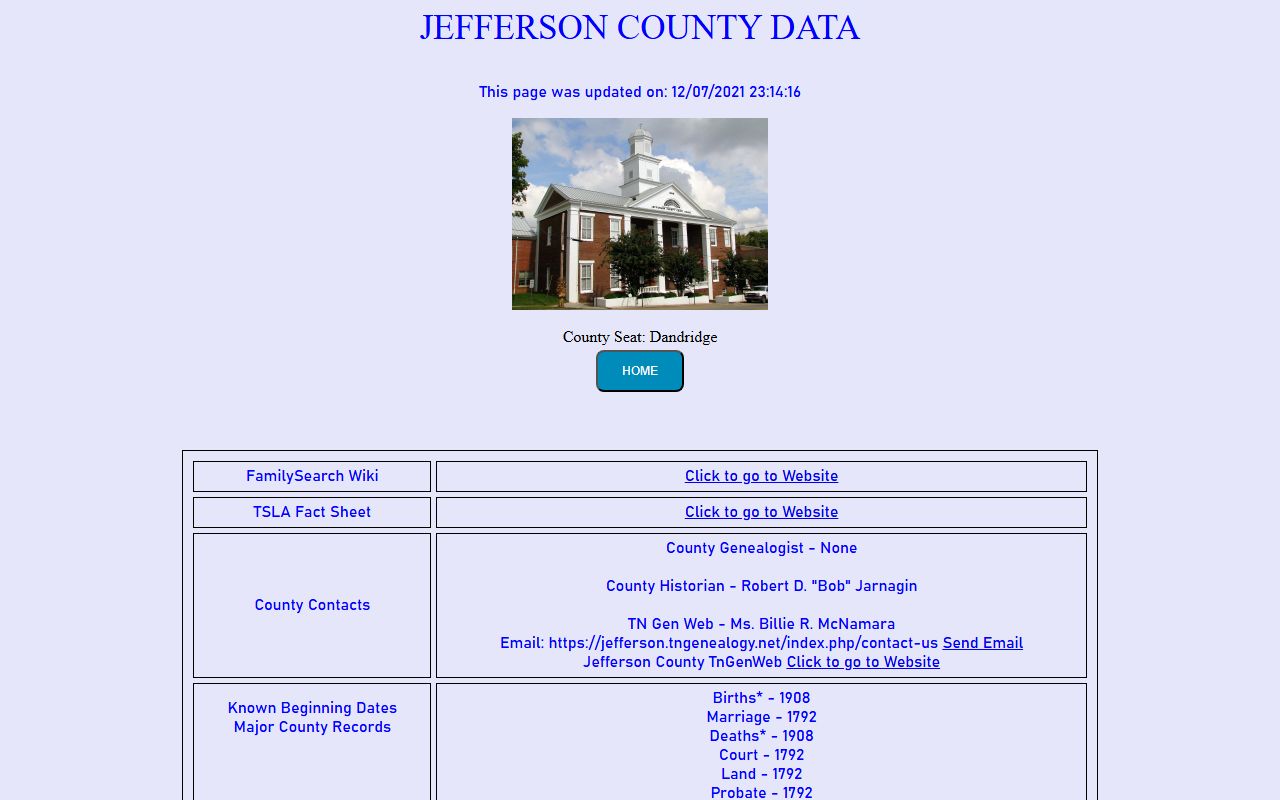
Use the county page as a second route into the same local record world. It is especially useful when the obituary only gives a place name.
Jefferson County also fits well with the state obituary and death record system. The TSLA vital records guide explains how state and archive copies are divided, and the TSLA death index helps bridge from a notice to a certificate number or record date. If you need a certified copy, the Tennessee Department of Health's Vital Records page and the Help Center explain the current request process.
That matters because a public obituary can tell you who died, while the state record can tell you how to prove it. Jefferson County often benefits from both.
Search Jefferson County Death Records
Jefferson County death searches work best when you pair the obituary with the county's long record base. The county notes say marriages begin in 1792 and that the county has good probate and court coverage. That means a notice may lead to a will, a burial site, or a deed transfer after death. In a county this old, the obituary is not just a death notice. It is a route into a larger family history. That is why the cemetery list matters too. A burial place can be the proof point that ties the notice to the family.
The state rules still apply when you need an official copy. Death, marriage, and divorce records are generally restricted for fifty years, while births are restricted for one hundred years. Those limits do not keep you from using the obituary, but they do control access to certificates. If you need the legal framework, the Tennessee Public Records Act at T.C.A. § 10-7-503 is the public-access base, while the vital records rules govern the certificate side. Use the public trail first, then the official copy if needed.
Jefferson County is one of the counties where the obituary, the county clerk, and the state index all deserve a turn. That is usually the fastest way to get a clean answer.
- Full name and any surname variation
- Approximate death year or paper date
- Dandridge, church, cemetery, or family clue
- Spouse, child, or parent names from the notice
- Any marriage, probate, or deed reference
Jefferson County Obituary Research Tips
Jefferson County obituary research is easier when you use the county's age to your advantage. Long record spans mean the same family can show up in multiple places over time. A notice in a newspaper may lead to a cemetery, and the cemetery may lead to a probate or deed record. That chain is common in Jefferson County. It helps to keep the search slow and specific. If you know the family stayed in the county for generations, the old record run is often enough to prove the line.
If the first search is thin, move from the obituary to the census or family files in the county sources. Those are often the records that show the county connection most clearly. Jefferson County does not require guesswork so much as patience. The records are there, and the local sources usually tell you where to look next.
Note: In Jefferson County, the obituary is most useful when you use it to open a path into the county's long paper trail rather than treating it as the final answer.
Jefferson County Public Access Notes
Most obituary materials are public, but not all copies are the same. Newspaper notices are generally open. County court and probate files are usually open unless sealed. Certified death records follow Tennessee age and requester rules. That is why the county sources and the state office should be used together. A public obituary can show you the family and the place. The official record can provide the copy you need for a legal purpose.
For Jefferson County, that distinction is easy to keep in mind. Start with the local obituary and the county clerk, then move to TSLA or the state health office if you need certification. That order matches the county's record strength and keeps the search practical.