
Johnson County Obituary Records
Johnson County obituary records are a good fit for a local, steady search. Mountain City is the county seat, and the county has limited record loss, so marriage, probate, court, and land records all help support the obituary trail. That matters when the notice is brief or the family lived in the mountains for generations. A county obituary often names the church, the cemetery, or a nearby town. Johnson County gives you enough local record support to turn those clues into a real family history search without a lot of wasted steps.
Johnson County Quick Facts
Where to Find Johnson County Obituary Records
The Johnson County Clerk in Mountain City is the main office to start with when you need obituary support. The research notes say marriage, probate, and court records all begin in 1836, which makes the county strong for family work. The register of deeds also keeps land records from 1836. That means a death notice can be checked against a marriage book, a probate file, or a deed trail without leaving the county record world. The public library adds a local history collection, census records, and newspaper archives, so you have more than one place to test a surname or burial clue.
Johnson County obituary research also benefits from local geography. Mountain City, Doe Valley, and the county's mountain cemeteries can help separate one branch from another. The county has enough continuity that a family may appear in the same church, cemetery, or newspaper line for a long time. That makes a death notice more than a headline. It becomes a way to move from one generation to the next.
Because the county has limited record loss, the obituary search is usually straightforward if you stay local and keep your clues tight.
Johnson County Obituary Sources
The main local web lead is Johnson County TNGenWeb. It provides census transcriptions, marriage records, cemetery records, obituaries, and family files. That is a strong first stop when you have only a surname or a rough death year. In a county with limited record loss, those volunteer transcriptions are often enough to tell you whether you are on the right family line before you ask the courthouse for anything.
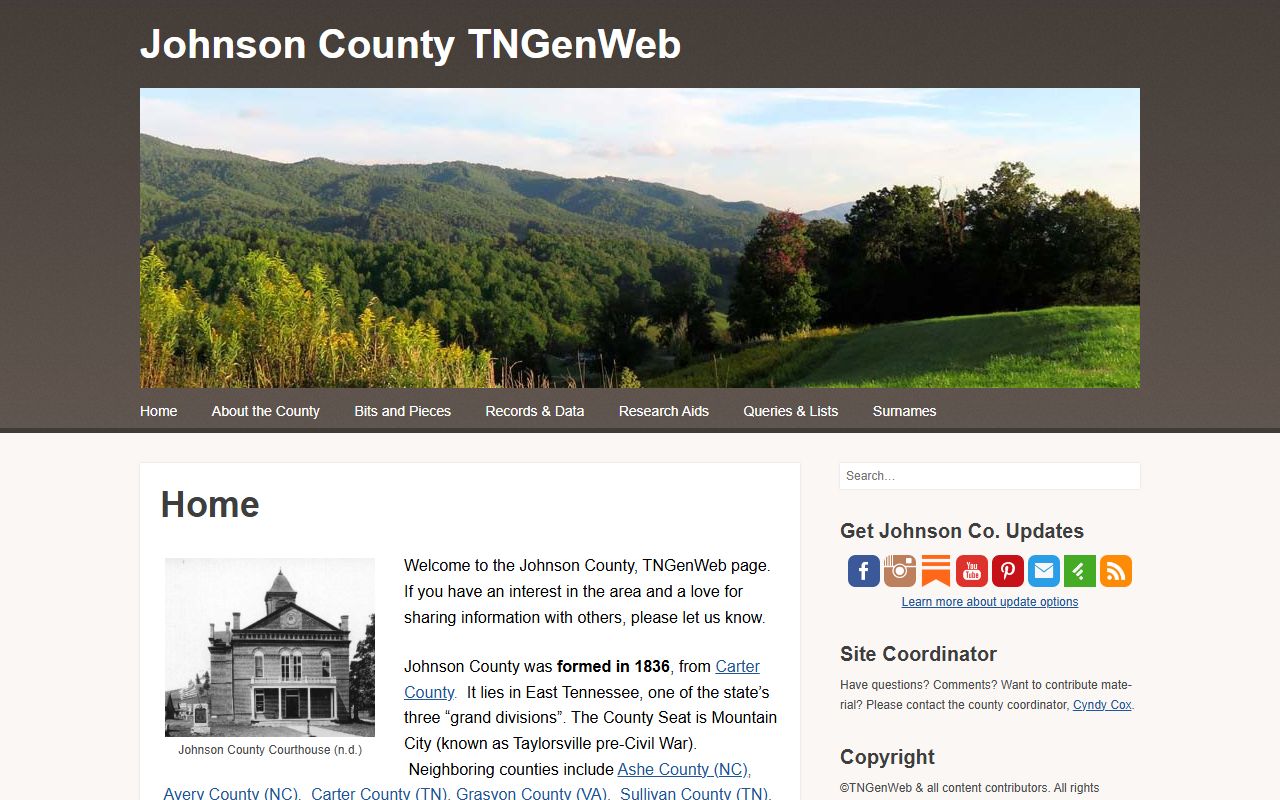
The TNGenWeb page is the best first route because it puts the obituary clue into the county context right away.
The Tennessee Genealogical Society county page is the other successful manifest source. It adds a second county-specific path and works well with the local library when you want a broad county view before requesting copies. The county historical society also supports the search, even though the research notes do not give a separate web address. That local memory can matter when the obituary names a church or a mountain cemetery instead of a town.
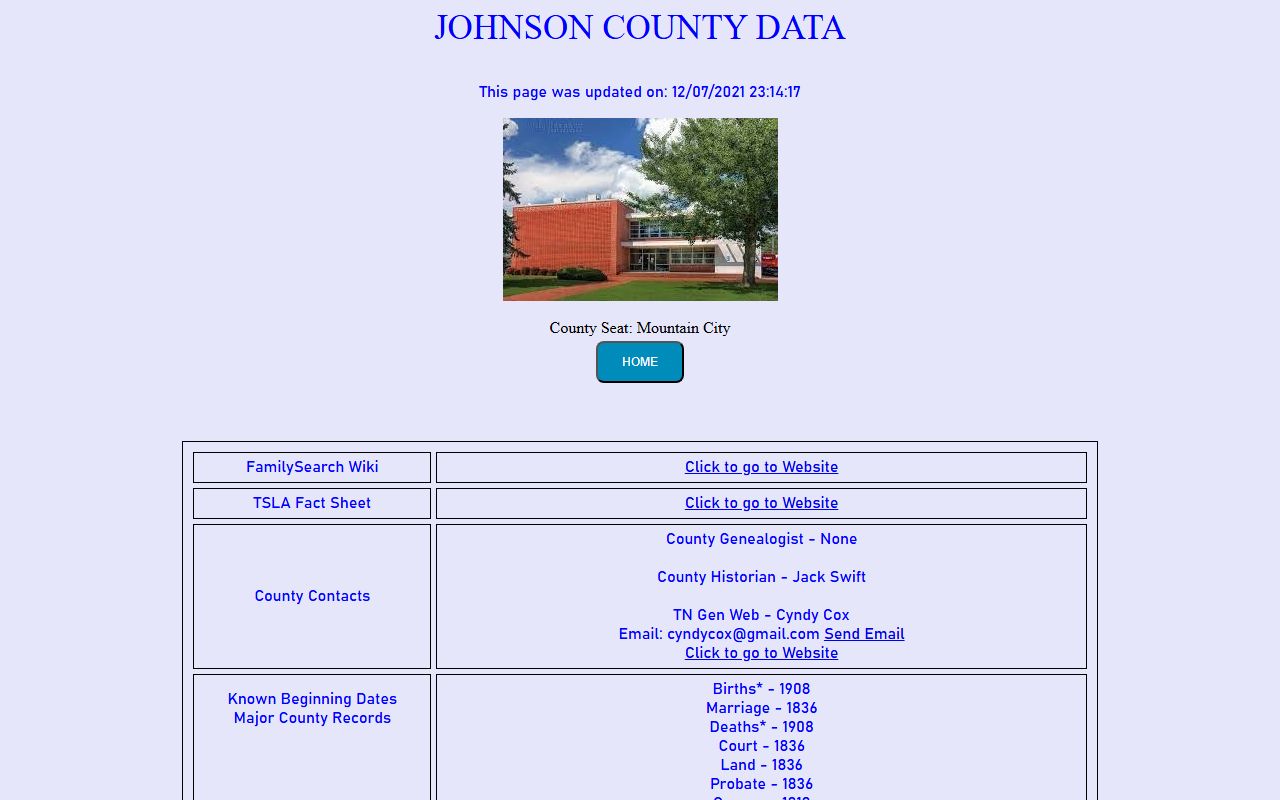
Use the society page as a second county lens. It helps if the first search only gives you part of the family story.
Johnson County also fits well with state death record tools. The TSLA vital records guide explains how records are split between the state office and the archives, and the TSLA death index helps bridge from a notice to a date or certificate number. If you need a certified copy, the Tennessee Department of Health's Vital Records page and Help Center explain the request process. That matters because the obituary and the certificate are related, but they are not the same record.
In Johnson County, the county page and the state index together usually give you a clean answer without much waste.
Search Johnson County Death Records
Johnson County death searches are usually practical because the county's record loss is limited. The obituary can be matched with a county marriage, probate, or cemetery record without much trouble. That helps when the notice names a burial place like Mountain City Cemetery or Doe Valley Cemetery. It also helps when the local newspaper is the Tomahawk or a Bristol paper and the notice has a family name you can cross-check in the county sources.
State access rules still apply to certified copies. Death, marriage, and divorce records are generally restricted for fifty years, while births are restricted for one hundred years. If you only need to identify the person, the obituary, TNGenWeb, and the county records may be enough. If you need a legal copy, the state help pages and code-linked guidance explain who can receive it. That difference matters in Johnson County just as it does everywhere else in Tennessee.
The best approach is simple: begin with the local obituary, check the county records, then move to the state index if the answer is still incomplete.
- Full name and any nickname or spelling variant
- Approximate death year or newspaper title
- Mountain City, church, cemetery, or funeral clue
- Spouse, parent, or child names if listed
- Any marriage or probate reference from the county
Johnson County Obituary Clues
Johnson County obituary clues often come from the surrounding mountain community. The local paper, regional Bristol coverage, and family cemeteries can all point to the same person. Because record loss is limited, it is usually possible to confirm a notice with one or two county records. That gives the county a steady, low-friction feel for family research. It also means the obituary can be treated as a lead instead of a problem to solve.
If a family lived in the county for a long time, the cemetery and the marriage record often do more work than the obituary itself. Still, the obituary matters because it gives you the date, the survivors, and the burial place. Johnson County is one of the counties where those details are often enough to move the research forward cleanly.
Note: In Johnson County, limited record loss makes the obituary trail easier to verify, so it is worth checking the county books before moving to a state request.
Johnson County Public Access Notes
Most obituary materials are public. Newspapers, cemetery notes, and county records are generally open unless a specific restriction applies. Certified death records follow Tennessee's age and requester rules. The Tennessee Public Records Act at T.C.A. § 10-7-503 is the public-access anchor, while the vital records rules control official copies. For Johnson County, that means you can usually read the obituary and county source freely, but you may still need a proper request for a certified copy.
The county works best when you keep the search local first. That approach fits the record base and usually gets you to the answer faster.