
Search Lake County Obituary Records
Lake County obituary records can be a compact but useful trail. Tiptonville is the county seat, and the county is the smallest in Tennessee by population, which means families often appear in a tight local circle. The best search path usually runs from a newspaper notice to the county clerk, the local library, or the Tennessee State Library and Archives death index. Because the county is small, a single cemetery name or family clue can carry a lot of weight in the search.
Lake County Quick Facts
Lake County Obituary Sources
Lake County was established in 1870 and named for Reelfoot Lake. The county seat is Tiptonville, and the county clerk and register of deeds both work from South Court Street. The county is small enough that obituary work often depends on a short chain of local clues. That can be a newspaper notice, a cemetery reference, or a family name that appears in a county clerk record. In a small county, those clues can be enough to move the search forward quickly.
The Lake County Library is another useful stop. It has a local history collection and limited genealogy materials, which is often enough to support a targeted obituary search. The county historical society also provides local history and Reelfoot Lake context. Those resources are helpful because a family may be tied to fishing, farming, or a neighborhood that only locals recognize right away. If an obituary names a church or burial ground, the local history layer can help you place it fast.
| County Seat | Tiptonville |
|---|---|
| County Clerk | 116 S Court St, Tiptonville, TN 38079 |
| Library | 108 S Court St, Tiptonville, TN 38079 |
| Historical Society | Local history, Reelfoot Lake history |
Lake County obituary searches often benefit from regional newspapers too. The Lake County Banner is local, while the Dyersburg State Gazette and Union City newspapers can give you regional coverage. That mix can be important when the local paper has a gap or when the family used a nearby town for services or burial.
The Lake County TNGenWeb page at tngenweb.org/lake is the best local starting point. It can lead you toward transcriptions and family files without wasting time.
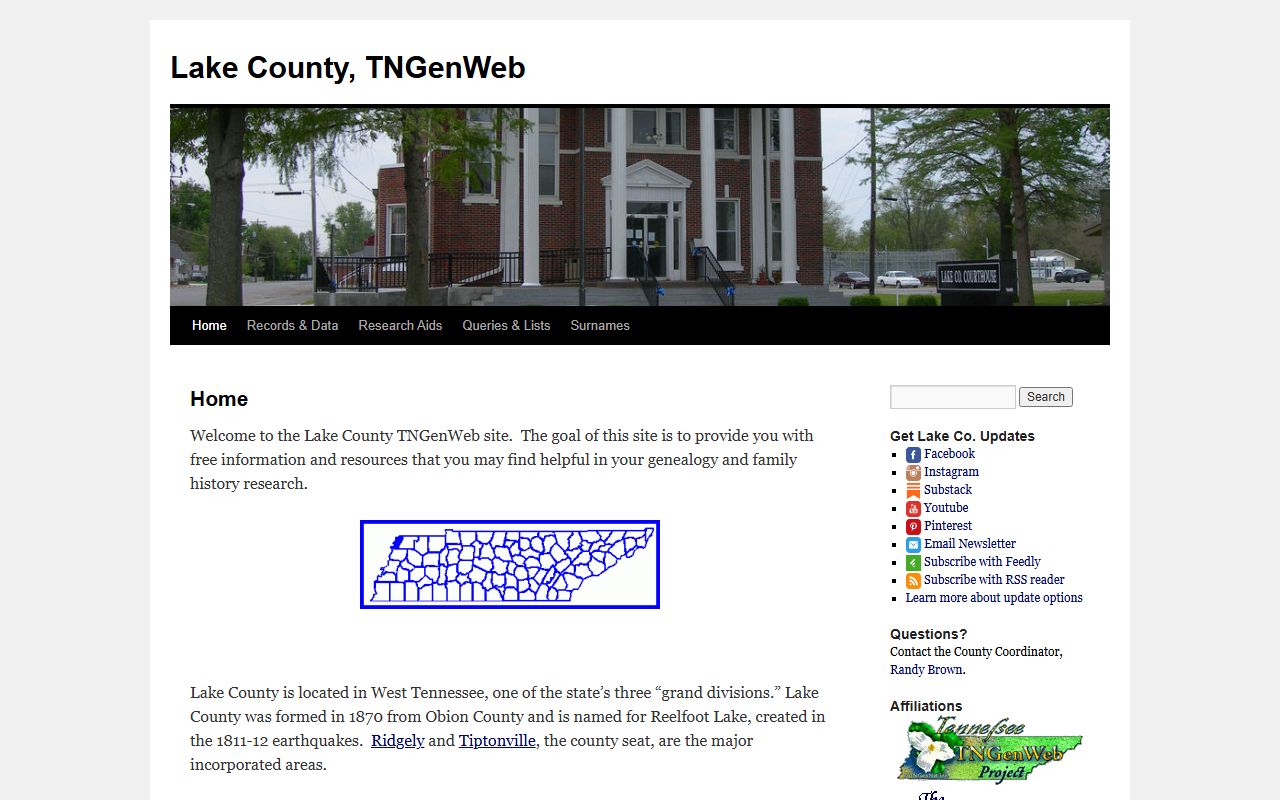
That site matters in Lake County because the county is small enough that one transcription can lead straight to the right family branch.
How to Search Lake County Obituary Records
Start with the county clerk and the local library. The county clerk has marriage records from 1870, probate records, and court records, while the library has local history and limited genealogy materials. If the obituary gives a spouse name, burial place, or town, those county sources can help confirm the family. The county's small size makes even a short clue more useful than it might be in a larger Tennessee county.
The TNGenWeb site is a practical next step because it includes census transcriptions, cemetery records, obituaries, and family files. That can save time before you start asking for copies. When a notice mentions a family cemetery, you can often use the county transcription first and the local library second. The Lake County Historical Society can also add Reelfoot Lake history or local context that helps you sort the family line.
Statewide help still matters. TSLA death indexes cover 1908-1912 and 1914-1933, and the state registration system becomes important for Lake County deaths from 1914 onward. The Tennessee State Library and Archives and the Tennessee Virtual Archive can help when the local obituary is thin or the year is uncertain. If you need a certified copy, the Tennessee Department of Health Office of Vital Records at tn.gov and vitalrecords.tn.gov is the official source.
Under T.C.A. 68-3-205 and T.C.A. 68-3-206, record access and copy rights depend on age and requester status. That is why county obituary work and state certificate work often move at different speeds.
Lake County does not have the broad record depth of Knox or Lawrence, but it does have enough local material to make a careful search productive. A family cemetery, an obituary line, and a county clerk entry can be enough to prove the connection.
Note: In Lake County, the smallest population often makes the local clue easier to follow, not harder.
- Full name and alternate spelling
- Approximate death year or burial year
- Tiptonville, Reelfoot, or cemetery clue
- Spouse or family name if listed
- Local paper or regional newspaper name
Those clues are enough for a solid first pass in a county this small.
The Lake County Banner and the regional papers are key when the local obituary is brief. Because Lake County families often rely on nearby services, a regional source can fill the missing detail that the local notice leaves out.
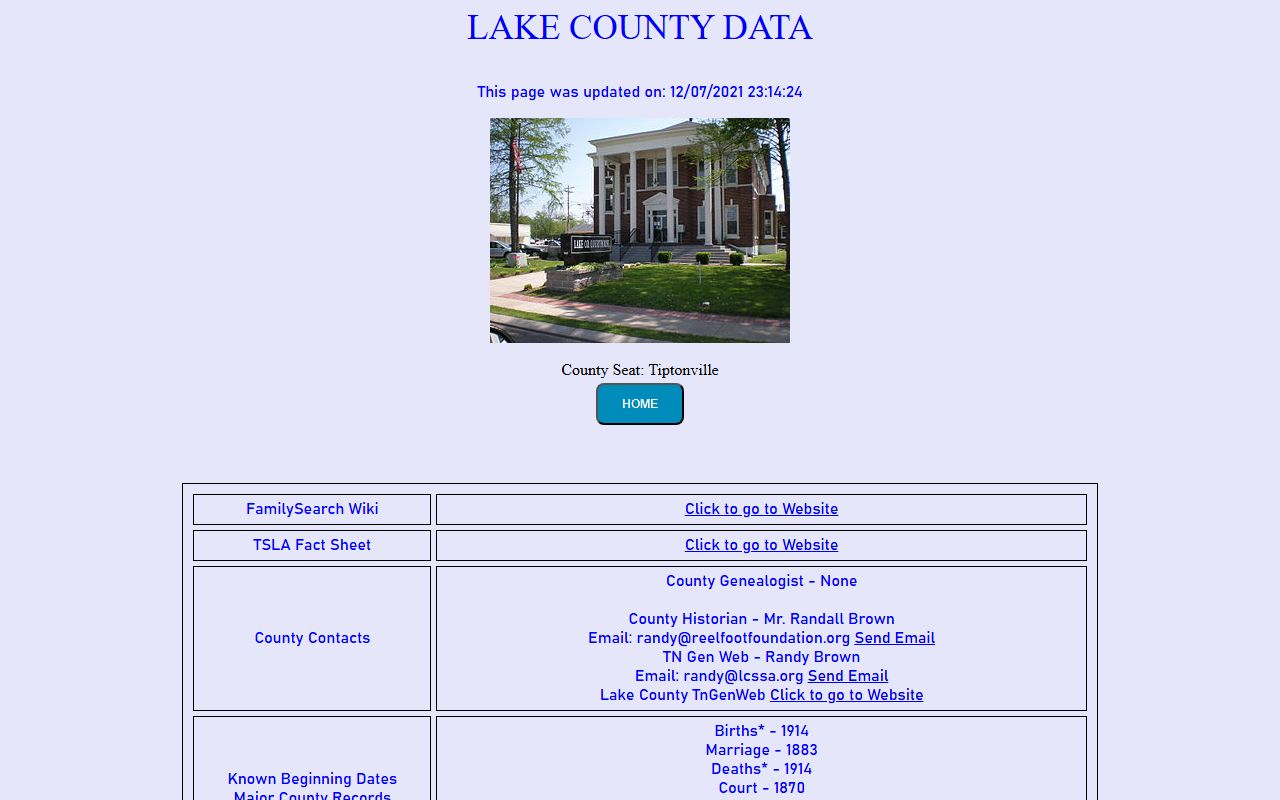
That county page is useful when you need a second local source before moving to the state indexes.
Lake County Obituary Records and Local History
Lake County obituary records often connect to local history more than to large archives. The county library's limited genealogy collection and the historical society's Reelfoot Lake focus can be enough to place a family in the right part of the county. That matters when a notice says very little. A lake, a church, or a cemetery name can identify the branch quickly.
The county clerk's records help too. Marriage records from 1870, probate records, and court records can give the family structure behind a death notice. If the obituary names a spouse or an heir, a county record can confirm the relationship. When the record is weak, that extra confirmation is valuable. It keeps the search from turning into a guess.
For certified records, the Tennessee Department of Health Office of Vital Records is still the state source. Certified copies are $15, and the office explains ordering methods on its website. That is useful when you need an official death certificate after a local obituary search. If you are trying to compare a newspaper line with a formal record, that office is the final stop.
Lake County's small size means the local and state sources work best together. Use the county clerk, the library, the historical society, and the state death index as one path rather than separate ones.
That is the simplest way to handle obituary research in Lake County.
Lake County families often leave their strongest trail in the local notice, then in the cemetery, and then in the county clerk record. That order is usually enough to keep the search moving without wasted work.
The county may be small, but the clues are usually enough if you keep them in the right order.
Browse More Tennessee Records
Lake County is part of the larger Tennessee obituary network. Use the browse pages when a family line crosses into another county or city.