
Lincoln County Obituary Records
Lincoln County obituary records are well supported by the library, archives, and county clerk offices in Fayetteville. That makes this county a strong research stop. The county was established in 1809, and while marriage records do not begin until 1834, the county archives and library make up a lot of ground. A death notice here can lead to a church, a cemetery, a family file, or a court record. If you work in order, the search is usually efficient.
Lincoln County Quick Facts
Lincoln County Obituary Sources
Lincoln County has a deeper local research structure than many counties its size. The county clerk holds marriage records from 1834 and probate records from the county’s early years. Court records begin in 1810, and the county archives keep court records, wills, deeds, and historical documents. Those records matter for obituary research because a notice may be tied to an estate, a church, or a land transfer. Fayetteville is the key town for all of that work.
The Fayetteville-Lincoln County Public Library is especially strong. Its genealogy room includes newspapers, birth and death records, family files, cemetery records, maps, and research access to Ancestry, FamilySearch, HeritageQuest, and TSLA tools. That is a real advantage when you are searching for an obituary that may not be indexed online yet. The library also gives you a place to work through surrounding-county references if the person lived near a county line.
Start with Lincoln County TNGenWeb and the TN Gen Society county page. Those pages help you identify the best local record path before you ask the library or archives for help.
Lincoln County Obituary Records
Lincoln County obituary records often contain more family detail than the short county index entries. The county’s strong religious tradition means funeral notices, service information, and church affiliations show up often. That is useful because the obituary may name children, a spouse, or a burial place that is not in the county clerk record. The local cemetery list is also strong, especially in Fayetteville and Mulberry.
There is a notable gap in early marriage records from 1809 to 1837, so older family lines may need more cross-checking. The county archives and library can help fill that space. If a person’s obituary mentions a family that has lived in the area for a long time, the newspaper clipping and the archive record can often solve the puzzle together. That is normal in Lincoln County and not a sign that the search is failing.
Use TSLA death indexes for the 1908-1912 and 1914-1933 periods if you need to confirm a death year. Later copies can be requested through the Tennessee Vital Records office. The county, library, and state together make Lincoln County obituary work quite manageable.
Read the local genealogy site first at Lincoln County TNGenWeb. It is the easiest way to spot cemetery, marriage, and obituary leads.
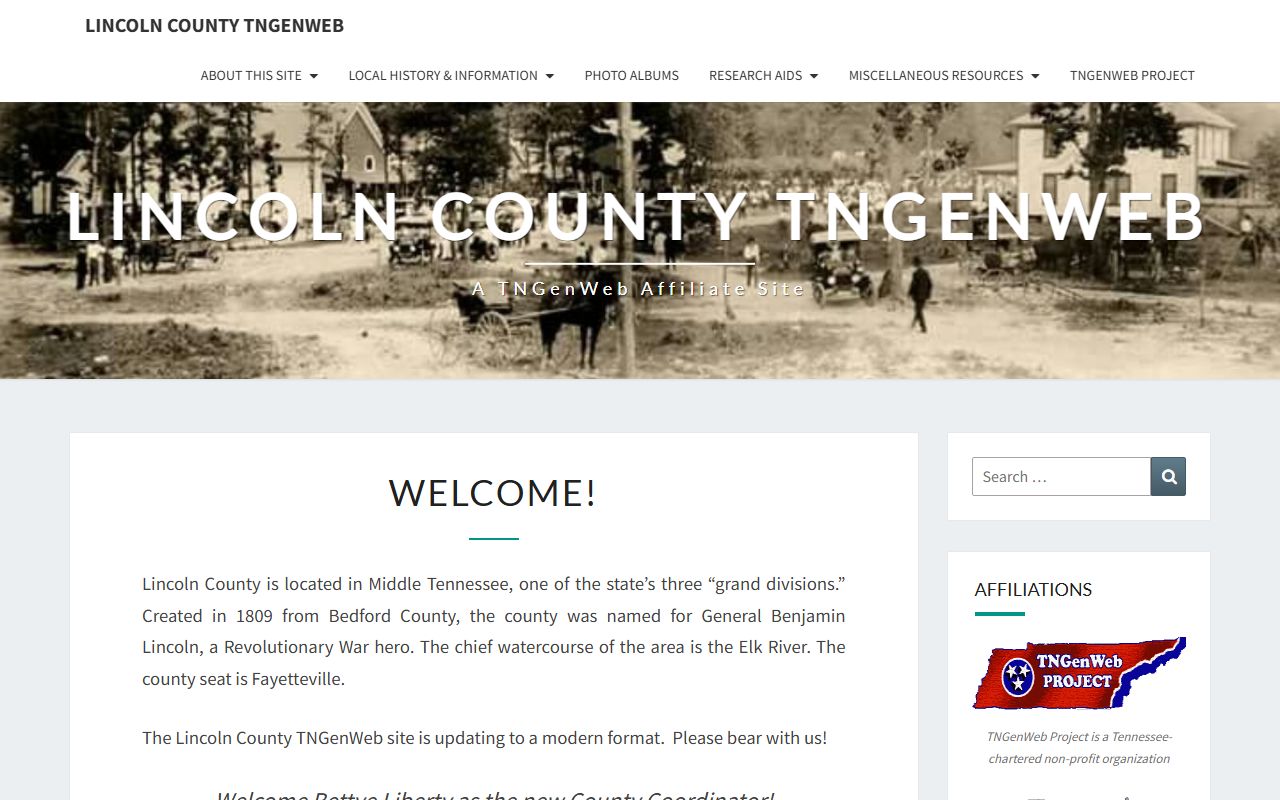
That page is helpful when a family name needs a fast local check.
Then use the Tennessee Genealogical Society county page at Lincoln County TN Gen Society page. It can help tie the obituary to a family line or cemetery area.
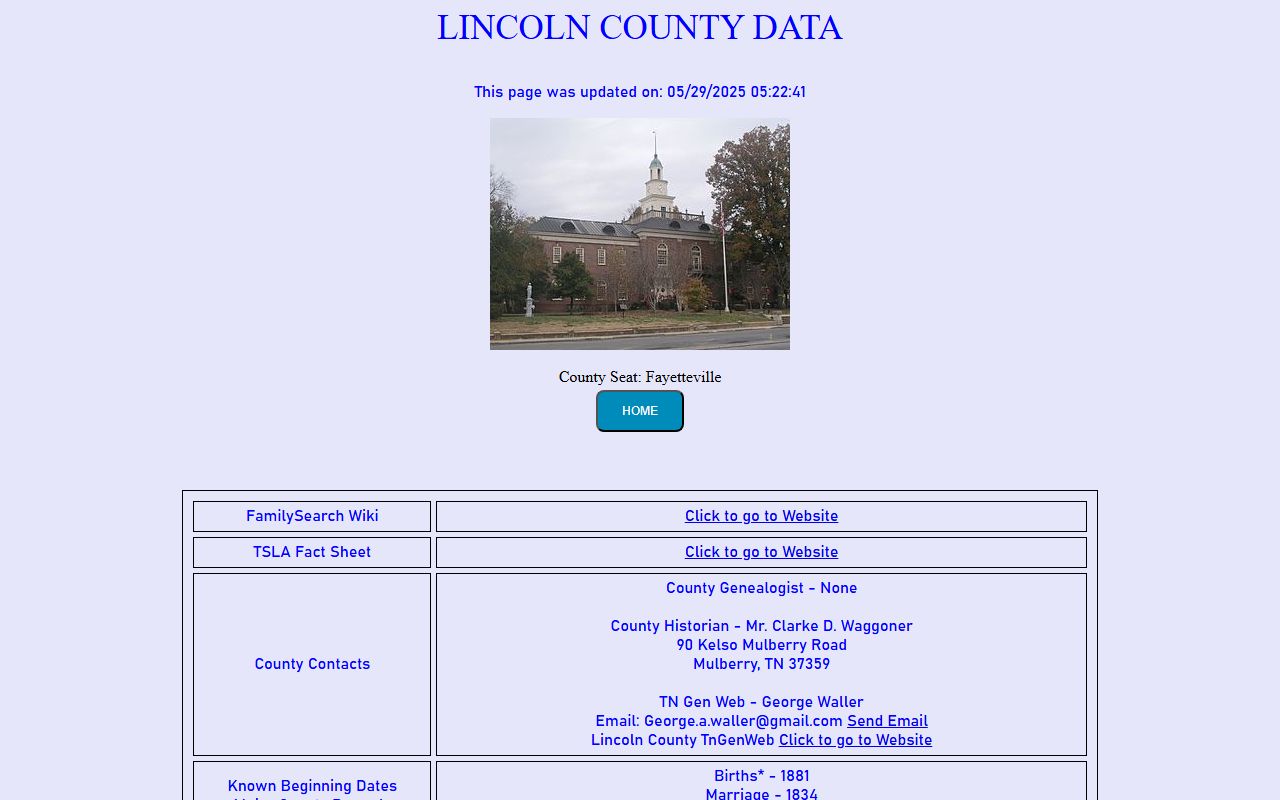
That second source is a clean cross-check when the surname is common.
Search Lincoln County Obituary Records
Search Lincoln County obituary records by starting in the Fayetteville-Lincoln County Public Library genealogy room. That room is one of the best research tools in the county because it brings together newspapers, files, maps, and database access. You can often move from a death notice to a burial place or family file without leaving the building. That is the fastest path when you need a practical result.
If you need a state date anchor, use TSLA death records 1908-1912 and TSLA death records 1914-1933. Those indexes make it easier to confirm the county and year before requesting a certified copy. If the obituary mentions a spouse or a church, the local archive may have the next clue. In Lincoln County, the search often works in that order.
Note: Lincoln County obituary searches usually begin with the library and finish with the county archives or a state index.
Lincoln County Help
The Lincoln County Archives, Genealogical Society, and museum are all useful local contacts. They can help with wills, deeds, court records, and historical documents that often sit alongside obituary clues. When you contact them, keep the request specific. Give the name, date range, and any family or burial clue. That helps the staff move quickly and keeps the search focused.
Lincoln County is a strong place for obituary work because the local record stack is broad. If the obituary itself is hard to find, the surrounding records are often enough to identify the person and confirm the family. That makes the county a good target for a deliberate search rather than a broad guess.
Lincoln County Access
Lincoln County obituary records are public-facing through county offices, the local library, the archives, and Tennessee state resources. Because the county has a library with research databases and an archive with historic documents, you can move through the search in a structured way. That is useful when you need both the notice and the proof.
The county and state together can usually give you what you need. If you only have one name, start with the library. If you already have a death year, move to the state index. Either way, Lincoln County has enough support to make the search efficient.