
Macon County Obituary Records
Macon County obituary records are straightforward to start because the county has a stable county seat, a local public library, and a clear county clerk office. Lafayette is the center of the search, and the county has enough surviving material to make a real attempt at a notice, a burial, or a family file. The county was established in 1842, so the local record trail has depth without being too hard to sort. That is good for an obituary search that needs both a clue and a confirmation.
Macon County Quick Facts
Macon County Obituary Sources
Macon County has a compact but useful record stack. The county clerk keeps marriage records from 1842, along with probate and court records. The register of deeds also holds land records from 1842, which can help place a family when the obituary mentions a farm, town, or deed transfer. The Macon County Public Library in Lafayette adds local history and census resources that are very helpful when the death notice is short.
The county’s TNGenWeb page and local historical society are also important. The TNGenWeb page lists census transcriptions, cemetery records, obituaries, and family files, and that means you can start with local transcriptions before you ask for an office search. That is a practical advantage in Macon County. The county does not need a lot of guesswork. It needs a specific name, a likely year, and one or two family clues.
Start with Macon County TNGenWeb and the TN Gen Society county page. Those pages usually get you to the right surname and burial path faster than a broad search.
Macon County Obituary Records
Macon County obituary records often connect to Lafayette newspapers, local cemeteries, and county marriage books. That combination gives you a lot of direction with just one notice. If the obituary mentions a spouse, the county marriage record can help prove the family line. If it mentions a burial place, the cemetery clue can often close the gap. Those are the two most common routes in a county like Macon.
The county cemetery list includes Lafayette Cemetery, Red Boiling Springs Cemetery, and family cemeteries. That matters because small-county obituaries frequently mention burial sites. If a notice is clipped or partial, the cemetery name alone can point you toward the right branch of the family. The county library can then help with census records and local history material if you need another clue.
TSLA death indexes are still a good confirmation tool. Use the 1908-1912 and 1914-1933 indexes to verify the county and year, then move to Tennessee Vital Records if you need a certified copy. In Macon County, that sequence is often enough to finish the search cleanly.
Begin with the county genealogy page at Macon County TNGenWeb. It gives you immediate access to cemetery and obituary references.
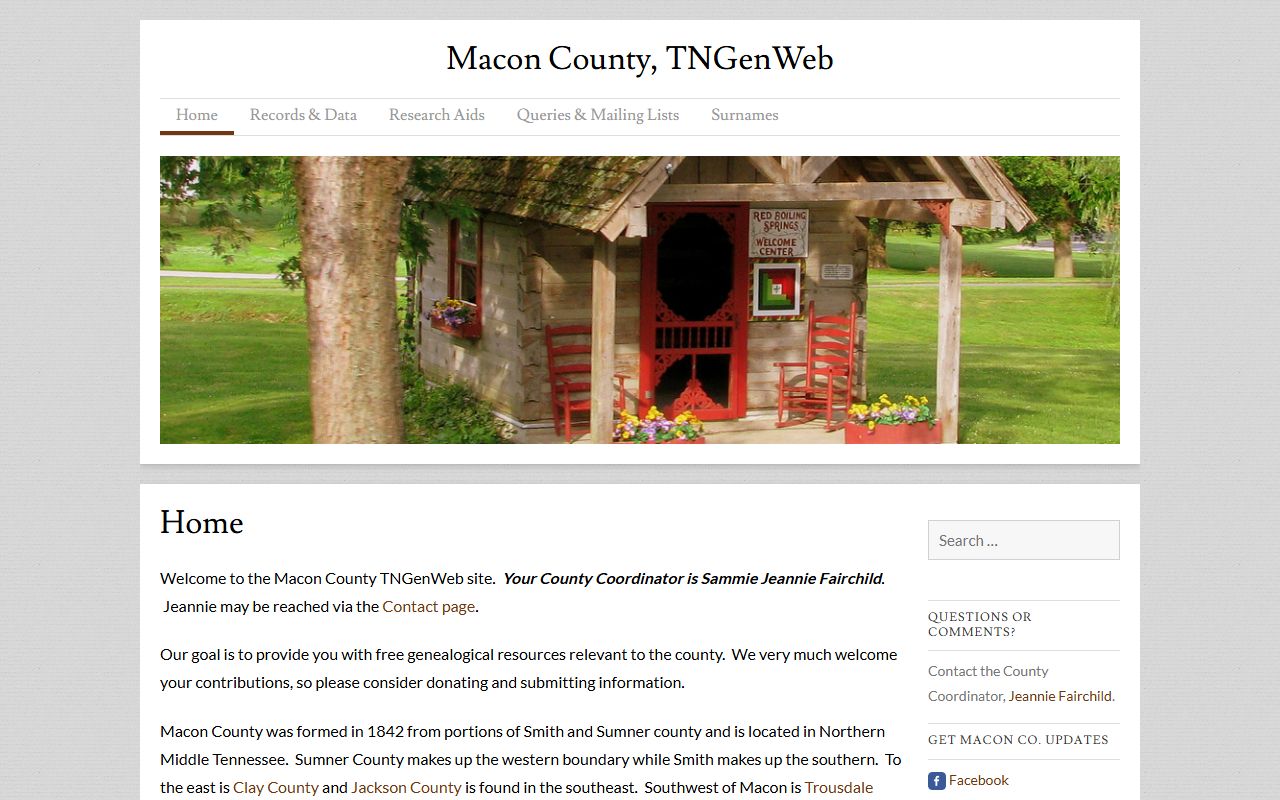
That page is useful when a surname is common and you need a first county filter.
Then use the Tennessee Genealogical Society county page at Macon County TN Gen Society page. It can help confirm a cemetery or family branch.
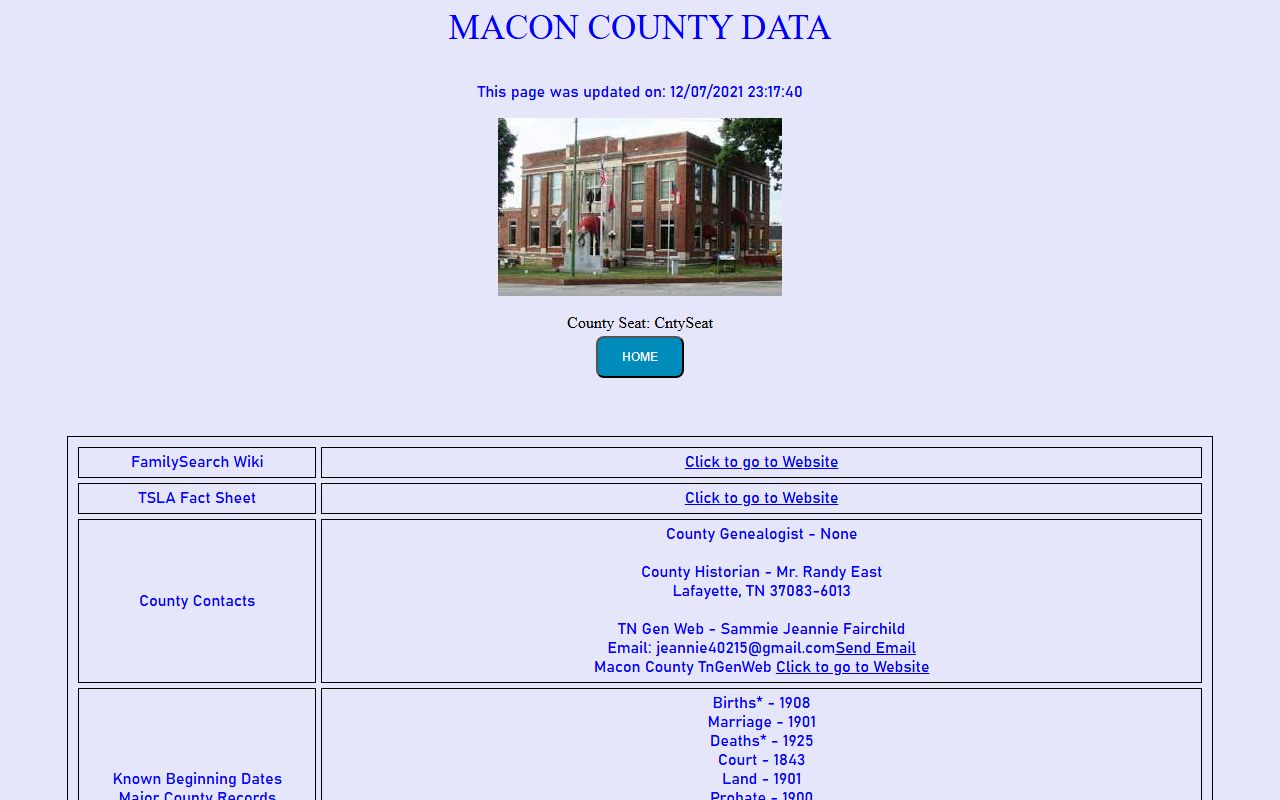
That second source is a fast way to narrow a broad family search into one local line.
Search Macon County Obituary Records
Search Macon County obituary records by starting with the public library and the county clerk. The Macon County Public Library has local history and census records that can help tie a death notice to a family group. That is useful because obituary notices in smaller counties often leave out enough detail that you need a second source right away. A surname plus a cemetery clue is often enough to keep moving.
When you need a state date anchor, use TSLA death records 1908-1912 and TSLA death records 1914-1933. Those indexes can verify the year and county before you request a copy. If the record is later, the Tennessee Vital Records office can handle the certificate request. That is the clean path when a newspaper notice needs formal confirmation.
Note: Macon County obituary searches are usually fastest when the library and county clerk are checked together at the start.
Macon County Help
The Macon County Historical Society and the public library are the best local help for obituary work. They can point you toward newspapers, cemetery records, and family files. When you ask for help, keep the request narrow and specific. Give the full name, likely death year, and any family or burial clue.
Macon County is a good county for organized searching because the local material lines up well with the county office structure. The obituary may be in a newspaper, but the family proof is often in the county clerk file or the cemetery list. That makes the county useful for building a complete record trail without too much backtracking.
Macon County Access
Macon County obituary records are public-facing through county offices, the local library, TNGenWeb, and state indexes. The county structure is direct enough that the search usually starts with a clue and ends with proof. That is ideal for obituary work. You do not have to hunt through a large, confusing set of institutions to get the basics.
If the obituary is tied to a family cemetery or a marriage record, the county material may be enough on its own. If you need a clean death date, the TSLA indexes and Vital Records office fill that role. In Macon County, the route is usually simple and reliable.