
Moore County Obituary Records
Moore County obituary records are shaped by a small-county pattern. Lynchburg is the county seat, and the county is the smallest in Tennessee by area, which keeps the local search focused. That helps because a death notice here may be easier to connect to the right family line, newspaper, or cemetery than in a larger county. The county clerk, archive, and public library all sit close to the center of the search, and that makes it easy to move from clue to proof without a lot of wasted motion.
Moore County Quick Facts
Moore County Obituary Sources
Moore County has a compact but useful research network. The county clerk and register of deeds share the same Lynchburg address, and the county archives sit on Main Street. The public library and historical society both support local history work. That matters because obituary searches in a small county are often about nearby clues. A notice may mention a family cemetery, a church, or a town newspaper and give you enough to finish the search quickly.
TNGenWeb Moore County is a very helpful first stop because it includes census transcriptions, cemetery records, obituaries, and family files. The Tennessee Genealogical Society county page gives you another quick place to confirm where to look next. Since the county is small, a short request with the correct surname can often get you farther than a broad search. That is especially true if you already know the family moved within the county for generations.
Use Moore County TNGenWeb and TN Gen Society county page early. The local archive at 241 Main Street is worth using even without a web link because it can help with county context and historical documents. That mix keeps the search grounded in the real sources Moore County offers.
Moore County Obituary Records
Moore County obituary records often show up in Lynchburg newspapers and nearby regional papers from Fayetteville and Tullahoma. That is useful because the county has no huge urban center, so the local notice can be fairly direct. Lynchburg Cemetery and family cemeteries are both important because obituaries here often mention a burial ground outright. That can be enough to tie the notice to the right family and keep the search moving.
The county clerk’s marriage records begin in 1871, which helps when an obituary names a spouse or a longtime family connection. The archive and library can fill in family history and local paper clues. When the obituary itself is short, the cemetery and marriage records often do the heavy lifting. Moore County is one of those places where one strong local clue can unlock the rest of the line.
State death indexes still matter. Use TSLA’s 1908-1912 and 1914-1933 death indexes when you need to confirm the year. The Tennessee Vital Records office can then handle later certificate requests. That gives Moore County a complete route from obituary notice to formal proof.
Start with the local county site at Moore County TNGenWeb. It is the best way to reach the county’s obituary, cemetery, and family-file material.
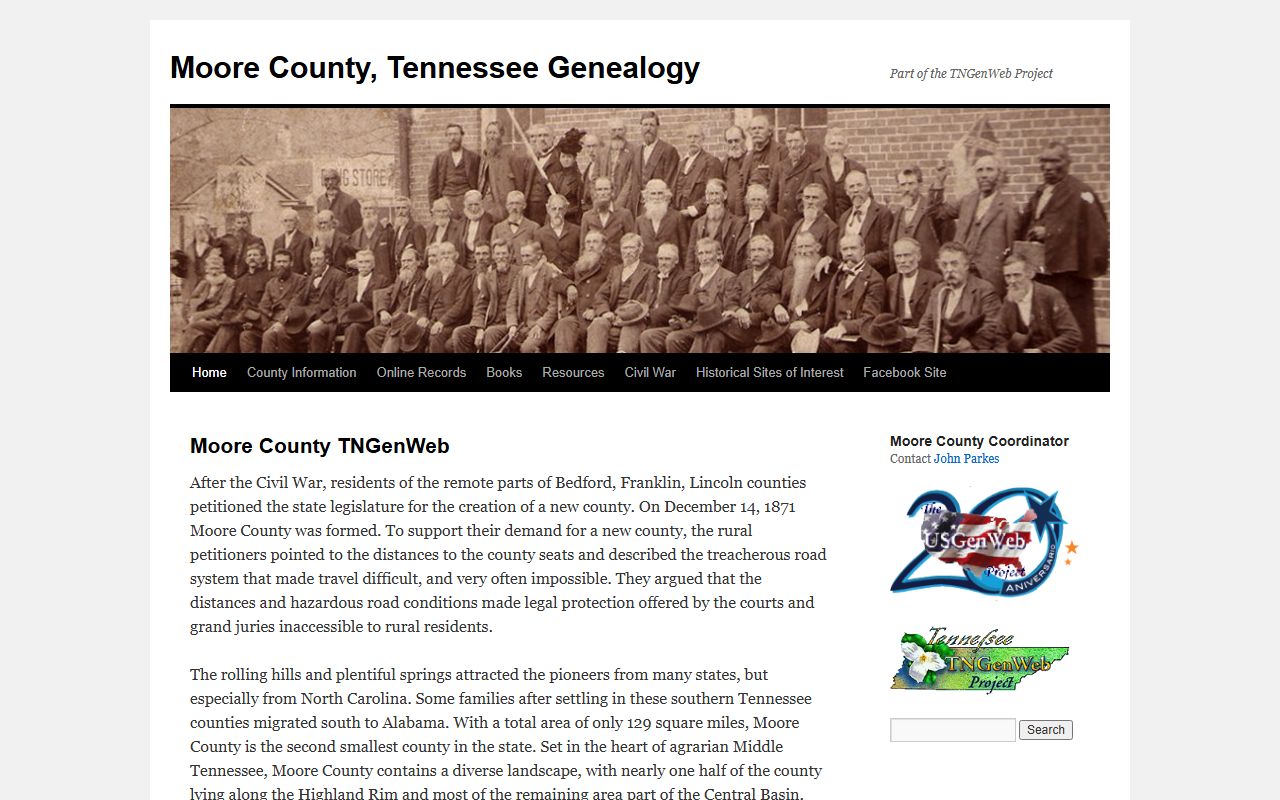
That page is useful when the surname needs a quick local pass.
Then check the Tennessee Genealogical Society page at Moore County TN Gen Society page. It can help confirm the local line or burial area.
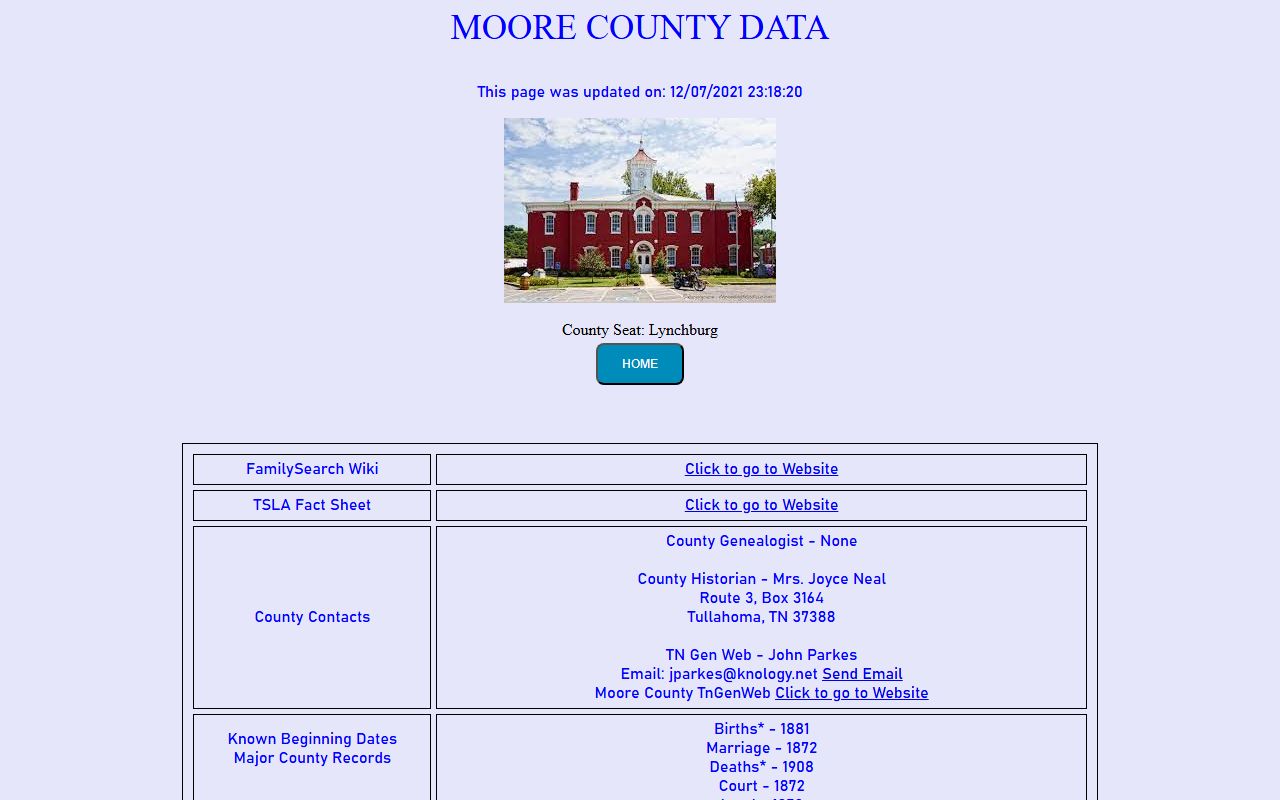
That second source is a useful cross-check when a family line appears in multiple places.
Search Moore County Obituary Records
Search Moore County obituary records by starting with the public library and county archive. The library can help with local history and the archive can help with county documents. Because Moore County is small, these local sources are often enough to identify the right family or burial place. If you know a cemetery, write that into the request. If you know a newspaper date, that helps too.
For state confirmation, use TSLA death records 1908-1912 and TSLA death records 1914-1933. Those indexes can confirm the year and county fast. If you need a later certified copy, the Tennessee Vital Records office gives the request path. In Moore County, that is usually the cleanest way to move from a notice to a verified record.
Note: Moore County obituary searches usually work best when the local archive and library are checked before the state index.
Moore County Help
The Moore County Historical Society, the archive, and the public library are the main local help points. They can point you to family files, local newspapers, and cemetery clues. Because the county is small, it is worth giving them a short and focused request. Full name, rough year, and any family or burial clue is usually enough.
Moore County’s small size is a real benefit for obituary research. It can limit the amount of noise in the record trail and make it easier to match a notice to the right family. That is the kind of county where a careful search often pays off quickly.
Moore County Access
Moore County obituary records are public-facing through county offices, the archive, the library, TNGenWeb, and state indexes. The county is so small that the local sources often carry more weight than the state sources at the start. But the state still matters when you need a certified death year or a formal copy.
That combination is the key here. Use the local source to identify the person, then use the state to confirm the date. If a notice points to a family cemetery or a funeral home, the county resources can often close the gap without much extra work.