
Polk County Obituary Records
Polk County obituary records are a good match for a county that has a steady local record base and several strong research sources. Benton is the county seat, and the county clerk, library, TNGenWeb page, and historical society all support the search. If you are looking for a death notice, Polk County is the kind of place where the obituary can lead you straight into a marriage record, a cemetery, or a family file. That makes it a practical county for family history work, especially when you want a local record trail that is not hard to follow.
Polk County Quick Facts
Where to Find Polk County Obituary Records
The Polk County Clerk in Benton keeps marriage records from 1839 and also handles probate and court records. The register of deeds keeps land records from 1839. That is a strong starting point for obituary research because a death notice often points to one of those record types. The Polk County Library adds a local history collection and census records, while the historical society supports local history preservation. Together those sources make the county very workable for obituary research.
Polk County obituary work also benefits from the county's newspaper coverage. The Polk County News is the main local paper, and regional coverage from Cleveland and Chattanooga can help fill in the gap when a notice is short. A death notice may name a cemetery in Benton, Copperhill, or Ducktown, and those place names can point you right back to the county records. That is the kind of county where the obituary and the family file often match up well.
If the family has lived in Polk County for a while, the county record set is usually enough to confirm the line. That makes the search efficient and grounded.
Polk County Obituary Sources
The main local web source is Polk County TNGenWeb. It offers census transcriptions, marriage records, cemetery records, obituaries, and family files. That is exactly the sort of local material that helps turn a death notice into a family search. If you only have a surname or a town, the county page can help you decide whether the family belongs in Polk County before you request copies or chase a regional newspaper note.
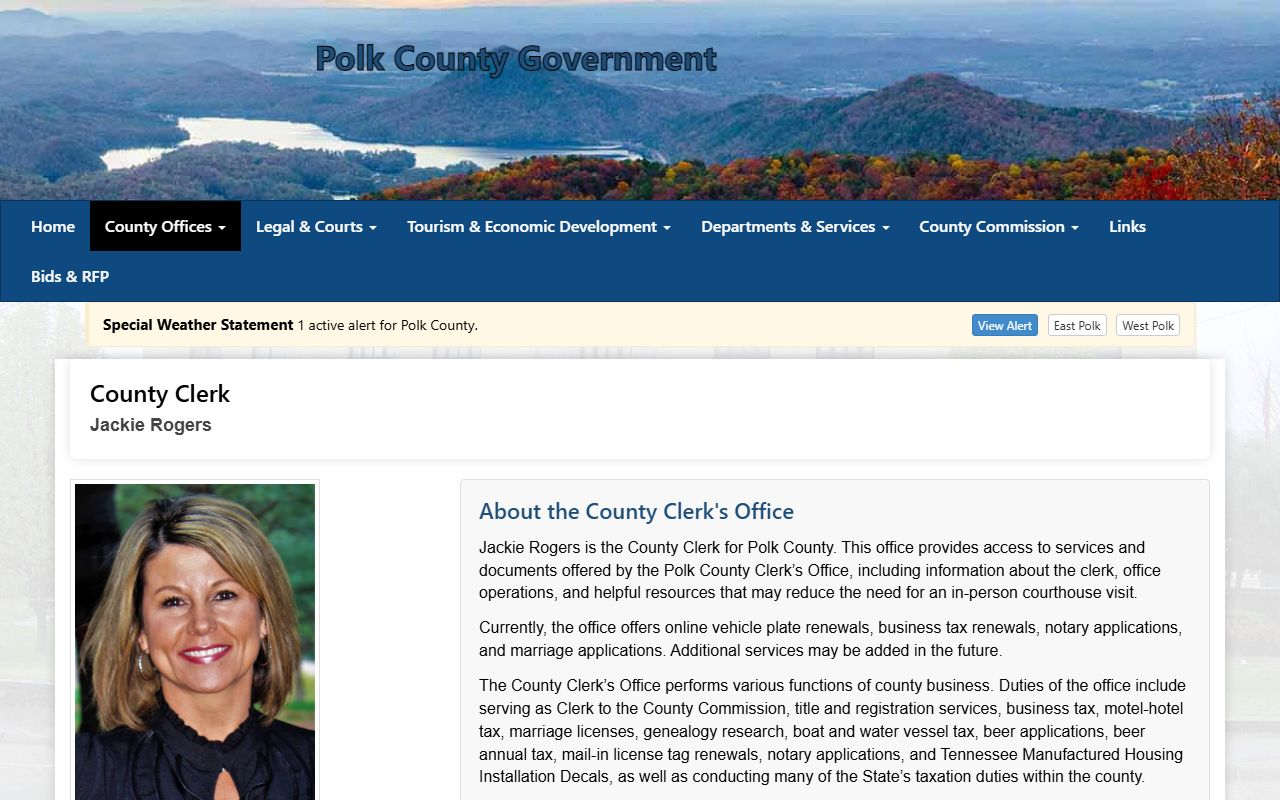
The Polk County clerk page is the best first step when you need the county record base behind a death notice.
The TNGenWeb page is the other successful local manifest source. It works well with the county library and the historical society because it gives you a second county-specific route into the family line. Polk County is a county where one clue often leads to another, so having two local web sources helps keep the search organized. The county page and the clerk page together can tell you whether a notice belongs in Polk County or in a neighboring county search.
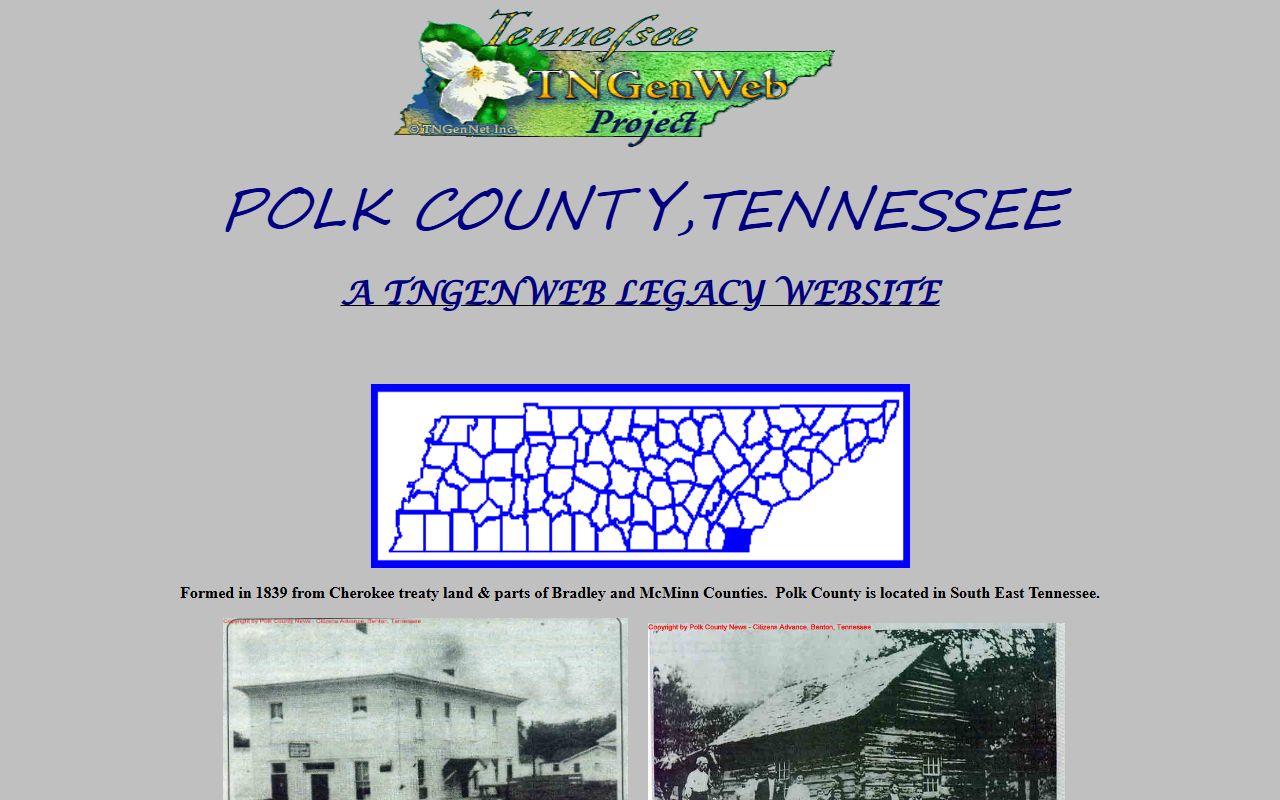
Use both Polk County pages together. One gives you the official office, and the other gives you the family-history trail.
Polk County also fits into the state record system. The TSLA vital records guide explains how state and archive copies are divided, and the Tennessee Department of Health's Vital Records page explains how certified copies are handled. That matters because an obituary may be public while the certificate is still controlled by Tennessee access rules. If you need an official copy, the Help Center is the right place to check.
Those state resources are most useful after the county obituary has identified the person and the county.
Search Polk County Death Records
Polk County death searches are usually straightforward because the county record base is steady and the local sources are practical. The county notes say state registration starts in 1914, but the county clerk and register of deeds both begin in 1839. That means a death notice can often be matched to a marriage record, a probate file, or a land transfer with little trouble. The obituary may also mention one of the local cemeteries in Benton, Copperhill, or Ducktown, which gives you another useful clue.
State access rules still matter if you need a certified copy. Death, marriage, and divorce records are restricted for fifty years, while births are restricted for one hundred years. That does not block obituary research, but it does control who can receive an official copy. The Tennessee Public Records Act at T.C.A. § 10-7-503 covers the public side, while the vital records rules cover certification. For most family-history work, the public obituary and county records are enough to identify the person.
For Polk County, the cleanest path is county clerk, TNGenWeb, and then the state office if needed. That keeps the search local and efficient.
- Full name and any spelling variation
- Approximate death year or newspaper date
- Benton, cemetery, church, or funeral clue
- Spouse, parent, or child names from the notice
- Any county marriage, probate, or deed reference
Polk County Obituary Clues
Polk County obituary clues often come from the county's newspaper pattern. The research notes point to the Polk County News as the local paper, with regional support from Cleveland and Chattanooga papers. That means a death notice may appear in more than one place. A cemetery name such as Benton Cemetery, Copperhill Cemetery, or Ducktown Cemetery can also be enough to narrow the family line. In a county like Polk, the local clues are usually good enough to move the search quickly.
The county historical society and library can add family context and local memory. That helps if the obituary uses a nickname, a house name, or a place that is known locally but not obvious online. Polk County is a county where the records and the geography fit well together. Once you know the place, the family usually becomes easier to place.
Note: In Polk County, regional newspapers matter. A local obituary may have been reprinted in Cleveland or Chattanooga and may carry the missing detail there.
Polk County Public Access Notes
Most obituary materials are public. County records, cemetery notes, and newspaper notices are generally open unless a specific restriction applies. Certified vital records still follow Tennessee age and requester rules. The broad public-access rule is the Tennessee Public Records Act at T.C.A. § 10-7-503, while the state vital records pages govern certified copies. That means the obituary can usually be read by anyone, but the official certificate may still require a proper request.
Polk County works best when you start with the local sources and keep the state office as the follow-up. That matches the county's record structure and keeps the search grounded in the actual record trail.