
Search Robertson County Obituary Records
Robertson County obituary records are built on a deep record base. Springfield is the county seat, and the county has preserved enough court, land, will, newspaper, and cemetery material to support a long obituary search. The local trail can move from county archives to newspaper microfilm, then into TSLA obituary indexes or cemetery volumes. That means you can often build a full family picture from a single death notice. If the name is common, the county's published death indexes and local obit transcriptions are especially helpful.
Robertson County Quick Facts
Robertson County Obituary Sources
Robertson County was formed in 1796 from Tennessee and Sumner counties. The county court clerk at 101 5th Ave W handles court records and marriage licenses, the register of deeds at 525 S Brown St keeps land records from 1796, and the county archives in Springfield hold historical records. That makes Robertson County unusually strong for obituary research. It is one of the counties where the paper trail, the cemetery trail, and the county record trail all work together well.
The Robertson County website at robertsoncountytn.org is the first place to check for local government contact and county information. The TSLA fact sheet at sos.tn.gov/tsla/pages/genealogical-fact-sheets-about-robertson-county adds county histories, microfilm information, and research aids. The Genealogy Trails obituary page at genealogytrails.com/tenn/robertson/obits.html is also useful because it contains transcribed obituaries from the local paper run and often cross references cemetery records.
| County Seat | Springfield |
|---|---|
| County Court Clerk | 101 5th Ave W, Springfield, TN 37172 |
| Register of Deeds | 525 S Brown St, Springfield, TN 37172 |
| Archives | Springfield location |
Robertson County also has a strong set of published local records at TSLA, including obituary and death record indexes from 1802 to 1930 and multiple death certificate surname indexes. That means local obituary work can be tested against a published county reference before you even ask for a copy. The county's early records, wills, deed index, court minutes, and tax books all support that search.
The county website at robertsoncountytn.org is the official county entry point and a good place to verify local government information.
That image matters because Robertson County's county site and archives are both useful when you want to move from a notice to a county record fast.
How to Search Robertson County Obituary Records
Start with the county archives and the published obituary indexes. The research notes say Robertson County has an alphabetical index of obituaries and death records from 1802 to 1930, plus multiple surname indexes to county death certificates from 1908 through 1955. That is unusually rich. It means you can often identify the right person before you even open a newspaper roll. The county archives can then help you with court, will, deed, and manuscript records that explain the family background.
The Genealogy Trails obituaries page is also useful because it gives sample entries from local newspapers and notes that the obituaries are cross-referenced with cemetery records. That is important in a county where family names and funeral home information are frequently preserved together. The Robertson County Funeral Home in Springfield and Austin & Bell in Pleasant View are useful recent-obituary names to keep in mind. If the obituary is recent, the funeral home is often the quickest path to a match.
The county also has a strong library and archive network. The Robertson County Library has a genealogy collection, and the TSLA research aids note county histories, church records, census records, tax lists, and funeral home records. Those materials are especially useful for obituaries that mention a church, a town like Adams or Greenbrier, or a family cluster that spans several generations. The county's manuscript collections, including church and family papers, can explain a relationship that a notice only hints at.
For state backup, TSLA death indexes for 1908-1912 and 1914-1933 are a natural fit, and FamilySearch and the Tennessee Office of Vital Records remain the state-level tools for later records. Under T.C.A. 68-3-205 and T.C.A. 68-3-206, access and copies depend on the age of the record and the requester. That makes Robertson County obituary material especially valuable because it often carries the exact date and family detail you need.
Robertson County also has regional newspaper depth. Newspapers were published in Adams, Greenbrier, and Springfield, with scattered issues from 1860 and a complete run beginning in 1925. That makes the local obituary trail broad enough to support both early and modern searches.
Note: Robertson County obituary work is often best when you start with the published obituary index and then use the county archives to prove the family line.
- Full name and alternate spelling
- Approximate death year or obituary year
- Springfield, Adams, or Greenbrier clue
- Funeral home, cemetery, or church name
- TSLA index or county obituary reference
That combination is usually enough to move from an index hit to a confident match.
The Robertson County obituary transcriptions at genealogytrails.com/tenn/robertson/obits.html are valuable because they preserve local newspaper material that is already linked to cemetery clues.
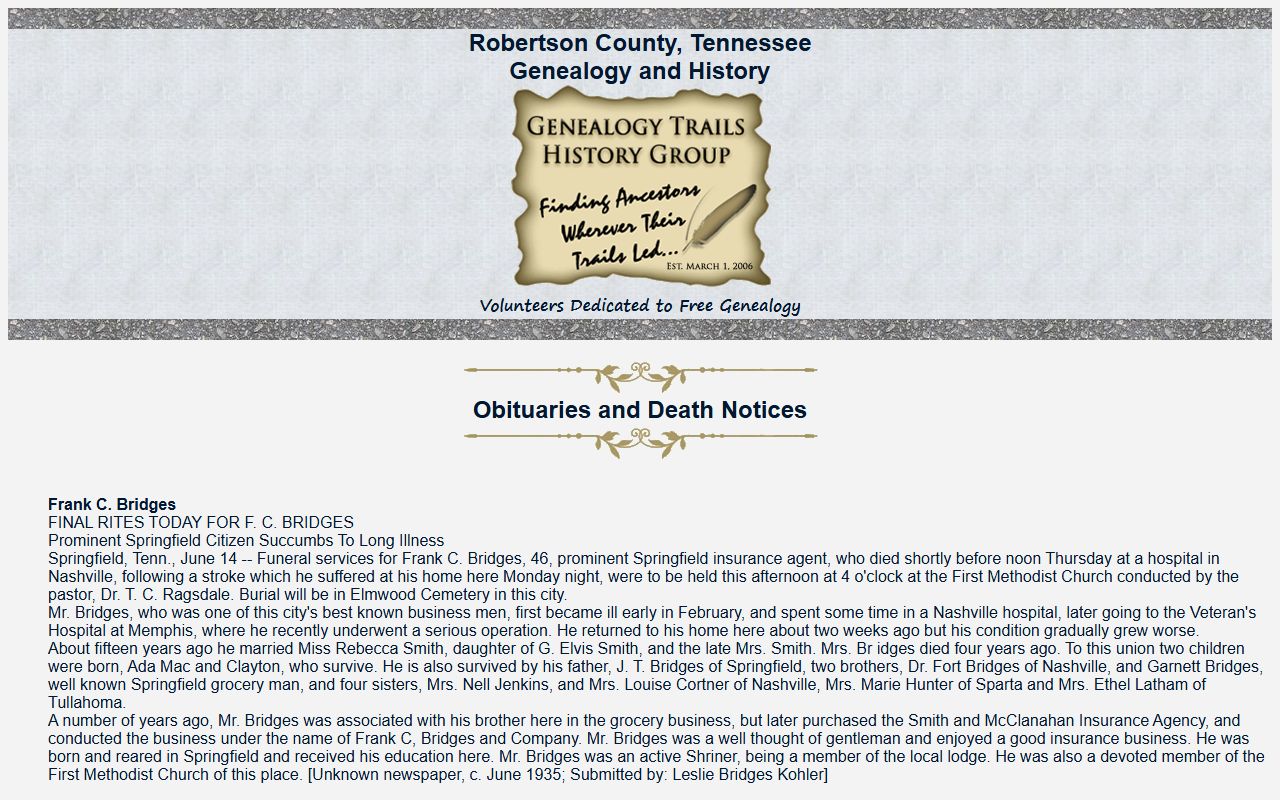
That transcription page can save time when the newspaper issue is hard to reach or when you need a surname list before you ask for copies.
The TSLA fact sheet at sos.tn.gov/tsla/pages/genealogical-fact-sheets-about-robertson-county is another strong bridge. It pulls together county histories, microfilm, research aids, and special collections that can turn a notice into a deeper family search. Robertson County is one of the rare counties where the published death indexes are almost a research path on their own.
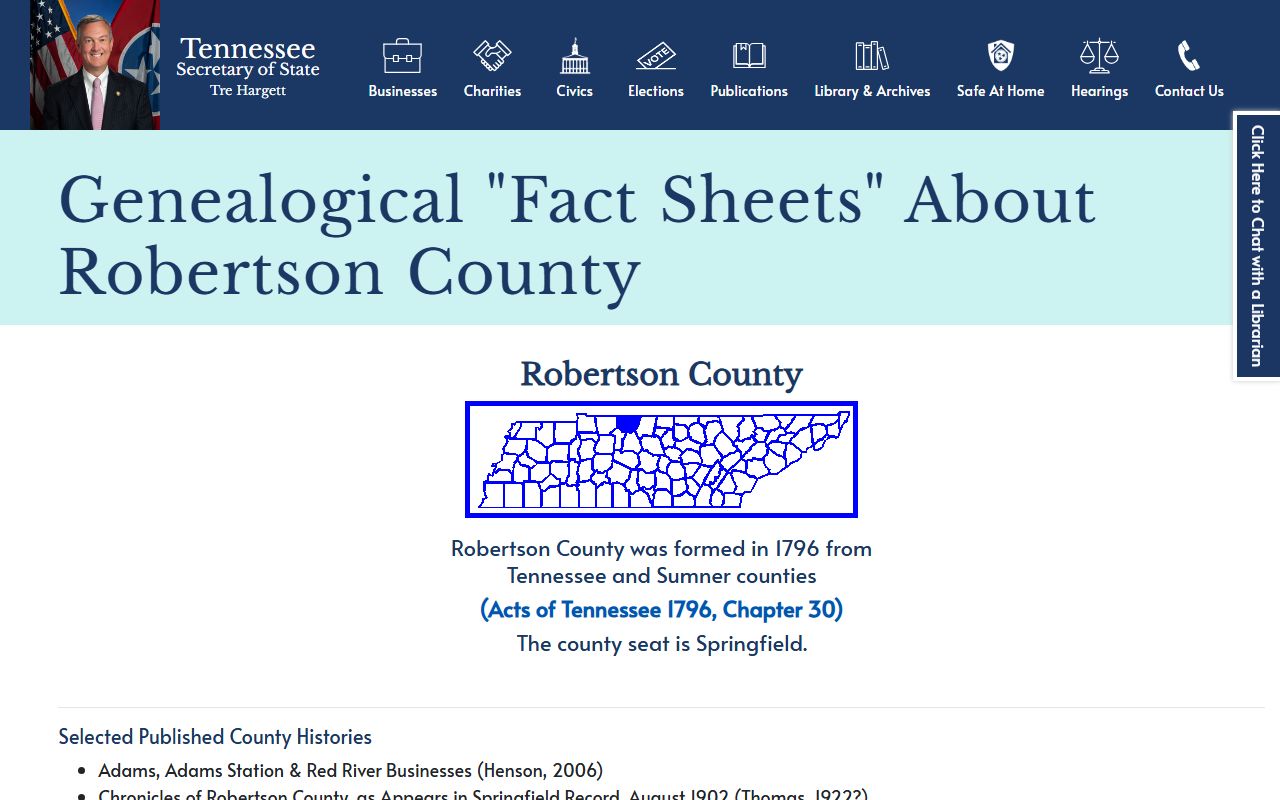
That fact sheet is useful after an obituary hit because it keeps the Robertson County obituary records trail tied to the right archives and published record sets.
Robertson County Obituary Records and Archives
Robertson County obituary records are especially strong because the published local records set is broad. TSLA holds Robertson County obituary and death record indexes from 1802 to 1930, plus a long run of death certificate surname indexes from 1908 through 1955. Cemetery volumes also survive, and they are indexed. That combination makes Robertson County one of the easiest counties in the state for death and obituary research.
The county also has strong manuscript and church record coverage. The Bethlehem Baptist Church records, the Fort Family Papers, the Washington Family Papers, the Red River Settlers records, and the Red River Baptist Church minutes all help explain family ties behind a death notice. If the obituary mentions a church or a family branch, those records can show you why the family belonged to that place. The Bell Witch history at Adams also means Robertson County has a rich local history context when you need it.
The funeral home trail matters too. Robertson County Funeral Home in Springfield publishes recent obituaries online, and Austin & Bell Funeral Home in Pleasant View is another local source. A funeral home notice may provide a burial place, a service date, and a family list that is easier to use than a clipped newspaper line. That is especially helpful when a death happened recently and the state certificate is not the first thing you need.
If you need the formal record, the Tennessee Department of Health Office of Vital Records remains the state source. But in Robertson County, the obituary index and the county archive often give you enough to know exactly what to request. That saves time and avoids the wrong copy.
Robertson County's obituary trail is not just complete. It is connected. That is why the county is one of the best in this batch for building a family history from death notices.
Note: Robertson County is one of the rare counties where an obituary search can begin in the published indexes and end in the archives without needing a broad statewide hunt.
The county libraries and archives make the record set even stronger. The library adds genealogy collections, and the archives can connect you to manuscripts, court books, and obituary runs that explain the family.
That is the kind of layered record base that makes Robertson County unusually efficient for obituary research.
Browse More Tennessee Records
Robertson County fits into the broader Tennessee obituary and vital-records network. Use the browse pages when a family line moves into another county or city.