
Search Rutherford County Obituary Records
Rutherford County obituary records are strong because Murfreesboro kept a deep local record trail. The county archives, Linebaugh Library, county clerk, and Tennessee genealogy resources all help turn a surname into a usable family path. That matters here because county records go back to 1804 and the obituary notes often connect to wills, deeds, or cemetery references. Start with the person, then add a year span, a burial place, or a family name. A little context goes a long way in Rutherford County.
Rutherford County Obituary Records
Rutherford County was formed in 1803 from Davidson County, and its courthouse records are reported as complete even though an 1832 tornado damaged some files. That gives obituary research a strong base. Marriage, probate, land, deed, county court, and circuit court records all begin early, so a notice can be checked against other county material quickly. A death notice is often just the beginning. The county record trail may show the same person in a will, a deed, or a cemetery reference.
The county clerk at 319 N. Maple Street and the county archives on Rice Street both matter here. The archives director has described the office as a place that protects permanent county records and serves genealogists every day. That is useful because Rutherford County obituary research often moves from a newspaper name to an archived county record in the same search session. The county is particularly good for that kind of cross-checking.
The Rutherford County Clerk page at rutherfordcountytn.gov/county-clerk/homepage is a useful local start when an obituary points toward marriage or court records. If the obituary leads into property or a probate clue, the county archives and register of deeds can usually keep the search moving.
The Rutherford County Clerk page is a good first stop for county record follow up.
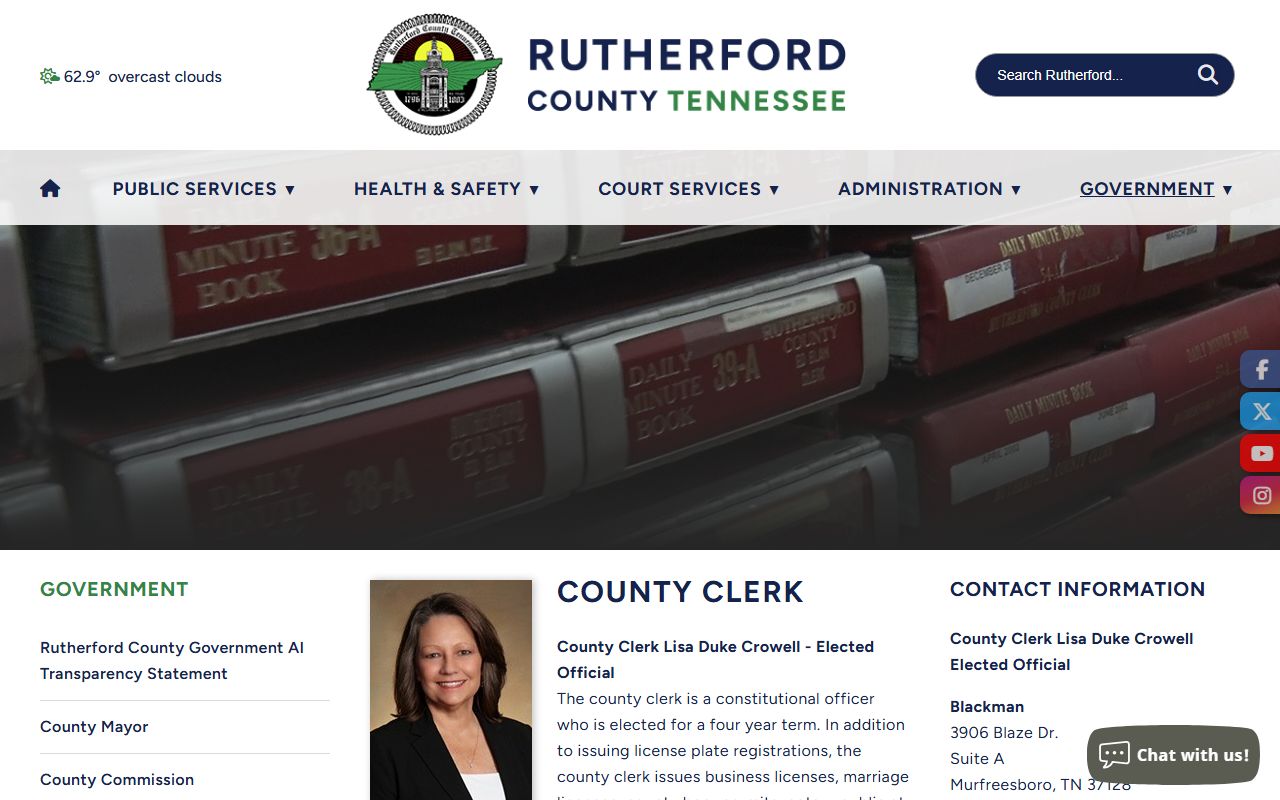
That clerk page helps tie an obituary clue to the official county record trail.
Search Rutherford County Obituary Records
A Rutherford County search should start in Murfreesboro and spread outward from there. The county has a large set of local research tools, and the Death Certificates 1914-1919 index gives more than just a death date. It can include parent names, cemetery location, marital status, and certificate reference numbers. That makes it one of the best obituary support tools in the county because it helps you verify the person behind the notice.
The Rutherford County death index at tngenweb.org/rutherford/rcdeathsathrul.htm is especially useful because it includes records for people born before 1900 and buried in family graveyards or Evergreen Cemetery. That burial detail can turn a short obituary into a much stronger family record. The index is a practical bridge between county history and death records.
Use the steps below when the first surname search does not land.
- Full surname and any maiden name
- Likely death decade
- Murfreesboro, Smyrna, or a cemetery name
- Spouse or parent name if known
When a name is common, a cemetery or certificate number can save a lot of time.
Murfreesboro Obituary Sources
Murfreesboro is the center of county obituary work. Newspapers on microfilm from Murfreesboro and Smyrna begin with scattered early issues from 1820, and the complete run begins in 1931. Linebaugh Public Library also has a genealogy collection that can support obituary research. That means a death notice can be traced through a paper, a local file, and a county archive without leaving town.
The Rutherford County Archives is especially useful for family historians because it keeps permanent county records and helps with legal records, family history, and local history every day. The archive director has noted that the records reach back to the county's formation and cover legal, contemporary, and historical work. That is exactly the sort of setting that makes obituary research more productive.
The Linebaugh genealogy page at rclstn.org/genealogical-resources/ is a helpful local companion source when you need to move from a death notice into library records or family history files.
The Linebaugh genealogy page at rclstn.org/genealogical-resources/ helps connect obituary clues to local library records.

That library page is useful when a newspaper name needs a local follow up.
Rutherford County Obituaries in Archives
The Rutherford County Archives is one of the strongest county research centers in Middle Tennessee. It holds marriage records, wills, and permanent county government records, and it sees daily genealogy traffic. If you are tracing an obituary, the archives can help you connect the death notice to a will, a land transfer, or a court record. That makes the obituary more than a line in a newspaper. It becomes part of the county's larger story.
The county also has a good set of published local records, including obituaries and death notices for people born before 1900, wills and administrations, county court abstracts, tax lists, and Evergreen Cemetery inscriptions. Those resources are especially valuable when a notice is short or when the family used a rural graveyard. You can often use them to prove the same family was in the county long before the obituary appeared.
The Rutherford County Archives page at www.rutherfordcountytn.gov is useful when you need the county's broader record context. The archive office works well as a bridge between obituary notes and official county history.
The Rutherford County Archives page at www.rutherfordcountytn.gov helps place obituary research into the county record system.
That archive page is useful when a notice needs to be tied to a legal or family record.
Rutherford County Obituary Access
Most Rutherford County obituary material is open to research, but the rules shift when you move from an obituary to a certified death certificate. Under T.C.A. § 68-3-205 and T.C.A. § 68-3-206, public access and certified-copy access are not the same thing. That matters if you need proof instead of a reference note.
The Tennessee vital records system and the county's death index work together here. The county index can give you a birth year, cemetery, and certificate reference, while the state office handles the certified copy. That split is useful because Rutherford County has enough local record strength to reduce guesswork before you order anything. It saves time and money.
The Rutherford County deaths index at tngenweb.org/rutherford/rcdeathsathrul.htm is the strongest public checkpoint before a certificate order. It can confirm parents, burial details, and certificate references that make a Rutherford County obituary records search much more precise.
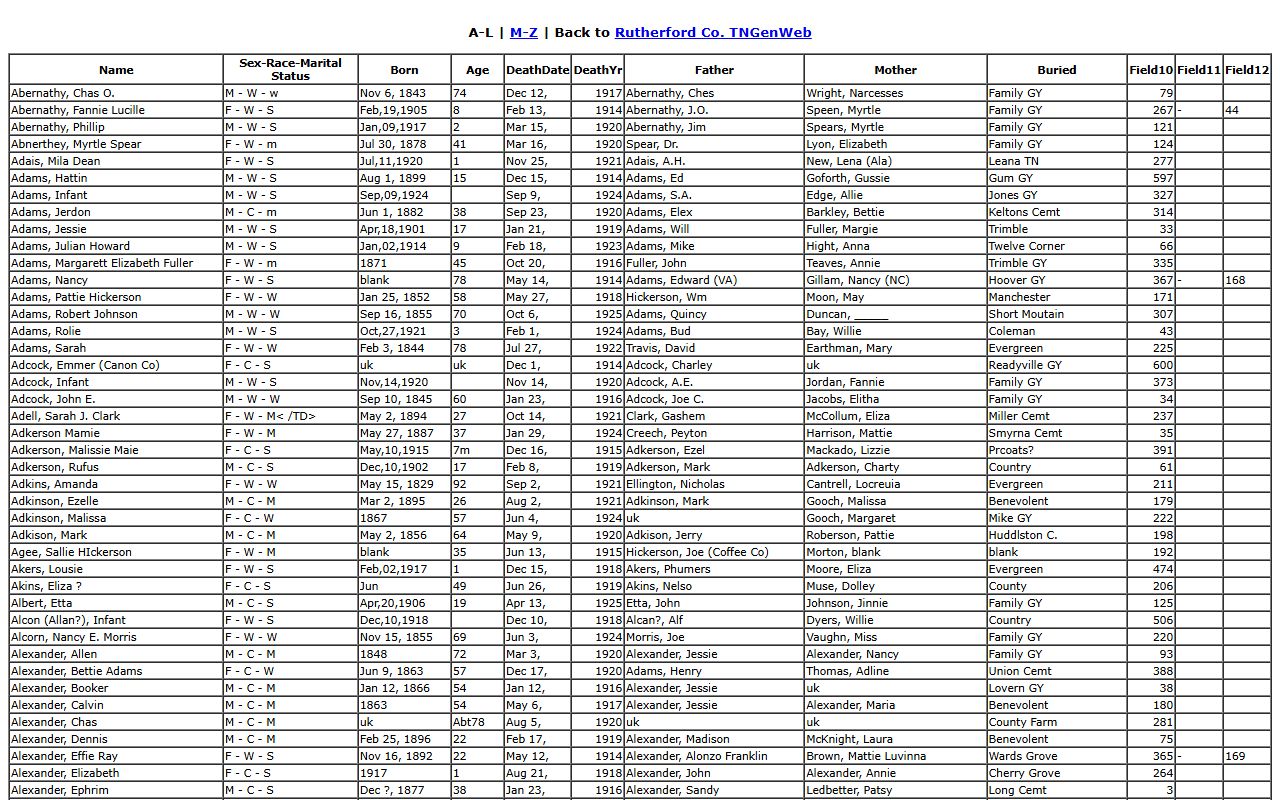
That death-index page helps turn a loose obituary lead into a narrow county or state copy request.
Note: Rutherford County is one of the counties where a newspaper clue often leads straight to a county record and then to a state certificate request.
Request Rutherford County Copies
When you need a copy, use the source that best fits the question. Start with the county death index for a quick obituary-related clue. Use the archives for wills, marriages, and court records. Use Linebaugh Library for newspapers and genealogy help. If the notice points to a certified record, use the state vital records office. Rutherford County gives you several routes, so you can keep the request focused.
The TSLA fact sheet at sos.tn.gov/tsla/pages/genealogical-fact-sheets-about-rutherford-county is a useful backup summary when you need the county's published local records and microfilm note. It is especially helpful when a family is tied to one of the older land or probate lines.
If you want to check one more surname before ordering, use the search box below.