
Search Scott County Obituary Records
Scott County obituary records are shaped by a hard county history and a strong local recovery effort. Huntsville has the county clerk, the historical society, the museum, and a live death records database, so a surname may surface in several places at once. The county lost records in the 1946 courthouse fire, but some were later recovered from the basement. That makes obituary work a little more deliberate, but it is still very doable. Start with the name and a likely decade, then check the county database and local genealogy pages.
Scott County Obituary Records
Scott County was established in 1849 and is known for the Civil War era breakaway government called the Free and Independent State of Scott. The county seat is Huntsville, and its record trail begins in the 1850s for many record types. The courthouse fire destroyed many files, including marriage records from 1842 to 1854 and probate records from 1842 to 1892. That makes obituary research more dependent on transcriptions, databases, and surviving local history sources.
The county is still usable because the Scott County Historical Society now houses records under restoration, and the county death records database is large and searchable. The county clerk, circuit court, and chancery court offices also give the county a usable official structure. For obituary work, that means a death notice can be checked against a state death record, a local transcription, or a county history note. The county rewards a careful search strategy.
The Scott County death records search at scott-county-tn.com/DeathRecords/query.php is one of the county's best direct obituary tools. It searches obituaries, headstones, and funeral home cards, and it accepts partial first names and maiden names. That is especially helpful in a county that lost so many early records.
The Scott County death records search at scott-county-tn.com/DeathRecords/query.php is a key first step for local obituary work.
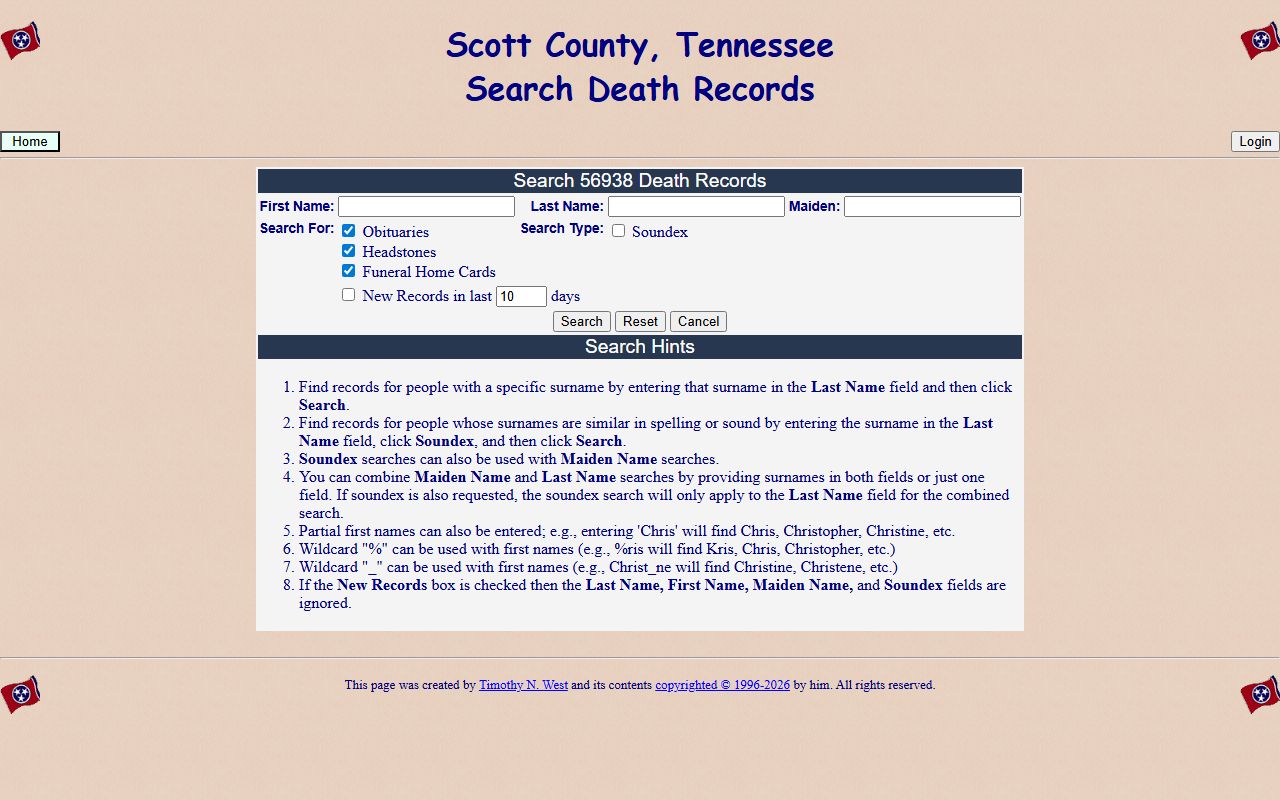
That database is especially useful when you need an obituary and a burial clue together.
Search Scott County Obituary Records
A Scott County search should stay flexible. Use a full surname first, then try the maiden name or a soundex search if the database gives too many results. The county's death records search supports partial first names and combined maiden-name searches, which is handy when a woman is listed under a former surname. That makes this database one of the easiest obituary tools to use in the county.
The TNGenWeb and Tennessee Genealogical Society county page at tngs.org/resources/Site/Custom_HTML_Files/TCD/County/Scott.html is another strong local guide. It confirms the county history, the record loss, the county historian, the historical society, and the Huntsville library. That context helps when you need to figure out whether a notice belongs to the county or to a neighboring place.
Use the steps below when the first search does not hit.
- Full surname and any maiden name
- Approximate death year
- Huntsville, a cemetery, or a funeral home name
- Soundex or partial first name search if needed
Scott County search results often improve as soon as you add one extra name variant.
Huntsville Obituary Sources
Huntsville is the county seat and the main obituary hub. The Huntsville Public Library, the Scott County Historical Society, and the Museum of Scott County all add context to the local record trail. The Genealogy Trails Scott County page is also strong because it includes biographies, death records, wills, obituaries, and family files. That gives you multiple ways to verify a death notice or add burial context after you find it.
The county's newspaper and periodical trail is also useful. The Scott County Historical Society Newsletter, FNB Chronicle, and other local publications can add family clues that are not in the obituary itself. That helps when the obituary is short or when the county database only gives a partial match. A few lines from a local history page can save a lot of time.
The Genealogy Trails Scott County page at genealogytrails.com/tenn/scott/ is especially useful when you want a wider family context around an obituary clue.
The Genealogy Trails Scott County page at genealogytrails.com/tenn/scott/ helps connect obituaries to family files and local history.
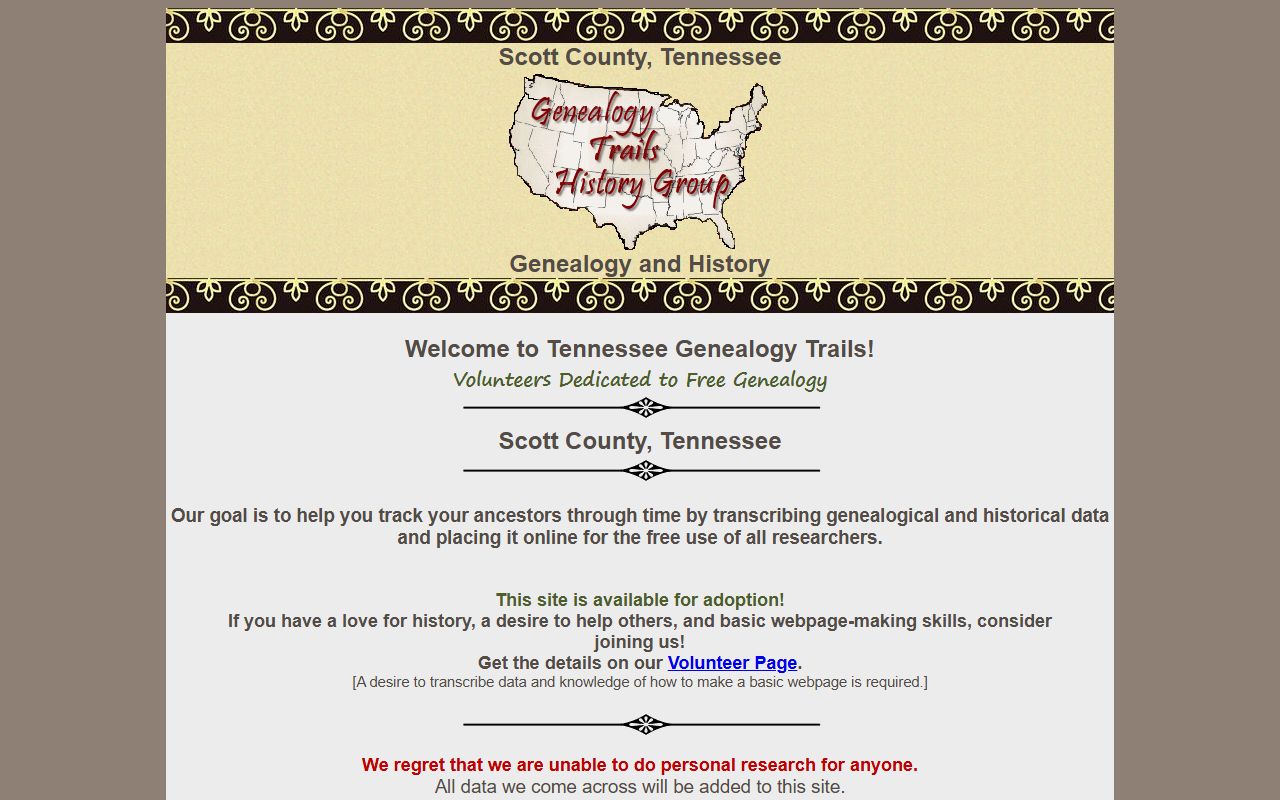
That page is helpful when a notice needs more family context.
Scott County Obituaries in History
Scott County has a strong historical society and a museum that are both useful for obituary research. Since the courthouse fire destroyed many records, the restored and published local sources matter a lot. Wills and probate abstracts, family history publications, and periodicals all help replace the material that no longer survives in the courthouse. That is what makes Scott County different from counties with a cleaner record set.
The historical society has also become the place where restored records are being kept. That means a researcher can sometimes move from a death notice to a restored county source, then to a church or family history note. A burial place, a headstone, or a funeral home card may be enough to reconnect a family branch. The county is small enough that those clues matter.
The Scott County county guide at tngs.org/resources/Site/Custom_HTML_Files/TCD/County/Scott.html is another useful bridge because it gathers the same record-loss context, library notes, and local contacts in one place. That helps keep a Scott County obituary records search grounded when the courthouse trail breaks.
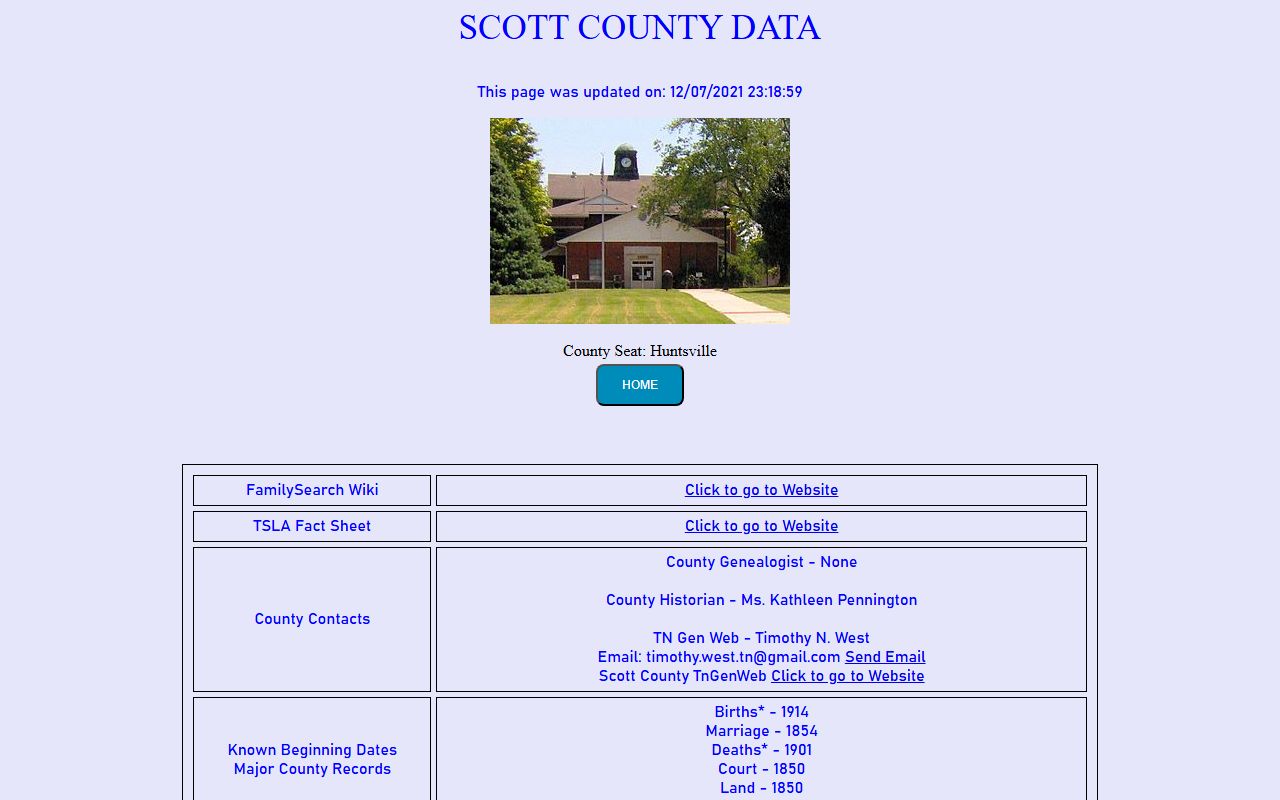
That county guide works well beside the local death database because it shows where the next surviving Scott County obituary records source is likely to be.
Note: In Scott County, a death notice is often strongest when paired with a headstone, funeral card, or society abstract.
Scott County Obituary Access
Most Scott County obituary sources are public to search, but certified records still follow Tennessee rules. Under T.C.A. § 68-3-205 and T.C.A. § 68-3-206, the rules for public access and certified copies are different. That matters when a database search turns into a certificate request. It is also why Scott County researchers often use the obituary database first and the state office second.
The Tennessee vital records guide at sos.tn.gov/library-archives/guides/vital-records-at-the-library-and-archives helps explain where the state archive fits. For Scott County, that is useful because the county's own record loss makes the state death indexes and local transcription projects especially important. The obituary search is more of a layered process here than in a county with a perfect courthouse run.
Request Scott County Copies
To request copies, start with the death records database if you need a quick obituary or burial clue. Use the county society page and Genealogy Trails if you need family context. Use the county clerk, circuit court, or chancery clerk for official records. If you need a certified death certificate, use the state vital records office. Scott County works best when the request stays narrow and specific.
The database and the historical society can usually tell you whether the person is likely to be in a restored county record or a statewide death index. That saves time because Scott County has enough record loss that a broad request can miss the right person. When you already have a partial name or spouse name, use it. The database was built to support exactly that kind of search.
If you want to compare one more surname before ordering, go back to the death records search at scott-county-tn.com/DeathRecords/query.php.