
Smith County Obituary Records
Smith County obituary records are a good fit when you need a long-running county trail in Upper Middle Tennessee. Carthage is the county seat, and the county has records that stretch back to 1799 for land and court work. The obituary itself may be short, but the county has enough supporting material to turn it into a solid family record. Smith County obituary searches often start with the local cemetery or a TNGenWeb transcription and then move into the county archive or library for confirmation.
Smith County Quick Facts
Where to Find Smith County Obituary Records
The best local starting point is Smith County TNGenWeb. It includes cemetery transcriptions, marriage indexes, census records, obituary transcriptions, military records, and Bible records. That makes it especially helpful when you only have a surname and a rough date. The Smith County Archives and the Smith County Public Library in Carthage are the main in-person resources named in the research, and both can help you connect an obituary to the right family line.
Smith County has excellent county and state record coverage for obituary work. The county clerk handles marriage licenses, and the register of deeds holds land records from 1799. That means a death notice can often be tied to a marriage or property trail very quickly. The county archive and public library give you the local context that makes those links useful. In Smith County, a short obituary is usually enough to get you moving.
The first image below points to Smith County TNGenWeb, which is the simplest online entry point for a Smith County obituary search.
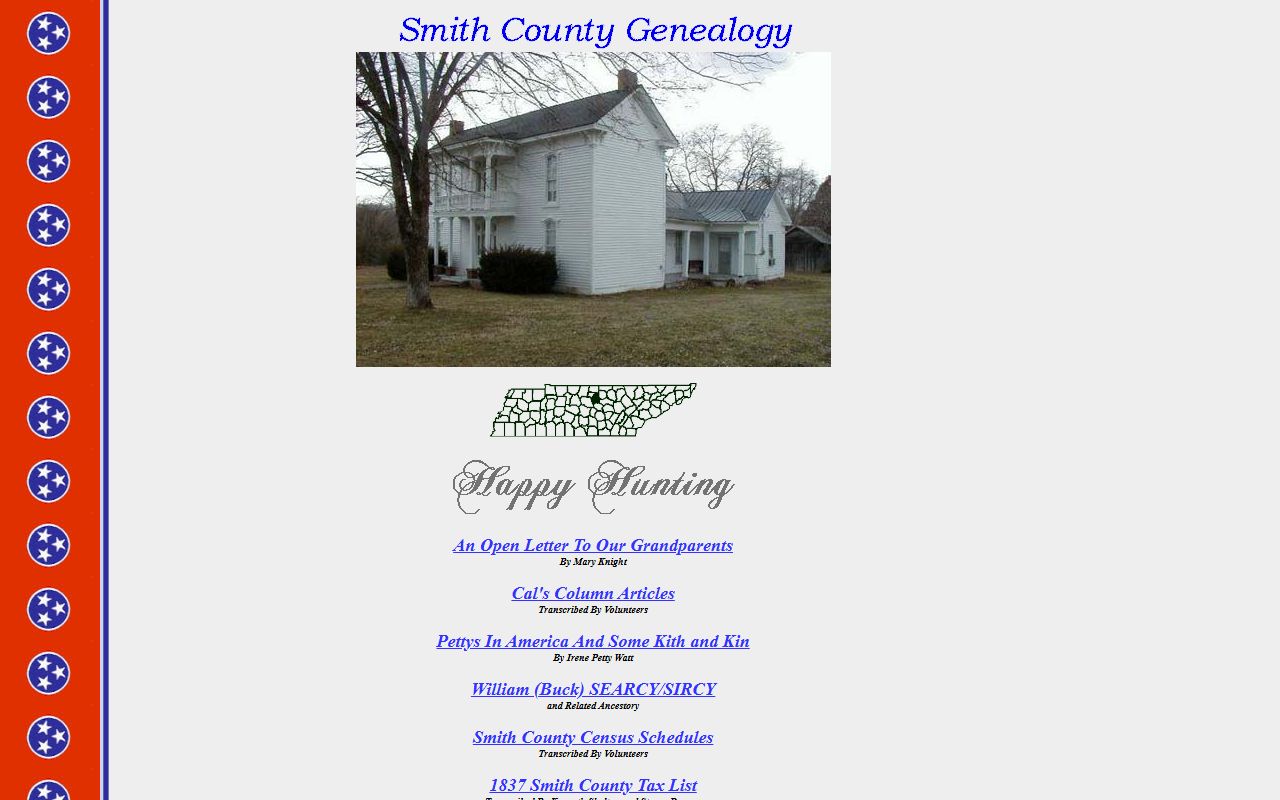
That page can move you from a name to a cemetery or marriage clue quickly.
For state verification, Tennessee vital-records pages and the archive tools help confirm death dates and certified copies. Smith County has enough local survival that the county and state records often line up without much trouble.
How to Search Smith County Obituary Records
Start with the surname, then add the cemetery or church if you have it. Smith County obituaries often show up in local cemetery transcriptions and county files before they show up in a wider database. Because Carthage is the county seat and the county has old land and court records, a family that has been there for a while can often be identified through more than one source. That is why Smith County can be very efficient for obituary research.
The obituary transcriptions on TNGenWeb are useful when the notice is short or when you need a quick family hint. The county library adds history material, and the county archive helps with official context. If the obituary mentions a burial site, use the cemetery transcription before you move away from the county. That often gives you the quickest answer.
Use a simple search order.
- Check Smith County TNGenWeb for obituary transcriptions and cemetery records.
- Use the Smith County Public Library for local history and family materials.
- Search the county archive for related records when the obituary gives a spouse or child.
- Compare the family line with marriage and land records.
- Verify the death with state records if you need an official copy.
That sequence works because Smith County obituary work often turns on one good surname match. Once the county sources line up, the state record is usually just a final check.
Smith County Obituary Sources and Archives
The Smith County Archives in Carthage is one of the best places to deepen an obituary search because it preserves county history and related records. The local public library also matters because it has a local history collection that can help you read a notice in context. In Smith County, the obituary can connect to a Bible record, a cemetery record, or a military note very quickly.
TNGenWeb is useful because it holds more than just the obituary transcription. It also has cemetery, marriage, census, military, and Bible material. That means you can often move from the notice to the family line without leaving the county page. If the family was in Carthage or a nearby community, the county record trail is usually clear enough to follow.
For broader verification, Tennessee state vital records and archive tools remain a useful fallback. They help when the obituary is thin or when you need a certified copy. Smith County’s surviving county records make the local and state layers work very well together.
Public Access to Smith County Obituary Records
Obituary notices are public, but Tennessee rules still control the official records behind them. Death certificates are limited under T.C.A. § 68-3-205, and certified-copy access is explained in T.C.A. § 68-3-206. That means a death notice can be easy to read, while the state copy may require a formal request. In Smith County, that is a normal part of the process.
The Tennessee Department of Health Office of Vital Records is the state source for certified copies. If you only need the local story, the county archive, the public library, and TNGenWeb are usually enough to start. When you need proof, the state record closes the loop. Smith County’s strong county records make that process straightforward.
Note: Smith County obituary research is usually fastest when the county notice, cemetery, and state record all point to the same person.
Getting Copies in Smith County
For local copies, start with the Smith County Archives or the county library in Carthage. The archive can help with county history and related records, while the library can help with local history and obituary context. If the obituary gives you a cemetery or Bible clue, use that before you order a state certificate. That can save time and money.
For state copies, the Tennessee Department of Health Office of Vital Records is the final source. Smith County obituary research works best when the local record and the state record agree, so it is worth checking both before you call the search complete.
Once the obituary, cemetery, and county record line up, Smith County research usually gives you a clean result.