
Search Wayne County Obituary Records
Wayne County obituary records reward a searcher who starts small and stays local. The county seat is Waynesboro, and the paper trail often leans on county clerk books, land notes, and probate clues before a notice turns up in print. Wayne County was formed in 1817 from Hickman County, so older family lines may move through several records before they show in a clean obituary index. If you know a surname, a church, or a place name along the Buffalo River corridor, that detail can pull a useful lead from a thin record set.
Wayne County Obituary Records
Wayne County obituary research usually starts with the county clerk because the office has marriage and probate records from 1853, and the Register of Deeds has land records from the same year. Those dates matter. They show where the local paper trail begins to stabilize, and they help you connect a death notice to a family line, a farm, or a spouse. The clerk also issues marriage licenses and business licenses, which gives the office an extra role in family history work beyond simple vital-record requests.
County history helps with the search path. Wayne County was created from Hickman County in 1817, so some families moved through older counties first. If a notice is missing in Wayne, the spouse or parent may still appear in Hickman, Lawrence, or another nearby county in the same period. That is why a Wayne County obituary search should not stop at one index. It should move between clerk books, land records, and any newspaper clipping that names a burial place or church.
The county clerk page at waynecountytn.gov/county-clerk gives the local office contact point, while the FamilySearch county wiki at familysearch.org/en/wiki/Wayne_County,_Tennessee_Genealogy adds a quick historical frame. Used together, they keep the search anchored in Wayne County instead of drifting into a broad Tennessee guess.
The Tennessee State Library and Archives Genealogy Index Search at sos.tn.gov/products/tsla/genealogy-index-search is a good state fallback when a Wayne County obituary is not obvious.
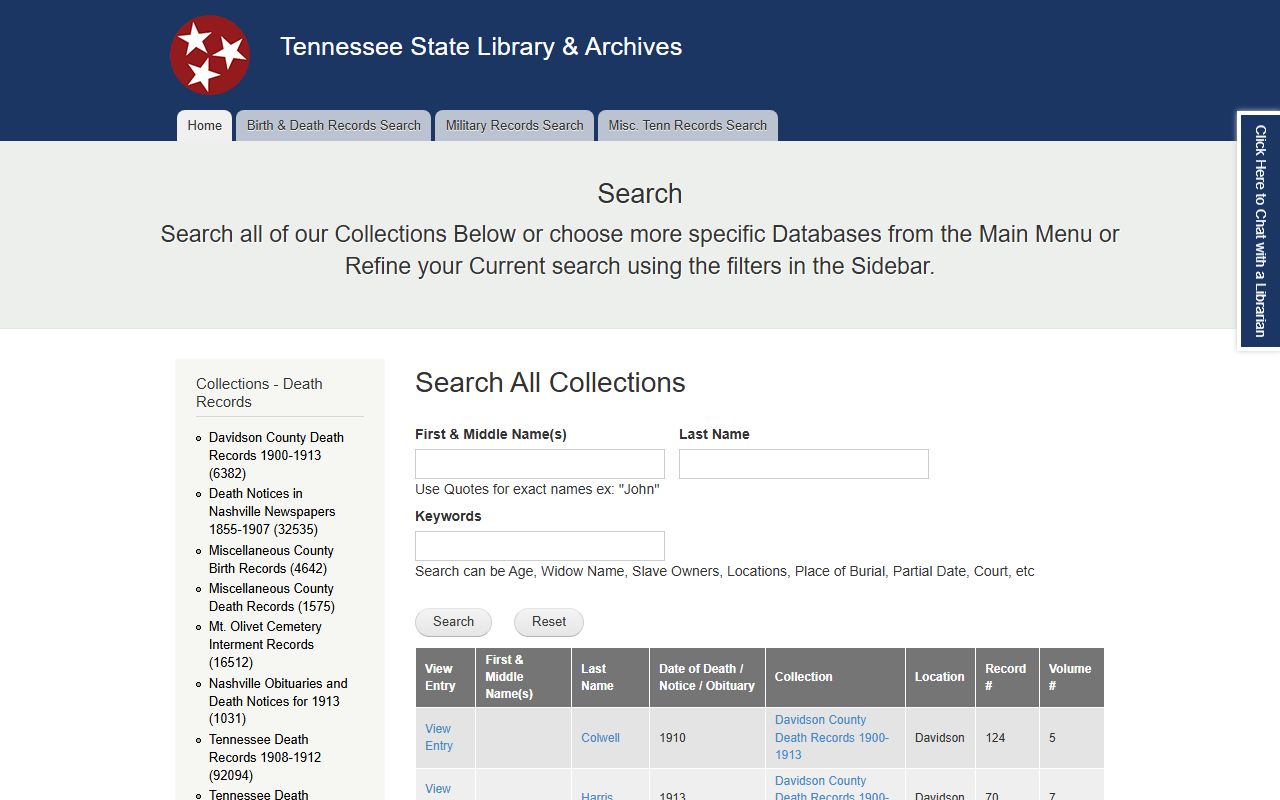
That index helps you move from a county hint to a dated record set without losing the local context.
How to Search Wayne County Obituary Records
Start with the surname, then add one place clue. In Wayne County that place may be Waynesboro, a church community, or a family farm name that repeats in land books. A short obituary may only list a spouse and a cemetery, but those two facts can still lead you to probate or marriage records from 1853. When a person used initials or a nickname, write down every form you see. County papers and clerk entries often shorten names, and the shorter form may be the one that indexes correctly.
State records are the next layer. Tennessee death records did not begin statewide until 1908, and the law changed again after 1913. For earlier deaths in Wayne County, that means the obituary, probate file, or cemetery note may be the best surviving proof. Later deaths can be paired with the state death indexes at TSLA or a certified death record request through the Department of Health. The important part is to match the local notice to a record with the same date and place.
Use the county facts as filters, not as decoration. If the family lived in the Waynesboro area in the 1850s, look first at that time span and then widen the search only if needed.
- Keep one surname spelling and one alternate spelling ready.
- Search Waynesboro first, then nearby county lines.
- Check probate, marriage, and land clues together.
- Save any church, cemetery, or funeral home name.
Those small steps prevent a Wayne County search from turning into a blind statewide hunt.
Wayne County Obituary Sources
Wayne County does not have a huge digital obituary archive, so the office records matter more. The county clerk's marriage and probate files from 1853 can show who was connected to the deceased, while the land books can point to a family seat or an inherited tract. When an obituary is brief, those books can supply the names that were left out of the paper notice. A widow, child, or sibling in a probate bundle often unlocks the right newspaper issue.
That local work pairs well with Tennessee's state resources. The Tennessee Virtual Archive at teva.contentdm.oclc.org and the Tennessee death records tools at sos.tn.gov/library-archives/guides/vital-records-at-the-library-and-archives can fill in the older and statewide pieces. If you only need the story, browse the local notice first. If you need proof, follow the trail into the archive or the health department.
The Tennessee Virtual Archive at teva.contentdm.oclc.org is the next fallback when you need to browse rather than guess.

That collection is useful when the name lives in a scanned record set instead of a searchable obituary index.
Wayne County Libraries and Archives
Wayne County research is easiest when you treat library work and clerk work as one path. A search may start in the clerk's office, then move into an archive, then end with a newspaper clipping or a state record. Because the county seat is Waynesboro, local questions often stay close to the courthouse and the county office trail. That helps when a family used the same land for generations, because the same names can appear in deeds, marriages, and later obituary notices.
Use the Tennessee death records index and the Genealogy Index Search together when you need a cleaner line. The index can give you the date frame, while the archive tool may give you a browse path to supporting material. In a county with an older record base, that combination saves time. It also keeps you from assuming that a missing obituary means a missing family. Often the family is there. The notice is just sitting in a different record set.
Wayne County obituary work becomes more manageable when you write down the source next to each clue. That habit makes it easier to return to the same trail later if the first notice is only partial.
Public Access to Wayne County Obituary Records
Most Wayne County obituary material is open for research, but not every record has the same access rule. Newspaper notices, transcriptions, and many archive files can usually be reviewed without much delay. Certified death records are different. Tennessee law separates public access from the right to request a certified copy, and that is why the lookup step and the order step are not the same thing. Under T.C.A. § 68-3-205 and T.C.A. § 68-3-206, the rules depend on the record type and the requester.
That distinction matters in Wayne County because the local obituary may be enough for family history, while the state certificate may be needed only when you need a formal proof document. If a death falls after statewide registration began in 1908, the Tennessee Department of Health or TSLA may hold the better follow-up record. If the death is earlier, the obituary, the cemetery note, or the probate trail may be the strongest surviving source.
Request Wayne County Obituary Copies
When you ask for a copy, begin with the office that is most likely to hold the best version. For older Wayne County material, that is often the clerk or a state archive source. For later deaths, the Department of Health can confirm the certificate path. If a newspaper clipping is the only clue you have, use the date, surname, and town together. That gives the local office or archive a better chance of finding the right entry the first time.
Wayne County's 1853 clerk records are especially useful because they can bridge the gap between a family name and the obituary that names the same people. A marriage entry can identify a spouse. A probate file can identify heirs. A land entry can identify a place. Once those pieces line up, the obituary is easier to confirm and easier to trust.
Statewide support also helps when the county trail is thin. The Tennessee Department of Health vital records help center at vitalrecords.tn.gov/hc/en-us explains ordering and entitlement in plain language, and that keeps the request process from turning into guesswork. Use the local source first, then the state source when you need the certified copy.