
Search Wilson County Obituary Records
Wilson County obituary records are closely tied to Lebanon, the county archives, and the local library trail at Mount Juliet. That mix helps because Wilson County has a long record base, but the 1881 fire may have damaged some records and the 1800 and 1810 censuses were lost. The archives still hold county records, vital records, court records, probate records, and land records stretching back to the late 1700s and early 1800s. For obituary research, that means a death notice may not stand alone. It often needs the help of a marriage, probate, or land clue to become clear.
Wilson County Obituary Records
Wilson County obituary work begins with the county archives and the Lebanon record trail. The archives are noted for births from 1881 onward, marriages from 1802 onward, deaths from 1908 onward, court records from 1802 onward, land records from 1789 onward, and probate records from 1800 onward. That is a strong base for family history. If an obituary names a spouse, a farm, or a court connection, there is a good chance the same family will appear in one of those books. That overlap is what makes Wilson County research productive.
The county also has a caution built into the record story. The 1881 fire may have damaged records, and the censuses for 1800 and 1810 were lost. That means some obituary searches have to lean harder on surviving books and later indexes. If the death notice is missing, the probate or land trail may still be enough to prove the family connection. The county archives page from the research notes is the main local office path, even though the web page itself can be unstable.
The TNGenWeb Wilson page at tngenweb.org/wilson is the best working local link from the manifest. It gives a free county map when you need to move from a surname to a record set.
The TNGenWeb Wilson page at tngenweb.org/wilson is the most reliable local lead-in for Wilson County obituary work.
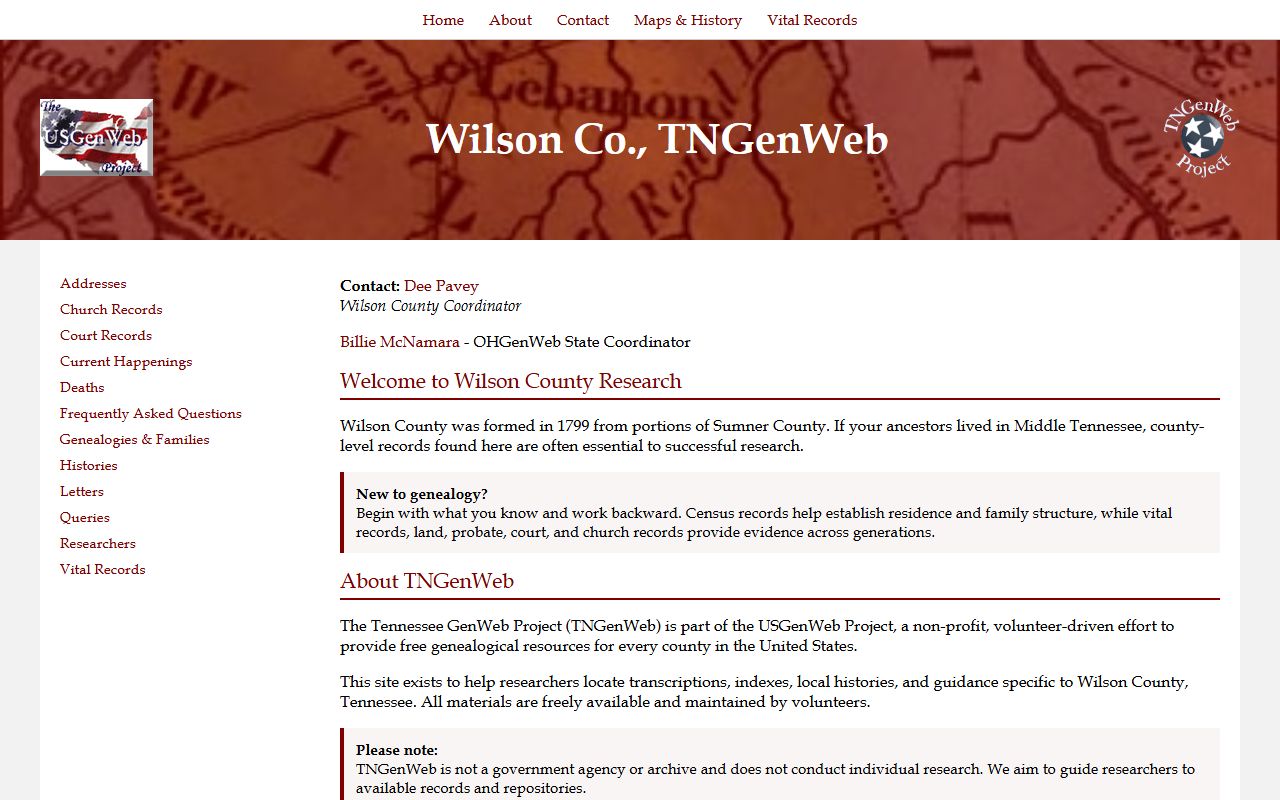
That page is helpful when you need a free local route before you turn to the archives or a state index.
How to Search Wilson County Obituary Records
Start with the county seat, Lebanon, and then move to Mount Juliet if the family stayed on the county edge. Wilson County obituary records often sit alongside probate and land clues because the county has long-running record coverage. If a notice names a spouse or child, write those names down. If it names a church or cemetery, do the same. That is especially important in a county with fire loss and missing early census records, because the obituary may be the clearest surviving statement of family relationships.
The county record dates help you know where to start. Births begin in 1881, marriages in 1802, deaths in 1908, and court and land records reach back much earlier. That range means Wilson County can answer both modern obituary questions and older family questions. If you know the death occurred after 1908, the state death record indexes may confirm the date. If it is earlier, the county books become more important. Either way, the search should stay tied to the place and the time period.
- Use Lebanon first, then widen to nearby county communities.
- Compare obituary names with probate and land records.
- Watch for record loss around the 1881 fire.
- Use the state index for post-1908 deaths.
That order keeps the search efficient and makes the county trail easier to trust.
Wilson County Obituary Sources
Wilson County sources include the archives in Lebanon, the TNGenWeb county page, and the local library resources at Mount Juliet. The Mt. Juliet - Wilson County Library is noted in the research as a home for the Madelon Wright Smith Memorial Archives, local histories, genealogical materials, cemetery records, and family files. That makes the county unusually good for obituary work because it gives you both an office trail and a local history trail. When a notice is short, the family file may add the missing names.
State tools still matter. The TSLA Genealogy Index Search at sos.tn.gov/products/tsla/genealogy-index-search can help with later death data, and the Tennessee Virtual Archive at teva.contentdm.oclc.org gives you another browse path when the obituary is not indexed cleanly. That combination is useful in Wilson County because the fire damage and lost censuses can leave gaps that the state tools help close.
The TSLA Genealogy Index Search at sos.tn.gov/products/tsla/genealogy-index-search can help confirm a later death when the county notice is incomplete.
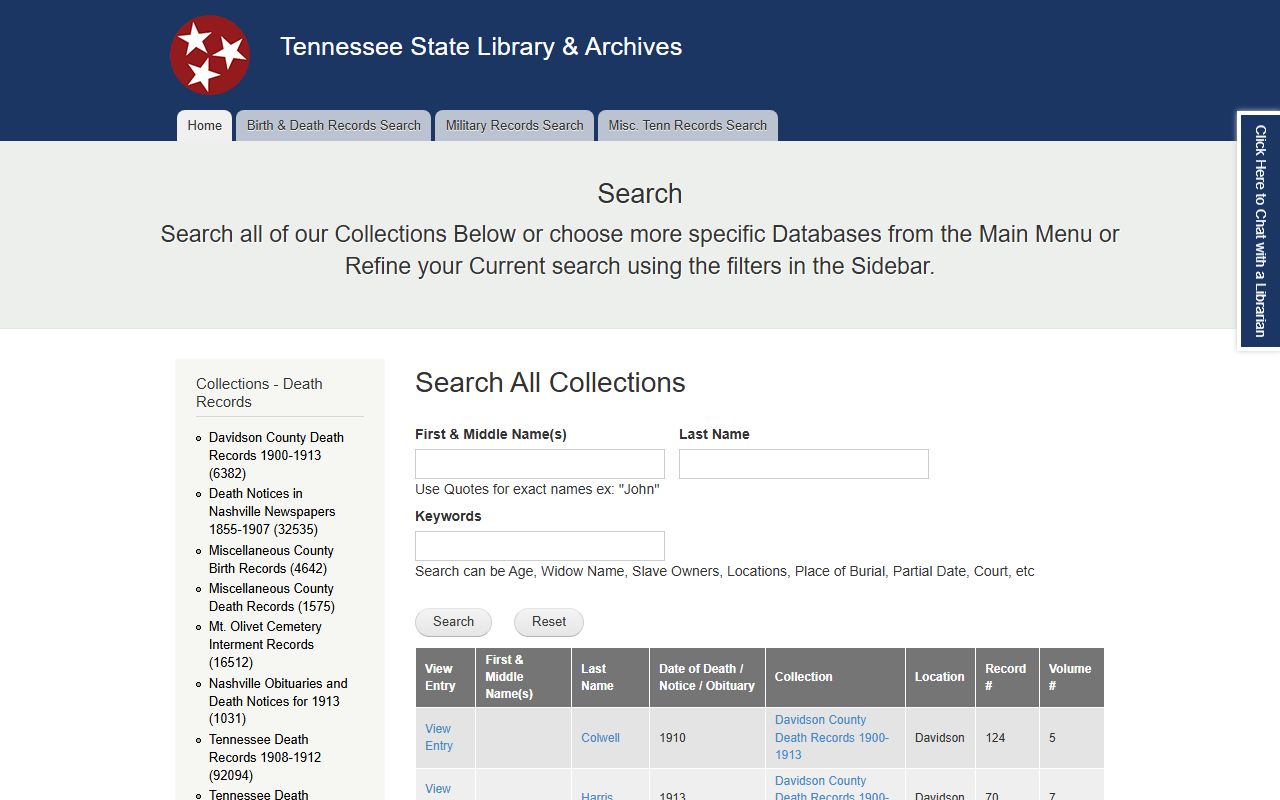
That state index is a useful backup when a local notice is hard to locate or only partly indexed.
Wilson County Libraries and Archives
Wilson County libraries and archives work well together because the records are spread across several holding areas. The Lebanon archives keep the county record system. The Mt. Juliet library adds family files and local histories. TNGenWeb adds a free county guide. That combination is important when you are tracing a death notice back to a family line, because the obituary may only mention one person while the library files mention three generations. In a county with long coverage, the extra context matters.
If a family line is damaged by the 1881 fire, the library and archive material can still make the search productive. A surname in a family file may connect to a probate record. A cemetery note may connect to a death notice. That is how a Wilson County obituary search moves from a single record to a complete family trace. The goal is not just to find the notice. The goal is to understand the line around it.
The Wilson Archives note in the research gives the address and the record dates, even if the web page itself is unstable. That is enough to keep the search local and specific.
Public Access to Wilson County Obituary Records
Most Wilson County obituary material is public, but the certified record rules still matter. Newspaper notices, transcriptions, and library references are usually open. Certified death records are handled under Tennessee access rules, and that is where the requester relationship or purpose may matter. Under T.C.A. § 68-3-205 and T.C.A. § 68-3-206, access to the record and access to a certified copy are separate questions.
For Wilson County, this often means a researcher can read the obituary first, then decide whether to order a certificate. If the death is after 1908, the state death record index may answer the basic question before a formal request is needed. If the death is earlier, the county archives and library files may be the better path. Either way, the access rules depend on the source, not just the county name.
Request Wilson County Obituary Copies
When you need a copy, start with the source that has the best match. If the obituary is only a local reference, use the county archive or the library family file to confirm the details. If you need a certified death record, use the Tennessee Department of Health help center at vitalrecords.tn.gov/hc/en-us after you have the date and place. In Wilson County, the more precise your county clue, the faster the request will move.
Because the 1881 fire may have damaged records, a good request often combines several facts: the surname, the town, the spouse, and the likely decade. That gives the archivist or librarian a better chance to find the right file. It also helps if you already checked the TNGenWeb page and the state death index, because then the request is built on a real record trail instead of a guess.