
Search Bristol Obituary Records
Bristol obituary records are shaped by a twin-city setting, county records in Sullivan County, and newspaper coverage that can fall on either side of the Tennessee and Virginia line. That means the fastest search usually starts with the place of death, a surname, and one local clue like a funeral home or cemetery. Bristol is especially useful because the local library and county clerk both support obituary work, while the regional newspaper trail gives you more than one place to check. If a notice is short, the surrounding county record often supplies the missing context.
Bristol Obituary Records at the County Clerk
The Sullivan County Clerk is a major Bristol stop because the Bristol office handles marriage licenses and scanned marriage records back to 1863. That makes it useful when an obituary mentions a spouse or a family line that needs confirmation. The clerk page also gives Bristol residents a local office on Anderson Street, which keeps the search practical when you need a county contact rather than a broad statewide index.
Bristol records still follow Sullivan County rules, even though the city straddles the Tennessee and Virginia line. That is important because a death notice may point to a burial, a marriage, or a probate file in the county records rather than in the newspaper alone. The county side can also explain whether the death took place in Tennessee or across the state line in Virginia. Bristol obituary work often starts with that question, because the right state determines where the certified copy lives.
The county clerk is also a useful reminder that the obituary search may be more about the family than the paper clipping. If the notice names a spouse, a previous marriage, or a county connection, the clerk’s marriage record can confirm the line quickly. That is a big help in a city where people moved across the state line but still used the same family names, cemeteries, and funeral homes. The county record keeps the search grounded.
The Sullivan County Clerk page is the right visual doorway for the county-clerk route and matches the Bristol record path well.

The clerk image above fits Bristol obituary work because the city often depends on Sullivan County marriage and record clues.
Bristol Obituary Records in the Library
The Bristol Public Library genealogy and local history page is the second city stop to use. The research says the library keeps a digital archive of Bristol city directories from before 1900 through the 1940s, cemetery information, family files arranged alphabetically, and Bible records. That is exactly the kind of material that makes a clipped obituary useful again. A family name in a directory can confirm a street address, and a cemetery file can show where the person was buried.
The Bristol obituary trail is also strengthened by the historical newspaper set. The research names the Bristol Herald Courier as the current obituary source, plus the Bristol News Bulletin and Bristol Courier as historical papers. The city sits in a part of Tennessee where newspaper history and family history overlap a lot, so a single notice may appear in more than one place. A city directory or Bible record can help you choose the right one when the surname is repeated across generations.
The library is especially useful because Bristol is a border city. If a death happened in Tennessee but the family lived across the line in Virginia, the city library can still help you frame the local side of the search. That matters when the obituary names a neighborhood, a church, or a cemetery that is shared by both sides of the city. In Bristol, the library is not just a backup. It is part of the main route.
The Bristol Public Library genealogy page fits the library and genealogy side of the search, where city directories and family files come together.
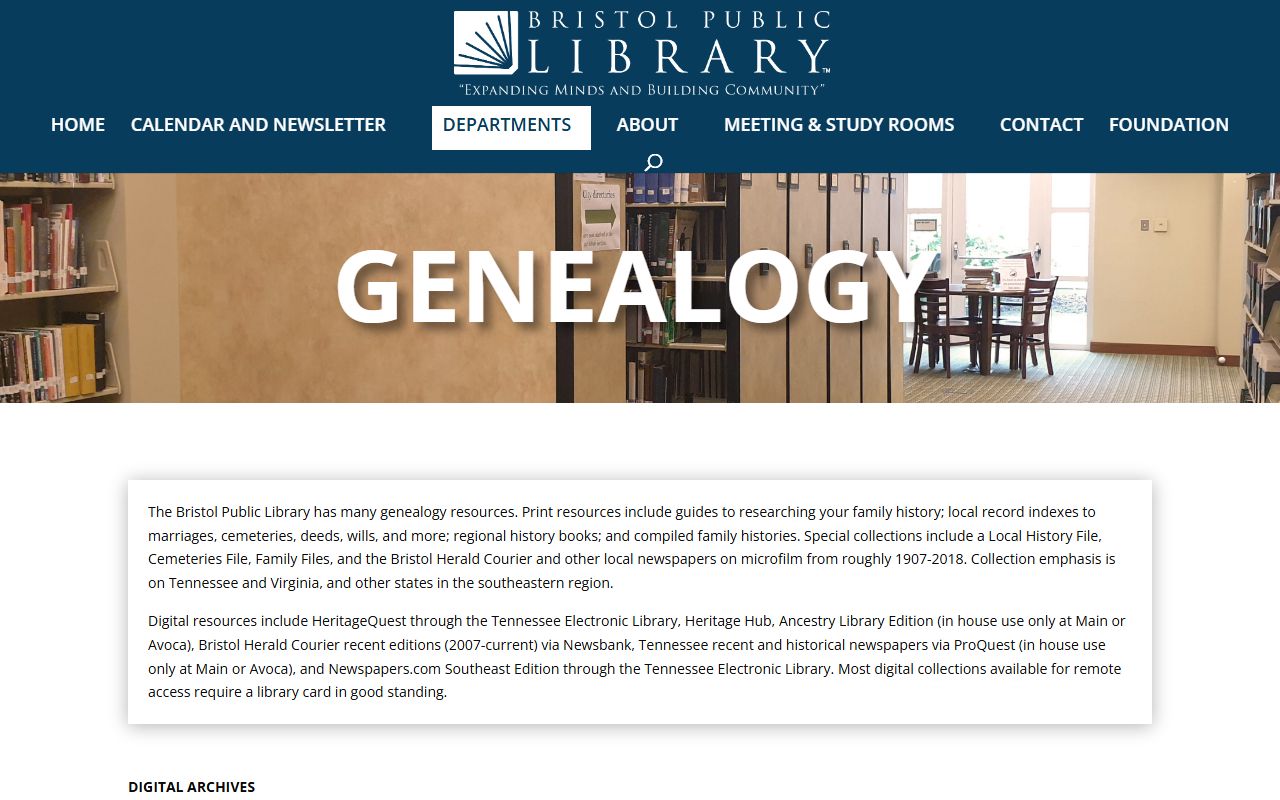
The library image above shows the local history room that often turns a Bristol obituary into a concrete family line.
How to Search Bristol Obituary Records
Start with the county clerk if the obituary names a spouse or suggests a marriage record. Start with the library if you need a directory, cemetery, or Bible record clue. Bristol obituary searches work best when you decide whether the problem is a paper citation or a family connection. That keeps the work moving in the right direction.
The county and city research both help with that. Sullivan County records apply to Bristol, and the county clerk can route you to marriage records from 1863 onward. The broader Sullivan County archive and historic society are useful when a notice is older or when the obituary mentions a family that moved in from another part of East Tennessee. If the death occurred in Virginia, the city line still matters, but the state search changes.
Funeral homes also matter in Bristol. The county research lists Akard, Oakley-Cook, R.A. Clark, and Weaver. Those names often appear in the obituary itself, and they are strong clues when the notice does not give a cemetery right away. Bristol obituary research gets easier when you treat the funeral home as part of the record trail, not just the service provider. The same is true for newspaper names. A notice in the Bristol Herald Courier can lead you to the county or city file that proves the family line.
- Full name and any maiden name
- Approximate death year or decade
- Funeral home, cemetery, or church clue
- Whether the death was in Tennessee or Virginia
Those clues are enough to move from a Bristol obituary reference to a usable county or city record.
Bristol Vital Records and Access Rules
When a Bristol obituary points you to a certified copy, the state of death decides where the official record lives. That is why Bristol research needs both Tennessee and Virginia awareness. For Tennessee deaths, the county archives or the state office are usually the right route. The Tennessee Department of Health vital records page and the state help center explain the process for recent records.
Under T.C.A. § 68-3-205 and T.C.A. § 68-3-206, certified-copy access and recent record limits still apply. That matters because an obituary may be public while the death certificate still follows the request rules. Bristol researchers should confirm the state of death first, then request the right office. That keeps the process from stalling if the family lived on both sides of the city line.
The Sullivan County Department of Archives and Tourism is also a strong local source when the obituary needs a county frame. The county archive, the clerk, and the library work together well in Bristol because the city records are so tied to the surrounding county. If the obituary names a burial ground or a family home, the county archive can often supply the missing piece faster than a broader search could.
The TSLA genealogy index search is the best visual cue for the state step that often follows a Bristol obituary lead.
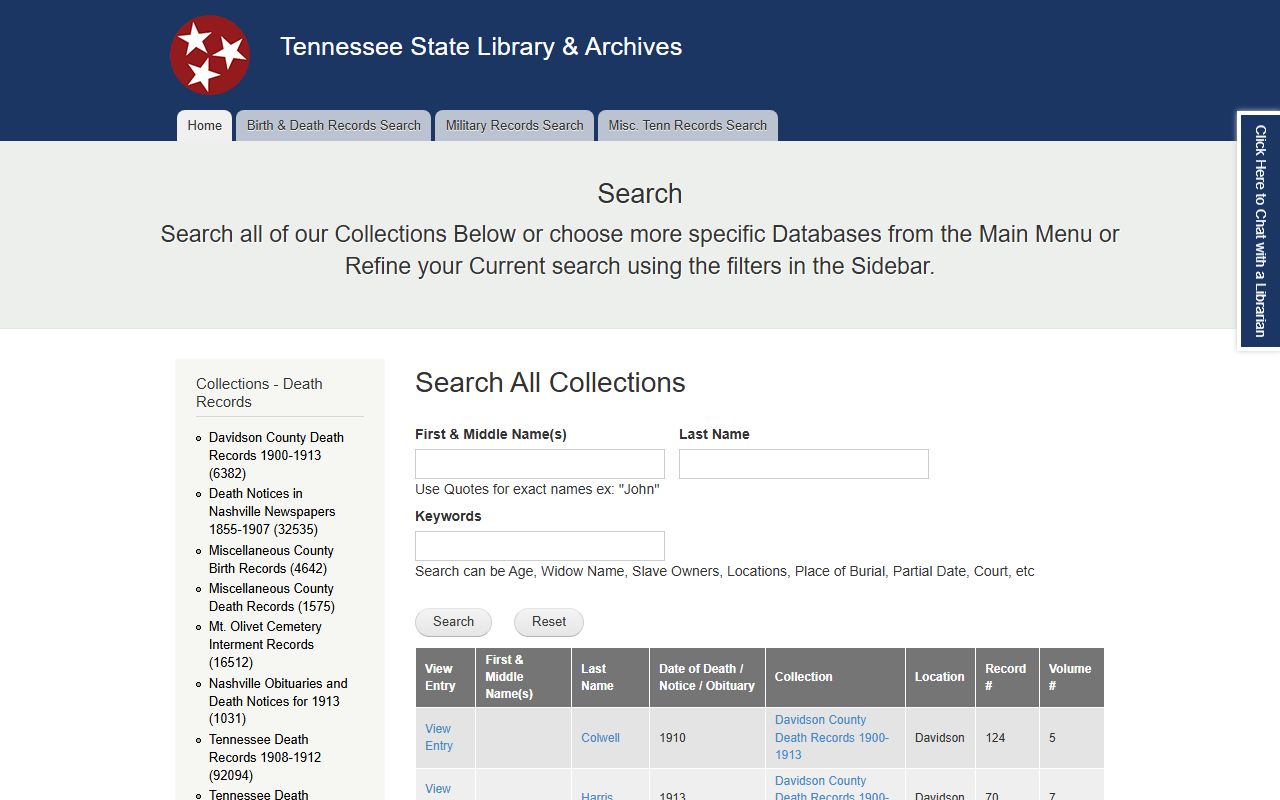
The Tennessee index image above fits the final record step because it supports the state search that often follows a Bristol obituary lead.
Sullivan County Obituary Records
The county page is the right next step when a Bristol notice points you to the deeper Sullivan County record set. It brings the clerk, archive, and local history trail together in one place so you can keep moving without changing the method.
Nearby Tennessee Cities
These nearby city pages can help you compare obituary sources across East Tennessee.