
Search Shelbyville Obituary Records
Shelbyville obituary records are tied closely to Bedford County court, probate, and library sources, so a short death notice can usually be expanded into a full family trail. That matters because Bedford County has courthouse losses and long-running newspaper references that make local context important. A good search often starts with a surname, a death year, and one local clue such as a funeral home or a family burial place. From there, the library, archive, and state record system can confirm the person and fill in the missing details without forcing the search too wide.
Shelbyville Obituary Records at the Public Library
The Shelbyville-Bedford County Public Library is the best city stop for obituary work. The research says the library keeps local history materials, census records, and family histories. That is exactly the kind of support a county seat needs, because Shelbyville obituaries often need one more clue before they are fully useful. If the notice names a family member, a cemetery, or a neighborhood, the library can help place that person inside the county history.
Bedford County’s newspaper trail is also strong enough to matter. The research notes Shelbyville newspapers on TSLA microfilm and Bedford County obituaries through TNGenWeb. That means the city has both a local library route and a broader county paper route. If the obituary is not easy to read in one source, another may still show the full text or a better date. Shelbyville research is especially practical because the county seat keeps the local history close to the public.
The library page is also important because it gives you a reliable public contact before you move into county records. That is useful when the obituary is the first clue and you still need a newspaper title, a family branch, or a burial place. In a county seat, those small clues often live in the same collection as the newspaper files. A library search is often the quickest way to bring them together.
The Shelbyville-Bedford County Public Library page is the right visual doorway for the library route that supports the Shelbyville obituary trail.

The library image above fits the county-seat search because it is the public place where Shelbyville obituary clues can be checked and paired with family history material.
Shelbyville Obituary Records in Bedford County
Bedford County gives the Shelbyville search its legal and historical base. The county clerk handles marriage licenses and court records, while the Bedford County Archives holds court records, wills and probate, land records, and historical documents. That is especially important here because the county courthouse suffered tornado damage in 1830 and fire damage in 1863 and 1934, which led to significant record loss. When a county has that kind of history, the obituary may become the cleanest surviving clue.
The county death record trail is still strong. The research points to Tennessee Death Records 1908-1958, Bedford County vital records at TSLA, and Tennessee State Library & Archives indexes. That makes Shelbyville valuable for both modern and older family searches. If the obituary is recent, the official record may be the best proof. If it is older, the county archives and TSLA indexes may give you the date and the family connections that the courthouse loss erased.
Bedford County funeral homes also help. The research lists Doak-Howell Funeral Home, Feldhaus Memorial Chapel, and Lawrence Funeral Home in Shelbyville. A notice that names one of those places often gives you the burial date or a family contact trail. That can be especially useful when the county record is incomplete because of the old courthouse damage. The funeral-home clue can bridge the gap between the paper notice and the older county file.
In Shelbyville, the county line matters almost as much as the city name. Many families stayed in Bedford County for generations, so a death notice may connect to a marriage book, a probate file, or a county court record. That is why the county page is so useful after the city page. It gives you the larger frame behind the obituary.
How to Search Shelbyville Obituary Records
Start with the library if you know the surname and want a newspaper or family history clue. Start with the county archive if you already have a church, cemetery, or probate lead. Shelbyville obituary searches work best when you decide whether the first problem is the paper citation or the family branch. That keeps the search tight and practical.
The county dates help guide the work. Marriage records begin in 1807, birth and death records begin in 1908, and the county seat keeps the local office close. If the obituary is from the twentieth century, the county death record or the state office may be the final proof. If the obituary is older, the Bedford County Archives and the TSLA microfilm can be the better route. Note: the courthouse losses make it important to check more than one source before you settle on a final citation.
The research also points to Shelbyville obituaries in the Shelbyville Gazette and to transcribed obituary collections for Bedford County. That gives you a strong county paper trail when the notice is not visible in one book or database. If the surname is common, compare the spouse name, burial place, and county record before you pick the right person. Shelbyville gives you enough sources to confirm the match if you use them in order.
- Full name and any maiden name
- Approximate death year or decade
- Funeral home, cemetery, or church clue
- Possible spouse or parent name
Those clues are enough to move from a Shelbyville obituary reference to a county file that can be checked with confidence.
Shelbyville Vital Records and Access Rules
When a Shelbyville obituary leads to a certificate, the county clerk or state office becomes the next stop. The Tennessee Department of Health vital records page and the state help center explain the request path for recent records. That is important because an obituary may be public while the certificate still follows a formal ordering process. Shelbyville researchers should keep those steps separate.
Under T.C.A. § 68-3-205 and T.C.A. § 68-3-206, Tennessee still controls access and certified-copy rules for recent records. That law matters in a county seat where the obituary trail may move from a newspaper to a certificate quickly. If the death is recent, the state copy is the safer final step. If the death is old, the library and archive may already have enough local material to confirm the person and the date.
The county archive remains essential because the courthouse losses make older records uneven. A death notice can often replace a missing file by naming the spouse, cemetery, or funeral home that the county records no longer show clearly. That is why Shelbyville obituary research should always keep the newspaper and the county archive connected. One source may be incomplete. The pair usually is not.
The TSLA death records index is the best visual cue for the state step that often completes a Shelbyville obituary search.
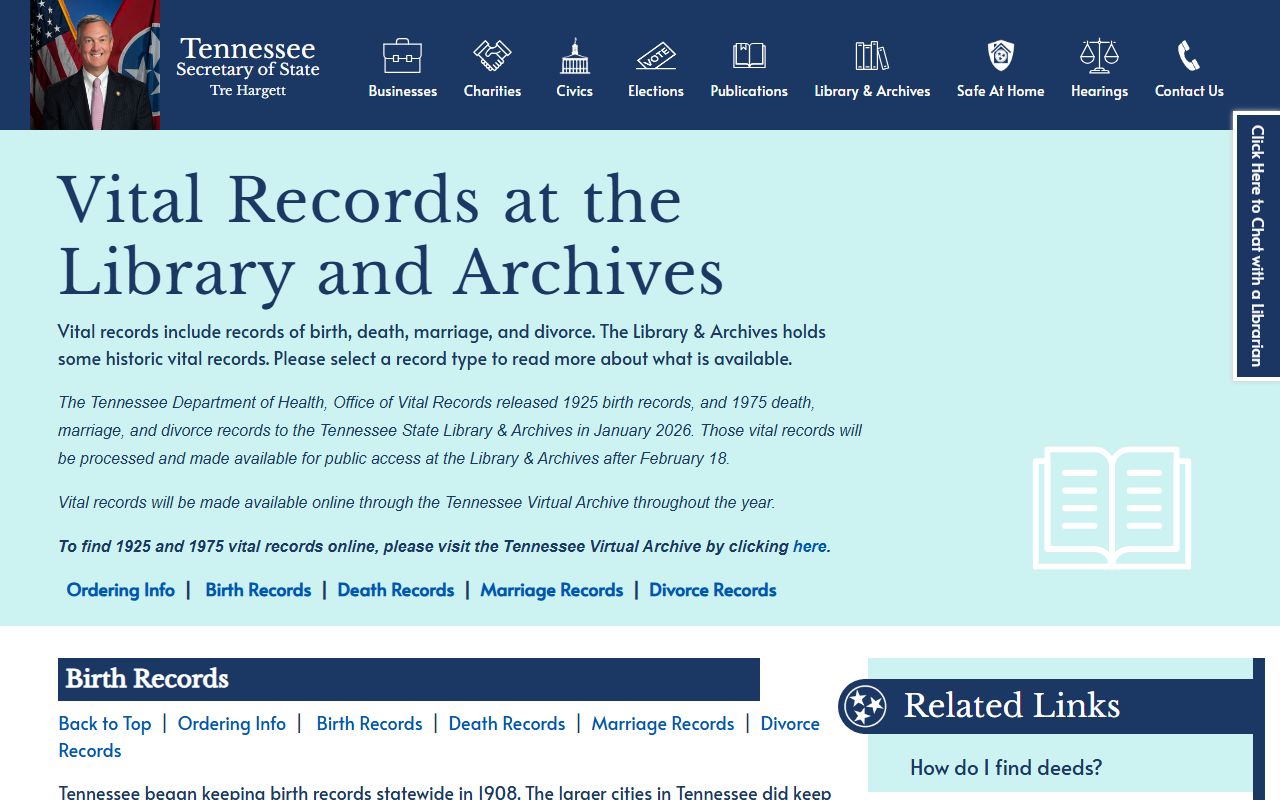
The Tennessee index image above fits the access step because it points to the state record path that often completes a Shelbyville obituary search.
Bedford County Obituary Records
The county page is the right next step when a Shelbyville notice points into Bedford County history. It gathers the clerk, archives, and local record notes in one place so you can keep moving through the county trail.
Nearby Tennessee Cities
These nearby city pages can help you compare obituary sources across Middle Tennessee.